
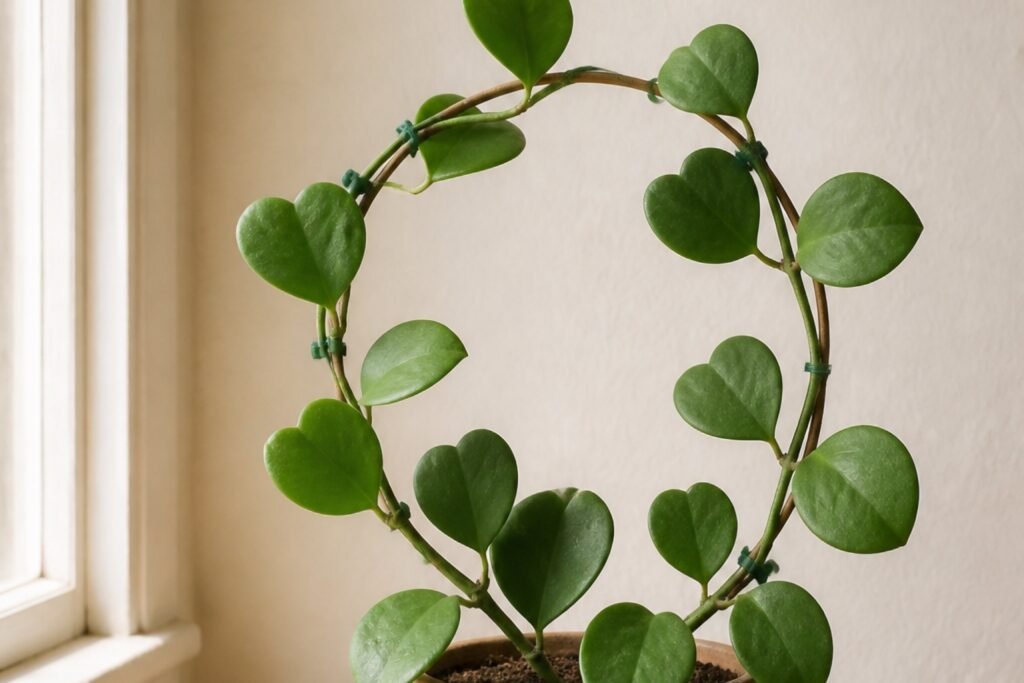
Hoya kerrii care has one odd complication: the cute heart leaf sold in a tiny pot may not be a whole plant. A mature Hoya kerrii is a climbing vine with thick, heart-shaped leaves. A single leaf cutting can stay green for a long time, but it needs a piece of stem with a node to produce a vine.
Sweetheart hoya, Valentine hoya, and lucky-heart plant are common names for this species. It belongs to the dogbane family, Apocynaceae, and comes from tropical parts of Southeast Asia. Its succulent leaves store some water, while its roots still need air.
Hoya kerrii care snapshot
| Care point | Practical indoor target |
|---|---|
| Light | Bright indirect light with mild direct sun after acclimation |
| Water | Let most of the mix dry, then soak and drain |
| Soil | Chunky, fast-draining mix in a pot with a drainage hole |
| Humidity | Average to moderately humid air with circulation |
| Temperature | Roughly 60 to 85 F indoors |
| Indoor size | Vines commonly reach 3 to 6 feet with support |
| Growth rate | Slow at first, then moderate in good light |
| Pet safety | ASPCA lists the species as non-toxic to cats and dogs |
Give the vine more light than a shelf ornament
A rooted heart leaf can sit in fairly dim light and appear unchanged. A growing vine needs more energy. Place it near a bright window where the leaves receive filtered light for much of the day. Gentle morning or late-afternoon sun is useful after the plant adjusts.
Long spaces between leaves, small new growth, and a vine reaching hard toward the window point to insufficient light. Strong midday sun through hot glass can bleach or scorch a leaf, especially after a winter in a darker room. Move the pot closer in stages.
If natural light cannot reach the plant, the guide to whether houseplants need a grow light explains how to judge the window before buying equipment.
Let most of the pot dry before watering
Push a wooden skewer into the mix or check through a drainage hole. Water when most of the root zone is dry and the pot feels noticeably lighter. Then wet the mix thoroughly and let the excess leave the container. A sip poured onto one side encourages dry pockets.
Thick leaves make Hoya kerrii more tolerant of a late watering than a constantly wet pot. Wrinkling can mean thirst, but it can also follow root loss in soggy soil. Check the mix and roots before assuming the plant needs another drink. The broader guide to watering indoor plants covers pot weight and depth checks in more detail.
Growth often slows in cool or dim months. The mix then dries more slowly, so a weekly routine becomes risky. Use the same physical cues all year.
Use a small airy pot and a support
Choose a container only a little wider than the root ball. A chunky indoor mix with coarse bark and mineral material holds some moisture without collapsing around fine roots. The drainage hole matters more than the pot material. Never compensate for an oversized pot by watering only a corner.
Repot when roots crowd the container, the old mix has broken down, or water runs around a dry core instead of entering it. Do not disturb a healthy plant merely because a year has passed. The houseplant repotting guide shows how to size the next container from the root ball.
A mature vine can climb a hoop, narrow trellis, or stake. Attach the stem loosely and leave the growing tip free. Do not remove a long bare runner too quickly. Hoyas sometimes extend a stem first and add leaves later.
Feed lightly while the vine is producing new leaves. A complete houseplant fertilizer at a reduced label strength is enough. Fertilizer will not correct low light or damaged roots.
Check the node before buying a single heart
Look where the leaf stalk enters the planting material. A viable vine cutting needs a short piece of stem containing a node. A leaf with only its stalk may root and remain plump, yet never form a new shoot. The difference can be difficult to see without gently moving the top layer of mix.
For propagation, use a stem section with at least one node and one or two healthy leaves. Root it in a small airy medium, or use water while keeping the leaves above the surface. The water propagation guide explains how to locate a node and avoid submerging foliage. Warmth and bright filtered light help, but a large wet pot does not.
Common Hoya kerrii problems
| Symptom | Likely checks | First sensible move |
|---|---|---|
| Heart leaf never makes a vine | Cutting may lack a stem node | Inspect the base without tearing established roots |
| Yellow soft leaves | Mix staying wet or roots losing oxygen | Pause watering and check root firmness |
| Wrinkled leaves | Dry root zone or damaged roots | Check moisture throughout the pot before watering |
| Long bare runner | New vine extension or inadequate light | Wait for nodes to develop and assess light |
| White cottony clusters | Mealybugs in nodes or leaf joints | Isolate the plant and inspect both leaf surfaces |
Mealybugs settle along nodes and under thick leaves. A few insects are easy to miss on a trellis. Use the repeat-check routine in the mealybug treatment guide instead of treating once and returning the plant to a collection.
Black, soft tissue at the soil line needs prompt attention. Remove the plant, trim collapsed roots with clean tools, and repot only sound tissue into fresh mix. Do not reuse wet soil.
Pet safety and handling
The ASPCA lists Hoya kerrii as non-toxic to cats and dogs. Non-toxic does not mean edible, and chewed plant material can still upset an animal's stomach. Keep the plant out of reach of persistent chewers and retain its botanical label. The pet-safe indoor plant guide explains why exact identification still matters.
Hoyas may release milky sap when cut. Wash it from skin and tools, and keep fresh pruning waste away from children and pets.
Frequently asked questions
Will a single Hoya kerrii heart grow into a vine?
Only if the cutting includes a piece of stem with a node. A leaf without a node may root and survive for years but usually cannot make a new shoot.
Why is my Hoya kerrii growing a long stem with no leaves?
That runner may be normal exploratory growth. Keep it supported and watch the nodes. If new growth stays thin and the spaces between nodes keep stretching, give the plant brighter filtered light.
How can I tell when Hoya kerrii needs water?
Check the root zone, not just the top half inch. Water when most of the mix is dry and the pot is much lighter, then soak the full root ball and drain it.