
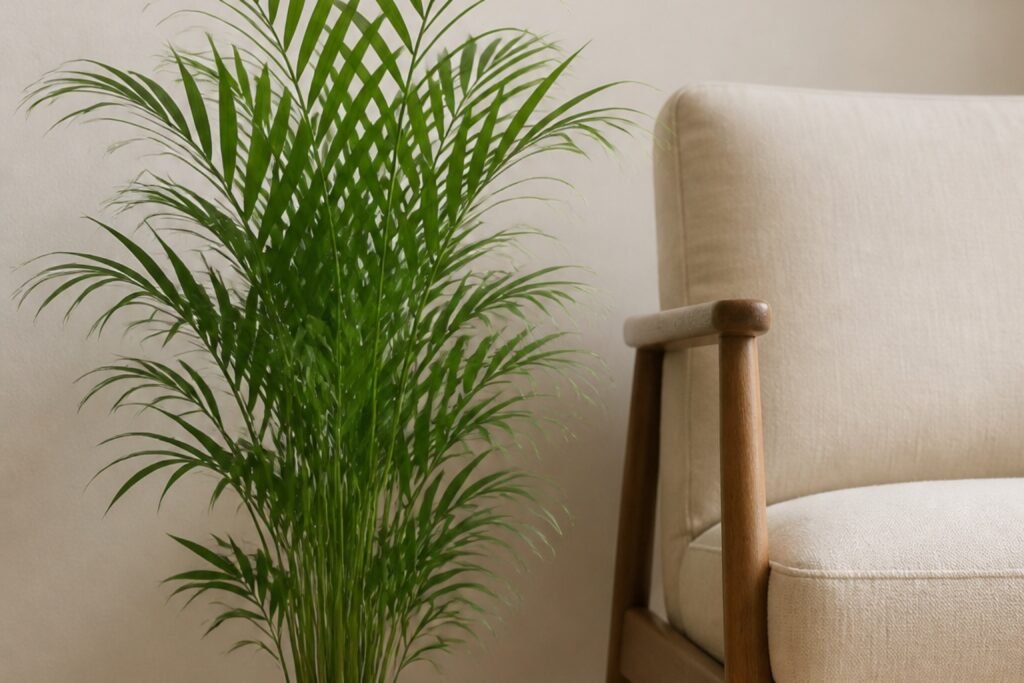
Parlor palm care rewards restraint. This palm grows slowly, manages ordinary indoor humidity better than many of its relatives, and accepts medium light. Problems often begin when someone tries to speed it up with a large pot, frequent watering, or strong fertilizer.
The botanical name is Chamaedorea elegans. Good luck palm, neanthe bella palm, and dwarf palm are common trade names. "Bamboo palm" is less useful because stores apply it to several different palms. The species comes from understory habitats in southern Mexico and northern Central America.
Parlor palm care snapshot
| Care point | Practical indoor target |
|---|---|
| Light | Medium to bright indirect light; lower light is tolerated |
| Water | Water after the upper layer dries, then drain fully |
| Soil | Organic, well drained indoor potting mix |
| Humidity | Average to moderate household humidity |
| Temperature | About 65 to 80 F, away from cold drafts |
| Mature indoor size | Commonly 2 to 6 feet tall over time |
| Growth rate | Slow |
| Pet safety | ASPCA lists it as non-toxic to cats and dogs |
Parlor palm appears in our low light plant guide and pet safe indoor plant guide. The palm's tolerance makes it useful, but it does not turn a windowless corner into a healthy growing space. Brighter filtered light produces denser, steadier growth.
Keep it near light, not in the sun
Place the palm near a north or east window, or back from a brighter southern or western exposure. Direct afternoon sun can bleach the narrow leaflets. A plant moved from a shaded shop may also scorch in gentle sun until it acclimates.
Low light slows water use and growth. If new fronds are small, sparse, or strongly angled toward the window, move the pot closer to filtered daylight. Do not expect old fronds to reshape themselves. Judge the next one.
Rotate the container occasionally. Nursery pots often contain several seedlings for a fuller appearance, and the side facing the window can become noticeably denser.
Water when the upper mix has dried
Feel below the surface. When the top inch or two is dry and the pot has lost some weight, water the root ball evenly. Let runoff escape and empty the saucer. Parlor palm likes some moisture but not saturated roots.
Brown tips do not automatically mean thirst. Dry air, fertilizer salts, softened water, or a hot vent can create the same symptom. Yellowing across several fronds in wet mix points toward root stress. The broader guide to watering indoor plants helps compare these clues.
In winter, the interval usually lengthens. Keep checking rather than reducing water by a fixed percentage. A warm, bright room and a cool, dim room will dry at different speeds.
Use a modest pot and leave the roots alone
Choose a container with drainage and a loose, organic indoor mix. Parlor palms grow slowly and do not need frequent shifts into larger pots. Too much unused wet mix around a small root ball raises the risk of rot.
Repot when roots have filled the container, water no longer enters the mix evenly, or the plant becomes unstable. Move up one size and disturb the root mass as little as practical. The houseplant repotting guide explains how to check roots and avoid burying the stems.
A palm sold as a dense clump may be many seedlings sharing one pot. Dividing them can damage intertwined roots and leave thin, awkward plants. Unless you need to separate a clear natural section, keep the group together.
Feed lightly and protect the fronds
Use a complete fertilizer labeled for indoor plants during active growth. Follow the product rate and avoid feeding a dry or stressed root ball. Slow growth is normal, so a second dose will not force a new frond safely.
Wipe or rinse dust from the leaflets with lukewarm water. Support each frond and avoid oily leaf shine. The leaf cleaning guide gives a simple routine that also helps you spot scale and mites.
Cut a fully brown frond near its base with clean tools. Do not cut the central spear or remove partly green fronds merely for symmetry. Brown tips can be trimmed cosmetically, following the leaf shape.
Propagation is usually from seed
Parlor palms do not make stem cuttings. Commercial plants are normally grown from seed, a slow process that requires warmth and fresh seed. Division is possible only when separate rooted plants can be teased apart without severe damage.
Fruit is uncommon indoors because male and female flowers occur on separate plants. NC State Extension also warns that fruit pulp can irritate sensitive skin. Do not treat indoor fruit as edible.
Common parlor palm problems
| Symptom | Likely checks | First sensible move |
|---|---|---|
| Brown leaflet tips | Dry air, salts, inconsistent moisture | Review drafts, water quality, and fertilizer use |
| Yellow fronds in wet mix | Poor drainage or root stress | Let the mix drain and inspect roots if decline spreads |
| Pale scorched areas | Direct sun | Move back from the glass and acclimate slowly |
| Fine stippling or webbing | Spider mites | Isolate and inspect leaf undersides |
| Cottony clusters | Mealybugs | Confirm the pest and begin a label-led control plan |
Spider mites can multiply in warm, dry rooms. Clean foliage and inspect the newest frond as it opens. If the symptom remains unclear, compare it with our guide to brown leaf tips instead of spraying first.
Pet safety and palm lookalikes
ASPCA lists Chamaedorea elegans as non-toxic to cats and dogs. That result does not apply to every plant called a palm. Sago palm is a cycad and is highly toxic. Keep the botanical label and verify a replacement plant rather than assuming the shared word "palm" means shared safety. Any chewed plant can still cause stomach upset.
Frequently asked questions
Can parlor palm grow in low light?
It tolerates lower light, but growth becomes slower and more open. Medium or bright indirect light gives better results. A room with no useful daylight needs a suitable grow light.
Why are the tips turning brown?
Check dry air, hot vents, salt buildup, water quality, and repeated dry spells. Brown tips have several causes, so do not respond with extra water until the root zone is checked.
Should I mist a parlor palm?
Misting does not raise room humidity for long. Use a humidifier if the air is very dry, and clean the foliage with a gentle rinse or damp cloth.