How Far Should Grow Lights Be From Plants? (A Simple Distance Guide)
Last updated: 06.07.2026.
You bought a grow light, which is great, but now it is hanging over your plants and you have no idea whether it is too close, too far, or just right. Too far and it does nothing, your plants stay leggy and pale. Too close and you can actually scorch the leaves. Getting the distance right is the difference between a grow light that works and one that wastes electricity.
The honest answer is “it depends on the light,” but there are clear, usable ranges, and easy ways to tell if you have it wrong. Here is the practical distance guide, plus how to read your own plants to dial it in.
Why distance matters so much
Light intensity drops off fast with distance. This is the part people underestimate: doubling the distance between the light and the plant does not halve the light, it roughly quarters it (light follows an inverse-square falloff). So a light that is too high is delivering far less to your plants than you think, which is why so many people run a grow light and still get leggy, stretching plants.
The flip side is that a powerful light placed too close can deliver too much intensity and heat, bleaching or scorching the leaves. So distance is a balance: close enough for real intensity, far enough to avoid burning. The right distance depends mostly on how powerful the light is.
General distance ranges by light type
These are practical starting points. Always check the manufacturer’s recommendation for your specific light, since wattage varies a lot.
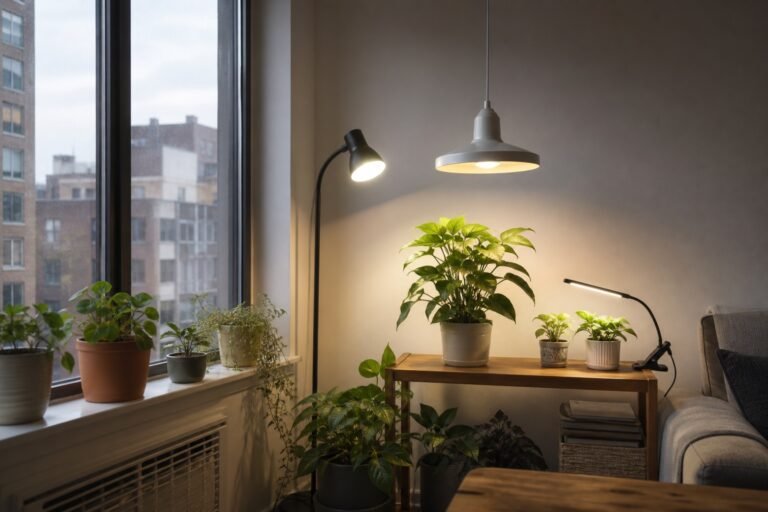
Standard LED grow lights (most home setups): roughly 12 to 24 inches (30 to 60 cm) above the plants. This is the common range for the typical full-spectrum LED grow lights people use at home. Lower-powered LEDs sit closer to the 12 inch end, stronger ones further away.
High-power LED panels: further back, often 18 to 36 inches (45 to 90 cm), because they are intense. Follow the maker’s spec closely.
Fluorescent tubes and CFL bulbs (low heat, low intensity): very close, 3 to 12 inches (8 to 30 cm), because they are gentle and lose intensity quickly with distance. You can almost tuck these up near the foliage.
Small clip-on or bulb-style grow lights: usually 6 to 18 inches (15 to 45 cm), depending on wattage.
As a rule, the more powerful the light, the further away it goes. A weak light needs to be close to do anything; a strong light needs distance to avoid burning.
Adjust by plant type too
The plant matters as well as the light:
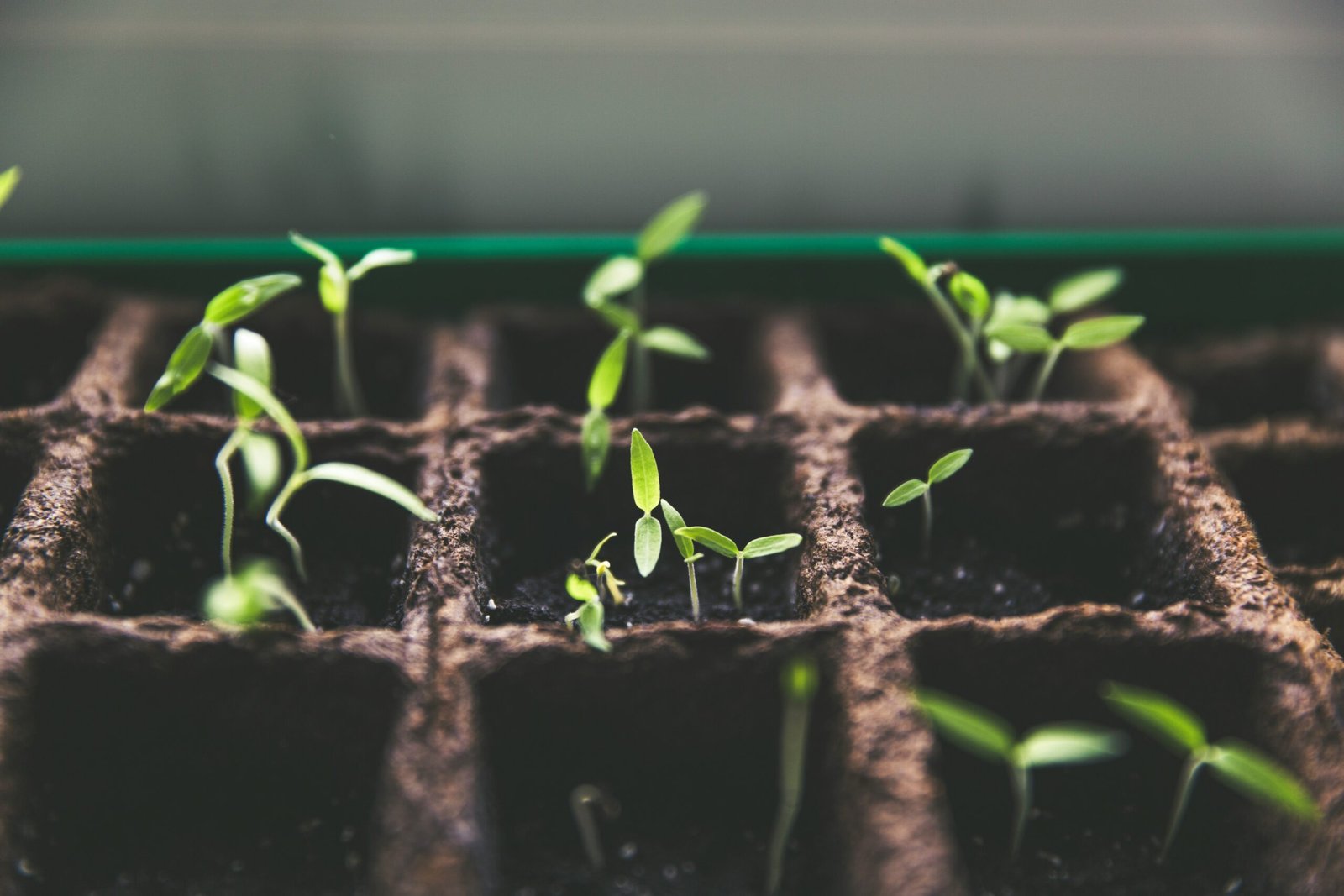
- Seedlings and young plants: keep the light a bit closer (within reason) for strong, compact early growth, but watch for scorching.
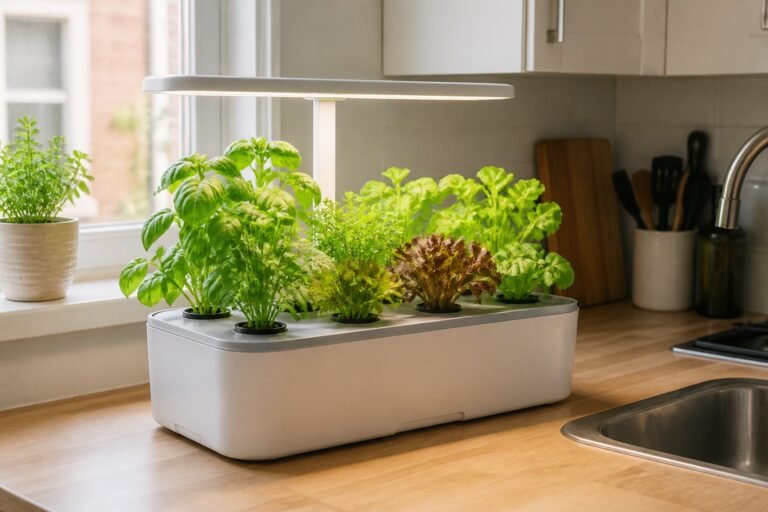
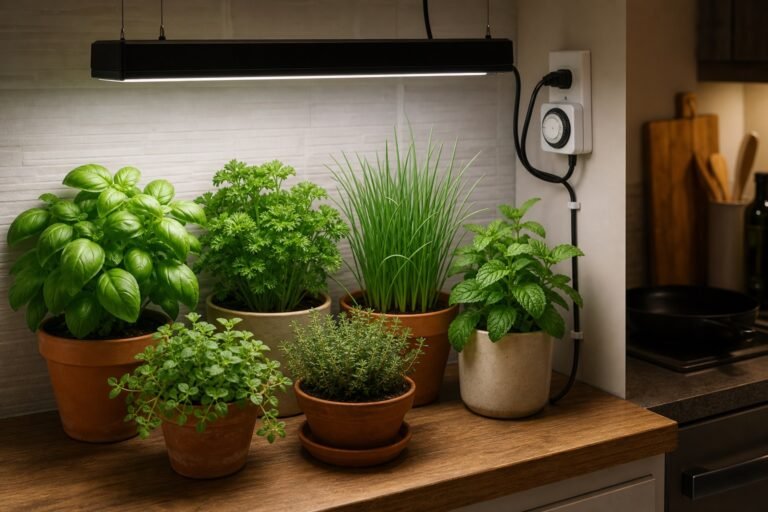
- Leafy greens and herbs (basil, lettuce, microgreens): want plenty of intensity, so toward the closer end of the range. This is why a light works so well for indoor basil and other herbs.
- Low-light foliage houseplants (pothos, snake plant): need less intensity, so can sit further away or use a gentler light.
- Flowering or fruiting plants: want high intensity, closer placement with a strong light.
How to read your plants (the real test)
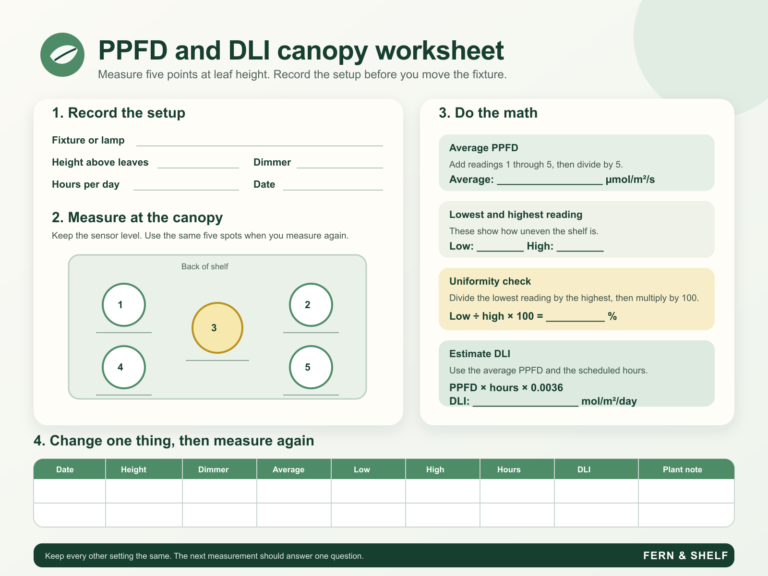
Forget the numbers for a second. Your plants will tell you if the distance is wrong. Watch for these signs and adjust.
Signs the light is too far away:
- Plants stretching, leaning, or growing leggy toward the light
- Pale, weak, or sparse new growth
- Slow growth despite the light being on enough hours
The fix: lower the light or raise the plants closer.
Signs the light is too close:
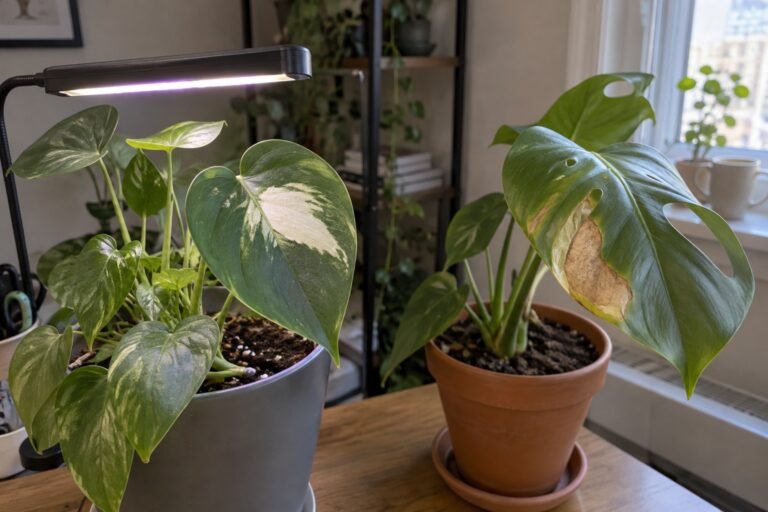
- Bleached, faded, or yellow-white patches on the top leaves nearest the light
- Crispy, scorched, or curling leaf tips on the upper foliage
- Leaves looking “washed out” right under the light
The fix: raise the light or move the plants down.
If raising the fixture does not settle the symptoms, compare the whole plant with our guide to too much grow light, including bleaching, curling, and stalled growth.
Signs it is just right: compact, sturdy, healthy growth with good color, and no scorching on the top leaves. When growth looks full and strong rather than stretched or bleached, you have found the distance.
Related guides and tools
A few practical tips
- Make it adjustable. Hang lights on chains or an adjustable stand so you can raise them as plants grow. A grow light with an adjustable stand or hanging kit makes dialing in distance easy.
- Account for heat. Even cool-running LEDs put out some heat. Hold your hand at leaf level under the light: if it feels noticeably warm, raise the light.
- Raise the light as plants grow so the distance stays consistent. What was right for a seedling is too close for a grown plant, or rather the plant grows up into the light.
- Distance and time work together. Distance sets intensity; run time sets the daily total. Pair the right distance with the right schedule from how long to leave a grow light on. And if you are not sure you even need a light, do you need a grow light helps you decide.
Grow light distance is not complicated once you have the ranges and learn to read your plants. Start in the recommended range for your light (around 12 to 24 inches for a typical LED), watch for stretching versus scorching, and adjust. Get it right and your grow light does exactly what you bought it for: strong, compact, healthy plants regardless of how dark your apartment is. For the bigger picture on choosing a light, see the best grow lights for apartment windows.