Balcony Vegetable Garden: 9 Best Crops for Small Spaces
Last updated: July 31, 2026.
Affiliate disclosure: As an Amazon Associate I earn from qualifying purchases. Links marked “paid link” may earn Fern & Shelf a commission at no extra cost to you. Read our full Affiliate Disclosure.
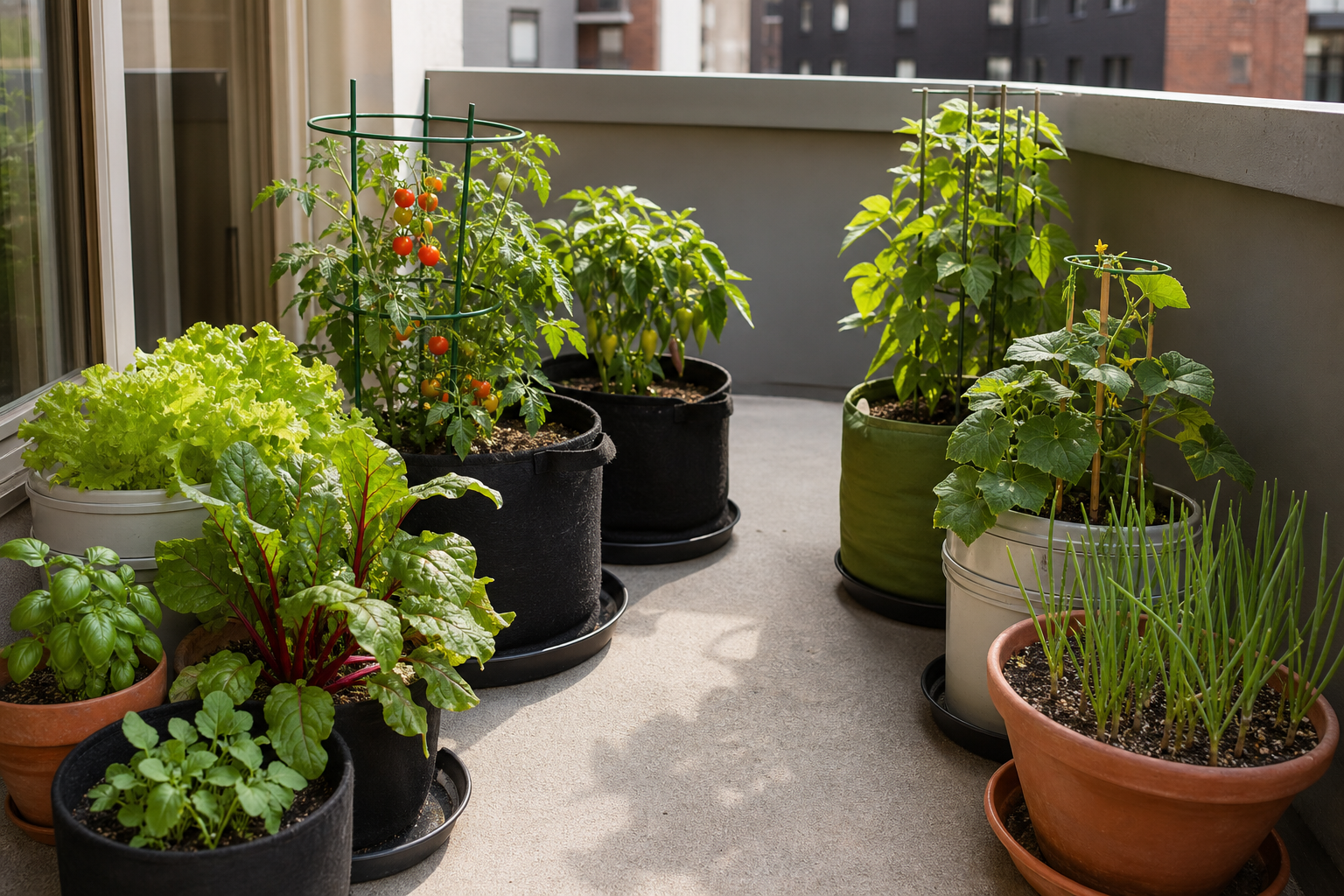
A balcony vegetable garden can produce herbs, salad leaves, roots, and fruiting crops without turning the whole balcony into a maze. The useful question is not how many pots will fit. It is which crops suit the real sun, wind, water access, rules, and safe loaded weight of that space.
Start small. Three well-chosen containers are easier to water and secure than twelve crowded ones. Once you know how quickly they dry and where the strongest gusts hit, adding another crop becomes a practical decision instead of a rescue project.
Balcony vegetable garden basics before you buy a pot
Read the lease, homeowners association rules, and building or fire requirements first. Keep every required exit and walking path clear. If you cannot confirm the balcony’s load limit, ask the property contact or a qualified building professional. A large container filled with wet mix can be much heavier than the empty pot, and no universal balcony weight limit is safe to assume.
Observe direct sun across a clear day. Illinois Extension describes full sun as at least six hours of direct light and partial shade as roughly four to six hours. Nearby buildings, railings, and seasonal sun angle can divide one small balcony into very different growing zones.
Wind also changes the plan. Broad, low containers are harder to tip than tall narrow pots. Place the heaviest stable containers on the floor, not on an unverified railing. Supports should stand securely within your space and comply with building rules.
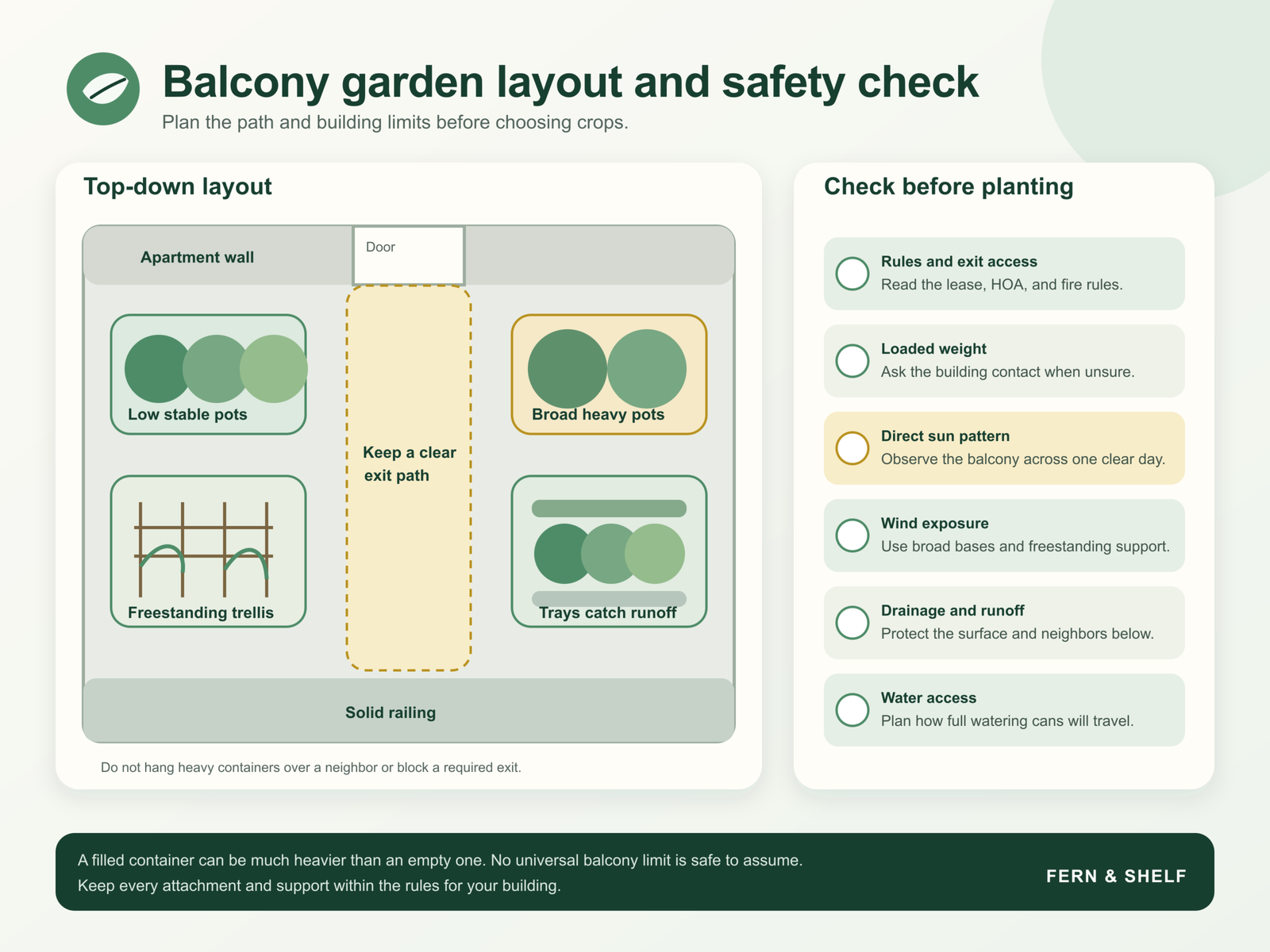
Finally, decide how water will reach the plants and where it will drain. University of Maryland Extension recommends containers with drainage holes and notes that gravel in the bottom does not improve drainage. Saucers can protect the surface and neighbors below, but roots should not sit in collected water.
What every container needs
Use fresh potting mix made for containers rather than digging soil from a yard. The difference matters on a balcony, where dense soil drains poorly and adds unnecessary weight. Our guide to potting soil versus garden soil explains the tradeoff.
Choose the container for the mature crop, not the seedling. A larger volume usually holds moisture longer, gives roots more room, and is harder for wind to topple. It is not permission to overload the structure. Wider bases and grouped floor pots improve stability, but each full setup still has to fit the building’s limits.
Search Amazon for 5-gallon fabric grow bags (paid link)
Search Amazon for plant saucers for a balcony (paid link)
Search Amazon for a freestanding container trellis (paid link)
Fabric bags can be light when empty and easy to store, but their sides may lose water faster than rigid pots in hot wind. Saucers must be wide enough for the container and emptied after drainage. Secure a trellis before the plant becomes top-heavy, and do not attach it to the building without permission.
Nine crops that earn their balcony space
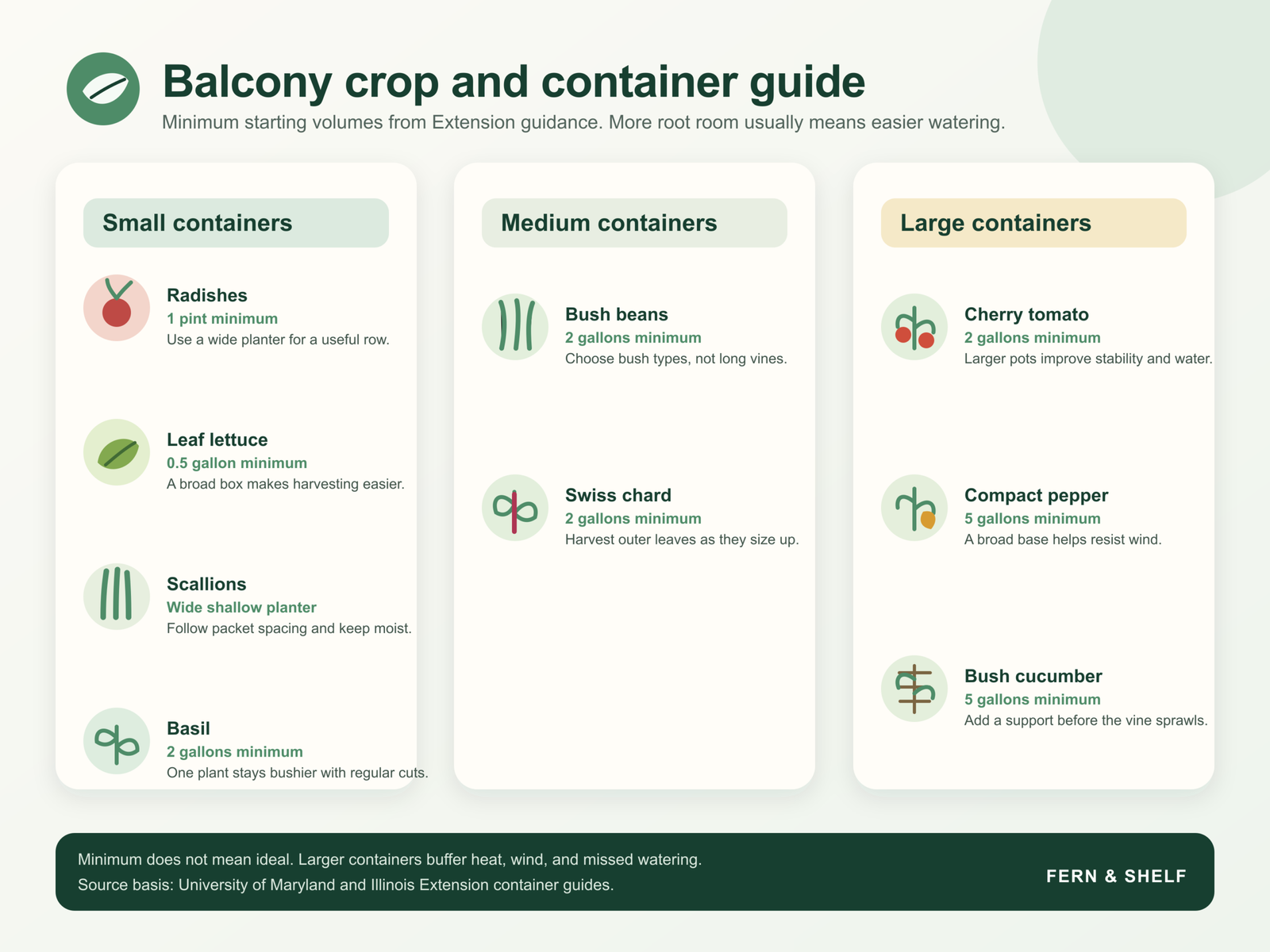
The volumes below are minimum starting points drawn mainly from University of Maryland Extension’s container crop table. Minimum does not mean ideal. A larger pot often makes watering and stability easier, provided its loaded weight is acceptable.
1. Leaf lettuce
Leaf lettuce suits a shallow, broad box and can be harvested a few outer leaves at a time. Maryland lists a half-gallon minimum. Give several plants the packet spacing instead of packing the whole surface with seedlings.
Lettuce appreciates cooler weather and may bolt or turn bitter in summer heat. A site with morning sun and afternoon protection can be useful in warm periods, though local conditions and the variety matter.
2. Radishes
Radishes mature quickly and need little container volume, with Maryland listing a one-pint minimum. A wider planter produces a more useful row than one tiny pot. Check the packet for root depth and spacing because varieties differ.
Keep the mix evenly moist. Drought followed by heavy watering can split roots, while crowding may produce leaves with disappointing roots.
3. Scallions
Scallions fit a wide, relatively shallow planter and tolerate close but deliberate spacing. Follow the seed packet rather than scattering a dense mat. Harvest whole plants as they size up, or cut greens only if the variety and growing method support regrowth.
For a more detailed indoor option, see how to grow green onions indoors. That guide owns the kitchen and windowsill method; this article keeps scallions outdoors in a balcony container.
4. Basil
Basil is compact, productive, and easy to keep in its own pot. Maryland’s table gives small herbs such as basil a two-to-five-gallon range. One plant in a two-gallon container is a sensible minimum start, while more root room buffers missed watering.
Pinch above a pair of leaves to encourage branching and remove flower buds if leaf production is the goal. The indoor basil guide covers detailed harvesting and care that also helps explain the plant’s growth habit.
5. Bush beans
Choose a bush variety, not a pole bean that needs a tall support. Maryland lists two gallons as a minimum container size. A broad box provides room for several plants at packet spacing and is steadier than a row of narrow pots.
Beans need useful direct sun for flowering and pods. Avoid excess nitrogen, which can push leaves at the expense of a balanced crop.
6. Swiss chard
Swiss chard brings a long harvest window and handles containers well. A two-gallon minimum gives one plant room to establish. Pick outer leaves while leaving the center intact.
The plant becomes broad as it matures, so give it enough spacing to keep a walkway clear. Colorful stems are decorative, but choose the crop because you plan to eat it, not merely to fill a corner.
7. Compact cherry tomato
Look for compact, patio, dwarf, or determinate language in the variety description. Maryland lists two gallons as a minimum for cherry tomato, but a larger container is usually easier to keep evenly moist and stable. Many balcony growers will find five gallons or more more forgiving if the safe loaded weight permits it.
Install a cage or freestanding support before the plant sprawls. Tomatoes also need the sunniest available zone and regular moisture. One healthy plant is a better first balcony vegetable garden choice than several crowded seedlings.
8. Compact pepper
Peppers grow neatly in pots, but they still need warmth and strong light to fruit well. Maryland lists five gallons as the minimum. A broad base helps the mature plant resist wind.
Choose a compact cultivar and set the pot where it will not shade lettuce or radishes. Cool nights can slow growth, while very hot exposed balconies may dry the mix rapidly.
9. Bush cucumber
A bush or patio cucumber contains the vines better than a standard sprawling type. Use at least five gallons and add a stable support if the variety climbs. Keep the vine and fruit inside the railing.
Cucumbers use water quickly once they grow and fruit. A larger container, mulch on the mix surface, and a dependable check routine reduce dramatic swings. Do not let a saucer remain full after watering.
A simple three-container starting plan
If nine options feel like a shopping list, choose three:
- Put leaf lettuce and a short row of radishes in one broad box for cool-season harvests.
- Give basil or Swiss chard its own medium pot.
- Choose one larger fruiting crop, such as a compact cherry tomato, pepper, or bush cucumber.
This mix teaches three useful watering patterns without filling every square foot. Add bush beans or scallions after the first containers are stable and you know the balcony’s sun.
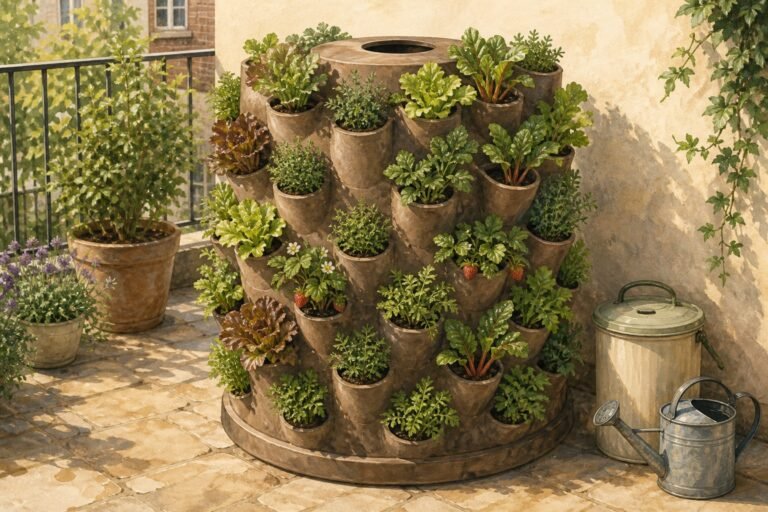
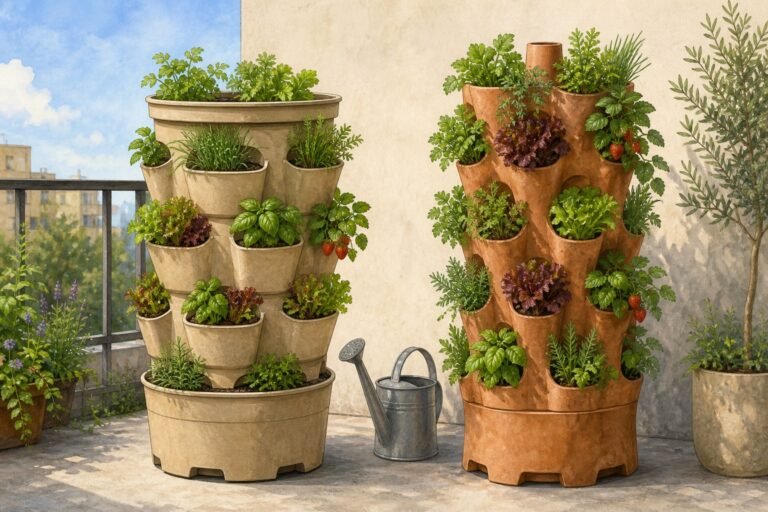
Vertical equipment can save floor area, but it does not remove weight, wind, or watering limits. Compare the practical tradeoffs in vertical garden tower alternatives and whether vertical garden towers are worth it before buying a tall system.
Watering, feeding, and leaving town
Container vegetables may need frequent checks in warm, windy weather. University of Maryland Extension notes that watering frequency changes with crop, container, location, and weather. Test the mix, feel the pot when safe to lift, and water the root zone until excess drains. Empty saucers after the pot finishes dripping.
Small pots dry first. Dark containers can warm quickly in direct sun. Wind pulls moisture from foliage and mix. None of those facts creates a reliable every-Monday schedule.
Potting mix nutrients do not last forever. Follow the fertilizer label for container vegetables and the needs of the crop. More feed cannot replace sun, root space, or steady moisture.
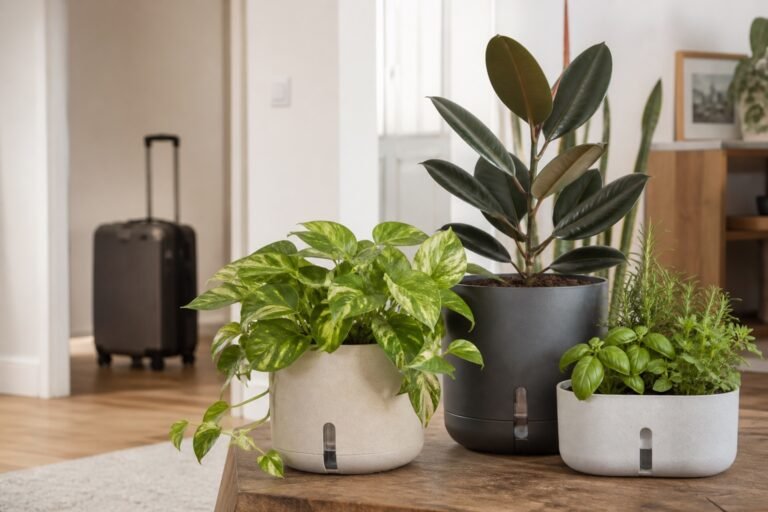
If travel is common, a reservoir planter may reduce daily swings. The self-watering planter guide explains what still needs checking before you depend on one. Test any system while you are home.
Renter-friendly limits that prevent trouble
A balcony vegetable garden should remain reversible. Use freestanding supports, catch runoff, protect the surface, and keep soil or leaves out of drains. Do not drill, tie into a railing, or hang weight over another unit without explicit permission.
The broader indoor gardening guide for renters covers portable setups and move-out concerns. Outdoor balconies add wind, weather, and building safety, so local rules always take priority over a generic garden layout.
Frequently asked questions
How much sun does a balcony vegetable garden need?
Many fruiting vegetables perform best with at least six hours of direct sun, while some leafy crops can produce with less. Map the actual direct sun across the balcony rather than using the direction alone. Buildings and railings create shifting shade.
Can I use garden soil in balcony pots?
Fresh container mix is the safer choice. Garden soil can become dense, drain poorly, and add weight. Illinois Extension recommends a soilless mix for container vegetables. Reuse a container only after cleaning it and checking the drainage holes.
What vegetables grow on a balcony with four hours of sun?
Leaf lettuce, scallions, radishes, and Swiss chard are more realistic candidates than tomatoes or peppers, but results depend on light intensity, season, temperature, and variety. Four hours of bright midday sun is different from four dim hours behind an obstruction.
Are fabric grow bags good for balconies?
They can work if the building permits them and runoff is controlled. They are easy to store and drain freely, but wind and exposed fabric may dry the mix quickly. Set them on stable surfaces and never assume that a light empty bag will remain light after watering.
How do I keep balcony pots from blowing over?
Use broad bases, group stable floor containers without blocking drainage or exits, and keep supports freestanding and secure. Avoid unapproved railing planters. If gusts are severe, choose lower crops and ask the building contact what attachments are allowed.
Build the garden around the balcony
The most dependable balcony vegetable garden begins with the space, not a catalog. Confirm the rules and weight, map sun and wind, plan runoff, then choose a few compact crops with enough root room. Three containers cared for well can teach you more than a crowded wall of thirsty pots.
Sources and further reading
- University of Maryland Extension: Growing Vegetables in Containers and Salad Tables
- University of Maryland Extension: Maintaining Container Grown Vegetables
- Illinois Extension: Growing Vegetables in Containers
- Illinois Extension: Container Size
- Colorado State University Extension: Container Gardens
- Colorado State University Extension: Vegetable Gardening in Containers