
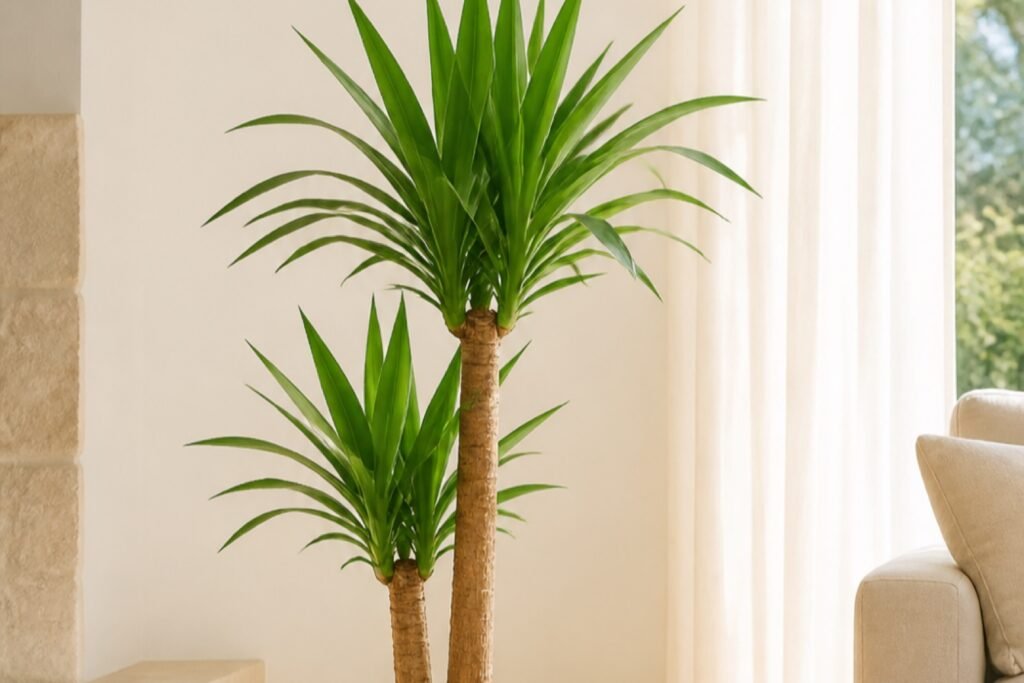
Yucca cane care indoors is mostly about giving a sun-loving plant enough light and allowing its root zone to dry. The familiar spineless yucca is Yucca gigantea, still widely sold under the synonym Yucca elephantipes. It has sturdy tan canes topped with rosettes of narrow green leaves. It is not an indoor palm, and care written for shade-tolerant palms leaves it weak and wet.
The common name yucca covers many hardy outdoor species. This profile stays with the tropical cane plant used indoors.
Yucca cane care indoors at a glance
| Care point | Practical indoor target |
|---|---|
| Light | Very bright light with several hours of direct sun after acclimation |
| Water | Let the upper half of the mix dry and the pot become light, then soak and drain |
| Soil | Loose fast-draining container mix in a sturdy draining pot |
| Humidity | Average to low household humidity |
| Temperature | About 60 to 85 F |
| Mature indoor size | Commonly 4 to 8 feet tall and 2 to 4 feet wide |
| Growth rate | Slow to moderate indoors |
| Pet safety | ASPCA lists Yucca species as toxic to cats and dogs |
Yucca cane care indoors needs real window light
Place the plant directly beside a bright south or west window, or use an unobstructed east exposure. A yucca raised in dim store light can scorch if moved straight into hours of hot sun, so add direct exposure over a week or two.
Weak light shows up as narrow floppy new leaves, a rosette that opens loosely, and a cane leaning hard toward the glass. Rotation improves symmetry but cannot replace light. The tests in do you need a grow light help when winter daylight is short or the only window faces a deep overhang.
Keep leaves from pressing against very cold glass. This species likes bright sun, not freezing tissue.
Let a large part of the pot dry
Push a wooden skewer well into the mix and learn the weight of the pot after watering. Water when the upper half has dried and the container feels distinctly lighter. Soak the entire root ball, then let all excess drain.
A thick cane stores some water, while a large decorative planter can hide wet soil for weeks. Do not add a small splash because the calendar says Sunday. The cue-based method in how often to water indoor plants is safer, especially in winter when growth slows.
Soft cane tissue, a sour smell, and yellow leaves on wet soil point toward rot. Stop watering, unpot the plant, and inspect the roots and cane base. The recovery steps in saving an overwatered plant help decide whether firm tissue remains.
Use a stable pot without oversizing it
Yucca canes become top-heavy. Choose a sturdy pot with a drainage hole, only slightly wider than the root mass. Weight at the bottom is useful, but a sealed cachepot full of wet mix is not. A fast-draining indoor mix should accept water rather than repel it and should break apart after squeezing.
The potting soil comparison explains how to judge drainage, while the repotting guide covers pot size and root inspection. Repot when roots circle densely, lift the plant, block the drainage hole, or the old mix no longer wets evenly.
Keep the cane base at its former depth. Burying it more deeply can hold moisture against stem tissue. Use a pot with a broad enough base to resist tipping rather than burying the plant for balance.
Prune a cane only with a plan
A tall yucca can be shortened during active growth. A clean cut through firm cane may trigger new rosettes below the cut, though the shape cannot be predicted exactly. Wear eye protection and gloves, sanitize the saw or pruners, and keep the cut surface dry.
Healthy cane sections or leafy tops may root, but large pieces rot easily in wet media. Start with firm tissue and a modest, barely moist rooting mix. Do not reuse a section with internal discoloration or a fermented smell.
Feed lightly during spring and summer when new leaves are opening. Follow the product label and stop during a winter slowdown. A yucca in weak light needs less fertilizer, not more.
Wipe the long leaves with a damp cloth and support each blade. Dust hides scale and mite damage. The simple method in our leaf-cleaning guide is enough.
Common yucca cane problems
| Symptom | Likely checks | First sensible move |
|---|---|---|
| Yellow lower leaves | Wet soil, weak light, or normal aging of an old leaf | Check deep moisture and whether loss is spreading |
| Soft cane base | Rot from prolonged wetness | Unpot immediately and find the boundary of firm tissue |
| Pale floppy new leaves | Light that is too weak | Move gradually into brighter light |
| Brown dry tips | Severe dryness, salt buildup, or physical damage | Check the root ball and flush salts if drainage is sound |
| Fixed brown bumps or sticky residue | Scale insects | Isolate and inspect leaf bases and cane creases |
One lower leaf drying is normal as a rosette grows. A sequence of yellow leaves plus wet soil is not. Check light, deep moisture, and pests one at a time when several causes still seem possible.
Pet and household safety
The ASPCA Yucca record is genus-level rather than an exact Yucca gigantea species test. It lists Yucca as toxic to cats and dogs, with vomiting and diarrhea among the reported signs. The stiff leaves can also cause mechanical injury. Keep the pot away from pet paths and children's play areas, and wear gloves and eye protection during major pruning. Contact a veterinarian if a pet chews the plant or becomes unwell. Our pet-safe plant guide explains how to interpret broad genus records.
Frequently asked questions
Can a yucca cane grow in low light?
It may survive for a time, but new rosettes become loose and weak. Give it the brightest practical window position or measured supplemental light.
How often should I water an indoor yucca?
There is no fixed interval. Water when the upper half of the potting mix has dried and the pot is much lighter, then soak and drain it fully.
Can I cut the top off a yucca cane?
Yes, a healthy firm cane can be shortened during active growth and may produce shoots below the cut. Use clean tools, protect your eyes, and keep the cut dry.