
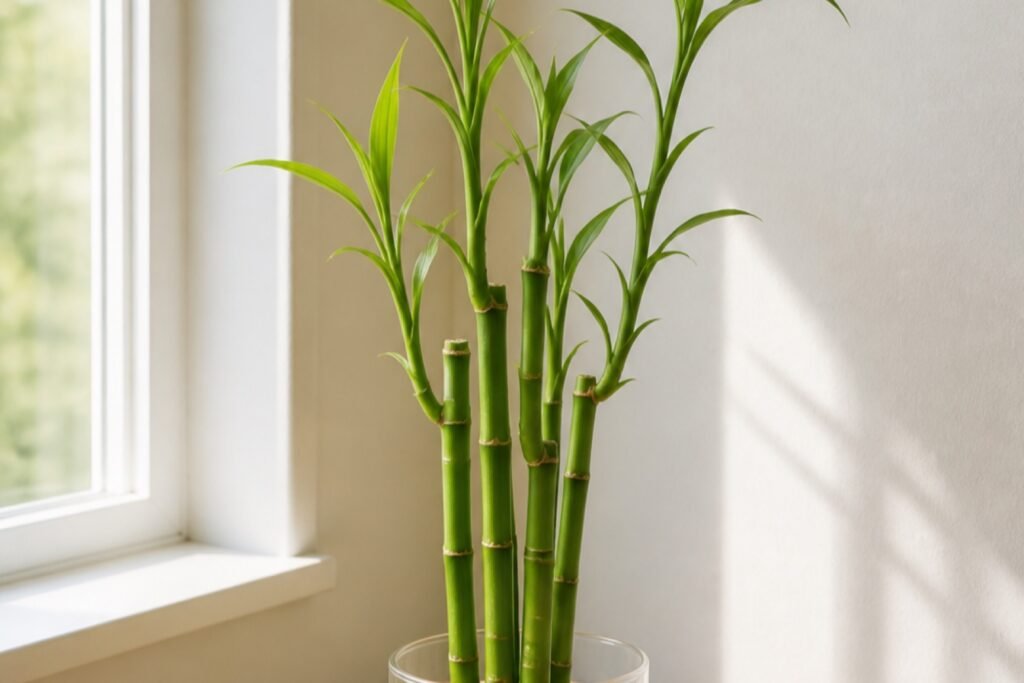
Lucky bamboo care makes more sense once the plant is treated as a dracaena rather than a miniature bamboo. Dracaena sanderiana has segmented green canes and narrow leaves, but it is a tropical foliage plant from west-central Africa. It can live in water for a surprisingly long time, yet a small pot of loose soil usually gives the roots a steadier long-term home.
Stores also sell it as ribbon dracaena or ribbon plant. Those names are not precise, so check the botanical label before following care advice. The straight, bundled, and curled forms are all the same species shaped by growers.
Lucky bamboo care snapshot
| Care point | Practical indoor target |
|---|---|
| Light | Medium to bright indirect light; gentle morning sun is usually fine |
| Water | In soil, water when the upper inch dries; in water, keep roots covered and refresh the vessel |
| Soil | Loose indoor potting mix in a pot with a drainage hole |
| Humidity | Average to moderately humid household air |
| Temperature | About 65 to 80 F, away from cold glass and vents |
| Mature indoor size | Usually 1 to 3 feet, depending on pruning and cane length |
| Growth rate | Moderate in useful light, slow in dim rooms |
| Pet safety | ASPCA lists Dracaena species as toxic to cats and dogs |
Lucky bamboo care begins with the growing method
A cane rooted in pebbles and water needs different attention from one growing in potting mix. Water culture is decorative and convenient, but it leaves the roots dependent on water quality and regular cleaning. Keep only the roots submerged. Water standing high around the cane can soften the stem and invite rot.
Change the water when it becomes cloudy, develops an odor, or leaves a slick film on the glass. Rinse the pebbles and vessel rather than topping up indefinitely. If the leaf tips turn brown while the roots remain firm, mineral-heavy tap water may be part of the problem. Filtered or rainwater can be worth trying, but first rule out dry air, fertilizer residue, and heat from a nearby vent.
In soil, wait until the upper inch feels dry, then soak the root ball and let the pot drain. Do not keep the mix permanently wet. The general method in our guide to watering indoor plants is more dependable than choosing one weekday.
Put it near useful light, not hot glass
Medium or bright indirect light keeps the leaves fuller and the new growth compact. A spot beside an east window or a few feet back from a brighter south or west window often works. Strong midday sun through glass can bleach leaves, especially on a plant that has spent months in a store.
Lucky bamboo tolerates lower light, but tolerance is not the same as active growth. Long bare gaps between leaves, pale new growth, or a cane that leans toward one side can mean the plant needs a brighter position. The low-light houseplant guide explains why a plant can stay alive in a dim room while slowly losing shape.
Move water-grown canes into soil carefully
Water roots are often fine and pale. They need time to adjust to the air spaces and changing moisture of potting mix. Choose a pot only a little wider than the root bundle, add a loose indoor mix, and spread the roots gently instead of packing them into a tight knot. Keep the mix lightly moist for the first week or two, then begin allowing the top to dry.
A permanently oversized pot creates a large wet zone around a small root system. The potting soil comparison can help with a mix that drains without becoming bone dry overnight. Repot again when roots crowd the pot or water runs around a compacted root ball, not simply because a year has passed.
Feed sparingly and prune above a node
Plants growing in potting mix need only light feeding during active growth. Use a complete houseplant fertilizer as its label directs, and reduce the amount if the plant is growing slowly. In water culture, never pour ordinary full-strength houseplant feed into a small glass vessel. Concentrated salts can injure the exposed roots.
New shoots develop from nodes below a cut. If the plant becomes tall and bare, trim a leafy side shoot just above a node on the main cane. The original cane will not grow taller from a sealed cut tip, but it may push another side shoot. Root the removed leafy section in clean water or a moist propagation medium. Our guide to propagating houseplants in water covers clean cuts and the move into potting mix.
Common lucky bamboo problems
| Symptom | Likely checks | First sensible move |
|---|---|---|
| Yellow cane | Stem rot, water covering the cane, or serious root decline | Remove the affected cane and inspect all roots before changing anything else |
| Brown leaf tips | Mineral buildup, dry air, fertilizer salts, or uneven moisture | Refresh the water or flush the soil, then watch the next leaves |
| Pale, stretched growth | Light that is too weak | Move the plant gradually closer to filtered daylight |
| Soft dark roots | Stale water or constantly saturated mix | Trim dead roots, clean the vessel, and restore oxygen around the roots |
| Sticky leaves or white clusters | Scale insects or mealybugs | Isolate the plant and confirm the pest before treatment |
Yellow tissue will not turn green again. The useful question is whether the next leaf stays healthy. If several symptoms overlap, use the houseplant problem diagnostic before adjusting light, water, and fertilizer all at once. Wipe the narrow leaves with plain water so pests and new damage remain easy to see; the leaf-cleaning guide shows a gentle method.
Pet and household safety
The ASPCA Dracaena record is genus-level rather than a species-specific test for D. sanderiana. It lists Dracaena as toxic to cats and dogs, with vomiting among the reported signs and dilated pupils also noted in cats. Keep the canes and fallen leaves out of reach. Contact a veterinarian or animal poison service if a pet chews the plant or becomes unwell. Do not use a common name such as bamboo to judge safety. Our pet-safe indoor plant guide explains that naming trap.
Frequently asked questions
Can lucky bamboo live in water forever?
It can remain in water for years when the roots stay clean and oxygenated, but water culture is less forgiving of stale water and concentrated salts. Soil often supports a larger, more stable root system.
Why is my lucky bamboo turning yellow?
A yellow leaf may follow low light, mineral buildup, or root stress. A yellow, soft cane is more serious and often means rot. Inspect the roots and water line before adding fertilizer.
Should the pebbles cover lucky bamboo roots?
Pebbles can hold the canes upright, but they should not bury soft stem tissue. Keep the roots under water and the canes above it, then clean the vessel whenever residue builds up.