
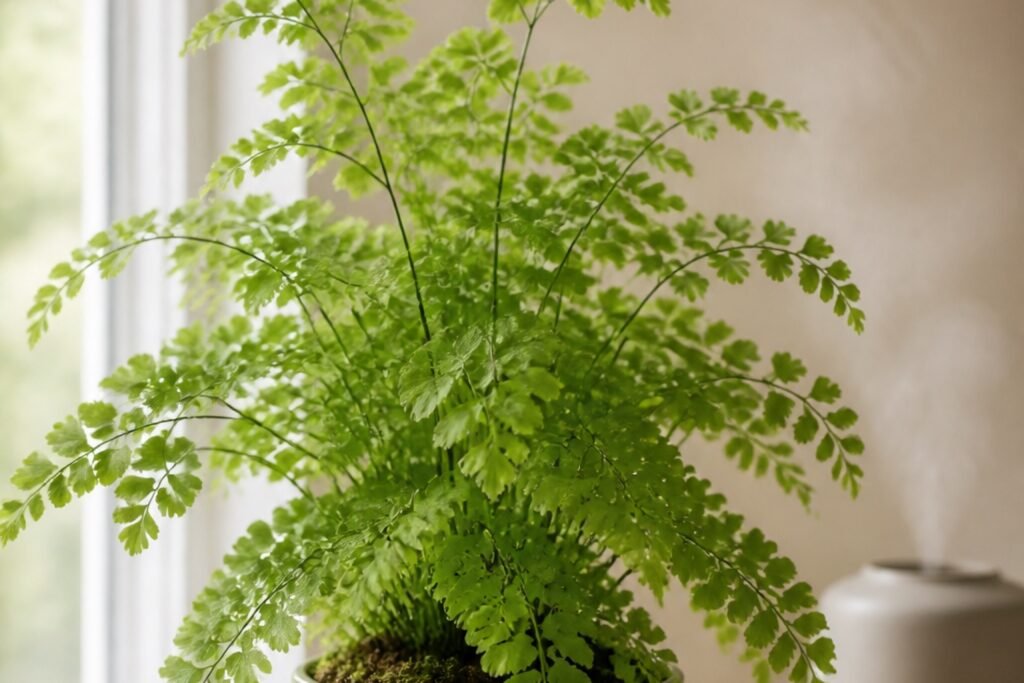
Maidenhair fern care leaves very little room for a forgotten watering. The fine leaflets lose moisture quickly, and a pot that dries to the center can turn crisp in a day or two. That sensitivity has given the fern a dramatic reputation. It is manageable when the pot, light, and humidity work together, but it is a poor choice for someone who travels often.
The indoor plant usually sold as maidenhair fern is Adiantum raddianum, also called delta or Pacific maidenhair fern. It comes from tropical parts of the Americas and the West Indies. Its thin black stems and fan-shaped leaflets distinguish it from asparagus fern and other plants that borrow the fern name.
Maidenhair fern care snapshot
| Care point | Practical indoor target |
|---|---|
| Light | Bright indirect or dappled light, without hot direct sun |
| Water | Keep the root ball evenly moist and do not let it dry completely |
| Soil | Moisture retaining but porous fern mix |
| Humidity | High, preferably around 50 percent or more |
| Temperature | About 60 to 75 F with few drafts |
| Mature indoor size | Roughly 1 to 2 feet tall and wide |
| Growth rate | Moderate when moisture is steady |
| Pet safety | No exact ASPCA listing was found for this species; prevent chewing and verify exposures with a veterinarian |
Our list of bathroom houseplants includes maidenhair fern for good reason. A bright bathroom can soften the swings in humidity that occur near a heater or air conditioner. A dark bathroom is not enough. The plant still needs light to replace old fronds.
Filter the light, but do not hide the plant
Place the fern near an east or north window, or behind a sheer curtain in a brighter exposure. Direct afternoon sun can scorch the thin leaflets. A position deep in a room may keep the fronds green for a while, but new growth becomes sparse.
Watch the newest fronds. Scorch appears as bleached or crisp sections on the side facing the window. Too little light produces weak growth and a pot that stays wet for too long. Move the fern gradually because a sudden change can create more damage than the original placement.
If natural light is poor, use a suitable grow light on a timer. Keep the fixture far enough away to avoid warming the foliage and drying the surface faster than the roots can supply water.
Moist does not mean submerged
Check the pot often, especially in warm weather. Water when the surface just begins to lose its damp feel. Apply water across the whole pot and let the excess drain. Do not wait for the fronds to collapse as a routine signal.
A dry maidenhair fern may surprise you by sending up new fronds after the damaged ones are removed. Recovery depends on living rhizomes and roots. Rehydrate the mix evenly, trim fully dead growth, and keep conditions stable. Do not compensate with daily flooding.
Persistent sogginess is also harmful. A closed decorative pot, blocked drainage hole, or compacted mix can deprive roots of air. The broader indoor watering guide explains how to check moisture and pot weight rather than blindly following a schedule.
Humidity needs a real solution
This fern often declines in winter because indoor heating dries the air. A humidifier is far more effective than misting. Grouping plants can moderate the immediate area, and a pebble tray may add a small amount of local moisture if the pot sits above the water.
Use a hygrometer to see how much the room changes. Our guide to increasing humidity for houseplants compares these methods and explains why occasional misting does not create lasting humidity.
Air still needs to move. A sealed display with wet foliage and stagnant air can encourage disease. A roomy terrarium or cabinet may work for a small fern if it has light, ventilation, and enough space around the fronds.
Keep the mix porous and the pot modest
Use a fine, organic fern mix that holds moisture but drains. A large pot full of unused wet mix is risky, so increase the container by one size when roots have filled the existing one. Plastic or glazed ceramic dries more slowly than unglazed terracotta and may suit a warm, dry apartment better.
Keep the crown at its original depth during repotting. The houseplant repotting guide covers how to loosen circling roots without tearing the whole root mass apart. Repotting a stressed, dry fern adds another shock, so restore steady moisture first unless the roots are rotting.
Feed lightly during active growth with a complete houseplant fertilizer at the label rate. Delicate roots can react to excess salts. Flush the pot occasionally with plain water if the drainage is good, and stop feeding while the plant is recovering.
Propagate by division
Division is simpler than growing the fern from spores. Separate a mature clump into a few rooted sections, keeping each crown and its rhizomes intact. Replant promptly and do not let the exposed roots dry while you work.
Spores on mature fronds are normal. They can produce new ferns through a multi-stage process, but they need clean conditions, steady moisture, and patience. It is a fine botanical experiment, not a quick household shortcut.
Common maidenhair fern problems
| Symptom | Likely checks | First sensible move |
|---|---|---|
| Fronds turn crisp rapidly | Dry root ball, hot draft, low humidity | Rehydrate evenly and correct the location |
| Yellow fronds with wet soil | Poor drainage or root decline | Check the drainage hole and root condition |
| Pale burned sections | Direct sun | Move to filtered light and watch new fronds |
| Sparse weak growth | Light too low or depleted roots | Increase indirect light and inspect the pot |
| Fine webbing or stippling | Spider mites | Isolate and inspect with a bright light |
The guide to brown leaf tips is useful when a fern is both crisp and wet, since damaged roots can imitate drought. Change one factor at a time unless root rot is obvious.
Pet safety requires an exact ID
An exact ASPCA entry for Adiantum raddianum was not located during this review. NC State Extension does not flag the species as poisonous in its plant profile, but absence from a list is not proof of safety. Prevent pets from chewing it, keep the botanical label, and contact a veterinarian or animal poison service after a concerning exposure. The pet safe plant guide explains this cautious identification process.
Frequently asked questions
Can a crispy maidenhair fern come back?
Sometimes. If the rhizomes and roots are firm and alive, trim fully dead fronds, restore even moisture, and wait. Do not fertilize until new growth is established.
Should I mist maidenhair fern every day?
No. Misting changes humidity briefly and can leave foliage wet. A humidifier and a stable watering routine do more useful work.
Can maidenhair fern grow in a terrarium?
Small plants can do well in a roomy terrarium with filtered light and ventilation. Keep fronds away from hot glass and avoid standing water in the bottom.