
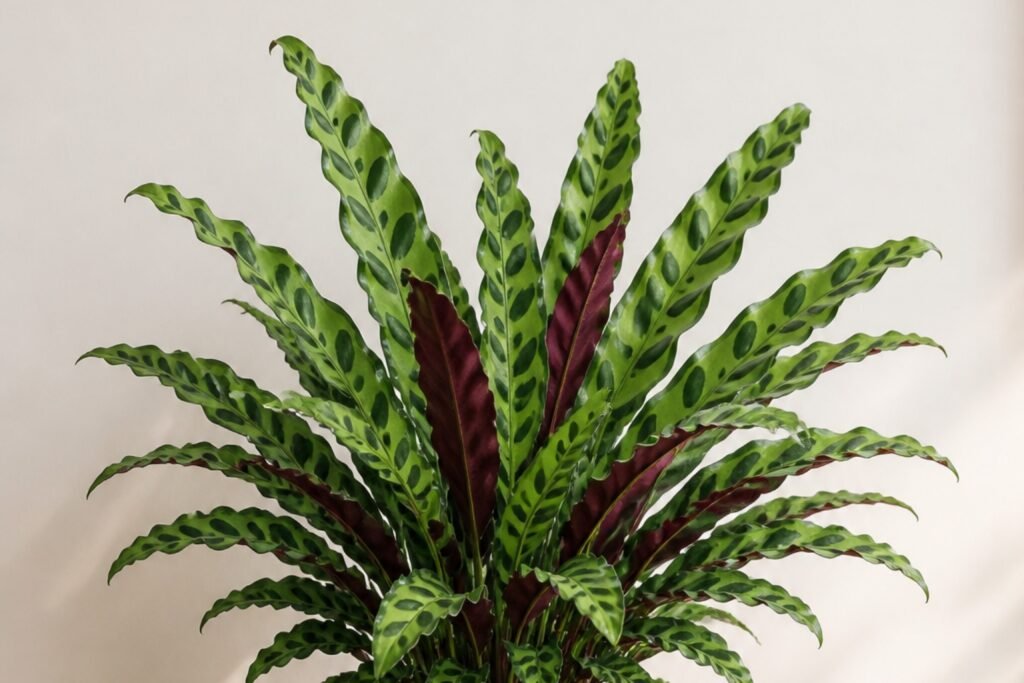
Rattlesnake plant care has a narrow comfort zone: filtered light, warm air, steady root moisture, and no stagnant water around the rhizomes. The accepted name used here is Goeppertia insignis. You will still find the plant sold as Calathea lancifolia, Calathea insignis, or rattlesnake calathea. Those labels refer to the same familiar plant with long wavy leaves, alternating dark green ovals, and purple undersides.
This Brazilian member of Marantaceae grows as a clump rather than a vine. Its foliage can rise and lower through the day. That movement is normal. Persistent curling, crisp margins, or a crown that collapses calls for a root and environment check.
Rattlesnake plant care snapshot
| Care point | Practical indoor target |
|---|---|
| Light | Medium to bright indirect light, without hot direct sun |
| Water | Water when the surface begins to dry and the pot is slightly lighter |
| Soil | Airy mix that remains lightly moist and drains fully |
| Humidity | High humidity with gentle air movement |
| Temperature | About 65 to 80 F, away from cold glass and vents |
| Indoor size | Often 18 to 30 inches tall and wide |
| Pet safety | ASPCA lists Calathea insignis as non-toxic to cats and dogs |
Keep rattlesnake plant care in filtered light
An east-facing window with softened morning sun is a good fit. A bright north window may also work. Near a south or west exposure, move the pot back or filter the strongest rays. Direct afternoon sun can bleach the pattern and leave tan, papery patches.
Weak light slows growth and keeps the root ball wet for longer. New leaves may emerge smaller and less strongly marked. Judge the plant by its newest leaves and the actual brightness at their height. Our guide to low light indoor plants explains why a room can look bright to people while still being marginal for foliage growth.
Do not press leaves against cold window glass in winter. A warm room with a sharp cold draft can still damage the thin foliage. Keep the plant away from heating vents as well; hot moving air dries leaf edges fast.
Aim for steady moisture with air
Feel the surface and lift the pot. Water when the top begins to dry and the container has lost a little weight, before the full root ball dries hard. Apply water evenly until it drains, then empty the saucer. This plant dislikes severe drought, but leaving it in runoff is not a safer alternative.
If leaves curl, check the root zone first. A light pot and dry mix support the case for watering. A heavy pot with wet mix and a soft crown points toward root trouble. Heat, low humidity, or spider mites can also curl leaves. The houseplant watering guide helps work through those overlapping clues.
Brown edges are often blamed on tap water. Mineral salts may contribute, especially if a crust appears on the mix, but dry air, hot sun, fertilizer, and repeated dry spells can look the same. Flush the pot with plain water occasionally. If local water is highly mineralized, a suitable lower-mineral source may help after the other conditions are checked.
Use a fine but airy root mix
Choose a mix that holds light moisture around fine roots while leaving air spaces after watering. A drainage hole is required. A wide pot can fit the plant's clumping habit, but move up gradually. An oversized container surrounds the rhizomes with more wet mix than they can use.
Repot when the clump crowds the pot, roots circle densely, or old mix no longer drains and rewets evenly. Keep the crown at the same depth and disturb healthy roots as little as necessary. The repotting guide covers the process, and the potting soil guide explains what to look for in a loose mix.
Rattlesnake plant generally appreciates higher humidity than the average heated apartment. A humidifier gives a measurable result. Grouping plants may help a little, though crowding makes pest inspection harder. Misting is brief and leaves foliage wet. The houseplant humidity guide compares the practical options.
Feed lightly and divide a healthy clump
During active growth, use a complete houseplant fertilizer at the lower end of the label rate. Pause when growth slows or when the roots are damaged. Excess salts can worsen leaf-edge burn, so feeding a struggling plant harder is often the wrong move.
Division is the practical propagation method. During repotting, identify a natural section with its own roots and several leaves. Separate a few substantial divisions rather than shredding the clump into weak pieces. Reset them at the same depth and keep conditions stable while new roots establish.
Inspect leaf undersides for spider mites and mealybugs. Fine stippling can disappear into the patterned surface at first glance. A new plant should follow the quarantine checklist before joining other humidity-loving plants.
Common rattlesnake plant problems
| Symptom | What to check first | First sensible move |
|---|---|---|
| Leaves curl and stay rolled | Root moisture, heat, humidity, and mites | Confirm which condition is wrong before watering |
| Brown crisp margins | Dry air, salts, direct sun, and dry spells | Correct one verified cause and trim only dead tissue |
| Yellowing at the crown | Wet mix, drainage, and root firmness | Pause watering and inspect roots and rhizomes |
| Faded leaf pattern | Too much direct sun or very weak light | Move gradually to medium filtered light |
| Fine pale speckling | Leaf undersides for spider mites | Isolate and inspect with bright light |
The houseplant problem diagnostic is useful when a curled leaf appears alongside both wet mix and dry room air. Fix the root risk first, then adjust the air around the plant.
Pet and household safety
The ASPCA lists Calathea insignis, a name used for this rattlesnake plant, as non-toxic to cats and dogs. Non-toxic does not mean edible. Chewing any plant material may still cause stomach upset, and a pesticide or fertilizer residue creates a separate hazard. Keep the pot clean and contact a veterinarian if a pet eats a large amount or becomes unwell.
Frequently asked questions
Why are rattlesnake plant leaves curling?
Curling can follow a dry root ball, damaged wet roots, hot air, low humidity, or pests. Check pot weight and moisture first, then inspect the undersides. Do not water a heavy, wet pot simply because a leaf is rolled.
Is Calathea lancifolia the same plant?
Yes. Calathea lancifolia, Calathea insignis, and Goeppertia lancifolia are older names still found on labels. This profile follows the accepted name Goeppertia insignis.
Should I cut off brown leaf edges?
You can trim dead brown tissue for appearance, following the natural leaf shape and leaving a narrow dry margin. Trimming does not solve the cause. Review humidity, salts, sun, and watering so the next leaf develops cleanly.