
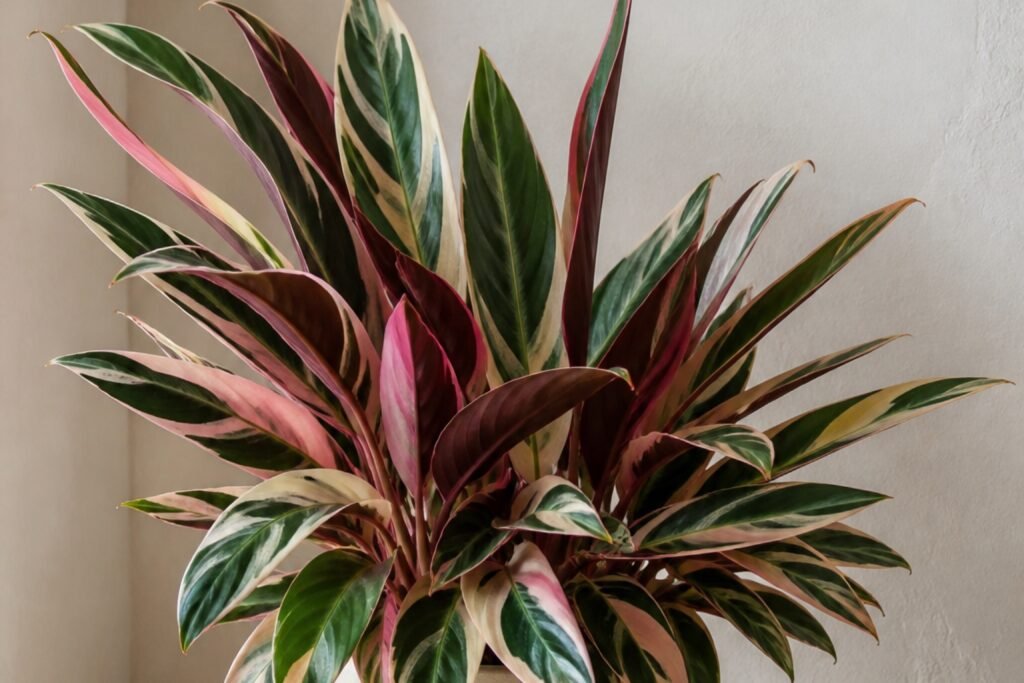
Stromanthe Triostar care gets easier once you stop treating every curled edge as a request for more water. Stromanthe thalia 'Triostar' likes a lightly moist root zone, but it also needs air around the roots. The same plant is often sold as Stromanthe sanguinea 'Triostar', Tristar, or Tricolor. Those labels usually point to the pink, cream, green, and burgundy cultivar covered here.
This plant reacts quickly to a dry room, a hot window, or a cold draft. It may look fussy because the pale sections of each leaf show damage readily. Stable conditions matter more than constant intervention.
Stromanthe Triostar care at a glance
| Care point | Practical indoor target |
|---|---|
| Light | Bright indirect light, with protection from hot midday sun |
| Water | Water when the upper inch starts to dry and the pot feels a little lighter |
| Soil | Airy, moisture-retentive mix in a pot with an open drainage hole |
| Humidity | High and steady, paired with gentle air movement |
| Temperature | About 65 to 80 F |
| Mature indoor size | Roughly 2 to 3 feet tall and 1 to 2 feet wide |
| Growth rate | Moderate when warmth and moisture stay consistent |
| Pet safety | Not independently verified for this exact cultivar and species |
Stromanthe Triostar care starts with calm, filtered light
Bright indirect light keeps the variegation distinct without cooking the cream-colored tissue. An east window, a bright north window, or a position several feet back from stronger glass often works. Watch the plant at midday. A hard beam that heats the leaves can leave pale tan patches, especially on the white areas.
Very dim light causes a different problem. New leaves may be smaller, greener, and held on stretched petioles. Move the plant in stages if it needs a brighter position. The grow light guide can help when winter window light isn't enough.
The leaves naturally rise and lower as light changes. That daily movement isn't wilting. Check leaf firmness and root moisture before reacting to a changed angle.
Let the top inch begin to dry
Push a finger into the upper inch and lift the pot. Water when that layer is beginning to dry and the container feels slightly lighter, while the lower root ball still has some moisture. Soak the mix, let the excess drain, and empty the saucer or cachepot. A fixed weekly reminder misses how much faster a warm, bright plant uses water than one sitting in a cool room.
Curling leaves on dry soil point toward thirst or dry air. Curling on wet soil calls for a root check, not another drink. The cue-based method in how often to water indoor plants is safer than trying to memorize a number of days.
Brown tips can follow uneven watering, but salts and low humidity create a similar mark. If the routine is steady and the next leaves still brown, try filtered or rainwater and flush the pot thoroughly. Change one condition at a time. Otherwise, it becomes impossible to tell what helped.
Humidity needs to be steady, not swampy
A room humidifier is more useful than occasional misting. Keep the plant away from heating vents and cold exterior doors, then leave enough space around the foliage for air to move. High humidity in stagnant air can encourage spotting.
Measure the room rather than guessing from how it feels. A consistent moderate-to-high reading is better than a brief wet burst. The practical options in how to increase humidity for houseplants explain which changes affect the whole room.
Dust dulls the patterned leaves and makes pest checks harder. Support each leaf while wiping it with a soft damp cloth. Skip oils and leaf shine because they can smear the surface and won't repair damaged tissue.
Build an airy root zone
Use a mix that holds a little moisture but breaks apart easily in your hand. A fine, heavy blend stays wet at the center. An extremely chunky mix may dry before the thin roots can use the water. The indoor potting soil comparison gives a useful starting point for adjusting drainage and moisture retention.
Choose a pot only slightly wider than the root mass. Repot when roots fill the container, the mix has collapsed, or water starts running around a dry core instead of soaking through it. Keep the crown at its old depth and follow the measured size increase in the repotting guide.
Feed lightly during active growth, following the fertilizer label. Pause after repotting or while the plant is stressed. Extra fertilizer won't restore faded variegation and may add to brown leaf edges.
Propagation is by division. Separate a natural clump with several leaves and a healthy share of roots. A tiny division with little root mass dries quickly, so don't split the plant into the smallest possible pieces.
Common Stromanthe Triostar problems
| Symptom | Likely checks | First sensible move |
|---|---|---|
| Brown, crisp edges | Dry air, uneven watering, salts, or root stress | Stabilize moisture and humidity, then judge new leaves |
| Leaves curl inward | Dry mix, hot air, cold exposure, or damaged roots | Feel the root zone before adding water |
| Faded pink and cream areas | Light is too weak or the newest leaf has not hardened | Check daily light before feeding |
| Bleached tan patches | Direct sun through glass | Move back from the window and acclimate gradually |
| Fine stippling or webbing | Spider mites | Isolate the plant and inspect leaf undersides closely |
Spider mites favor warm, dry rooms and can hide along the midrib. Confirm moving mites, eggs, or webbing before treating. The spider mite guide covers repeated checks and treatment timing.
An old damaged leaf won't turn green again. Remove it at the base only when it is mostly brown or clearly declining. Keeping a partly functional leaf is usually less stressful than stripping the plant for appearance.
Pet and household safety
No exact ASPCA or comparable veterinary record for Stromanthe thalia 'Triostar' was verified during this review. A related prayer plant or Calathea record is not proof for this cultivar. For that reason, the database marks both cat and dog safety as not verified rather than pet-safe.
Keep the pot and fallen leaves out of reach, especially if a pet chews plants. Contact a veterinarian if an animal develops symptoms after exposure. The pet-safe plant guide explains why botanical names and exact records matter.
Frequently asked questions
Why are my Stromanthe Triostar leaves curling?
First check the upper inch of mix and the temperature around the plant. Dry roots, hot air, cold drafts, and root damage can all curl a leaf. Water only when the physical cue supports it.
Can Stromanthe Triostar grow in low light?
It may survive for a while, but new growth often becomes smaller and greener. Bright filtered light gives the pink and cream sections enough energy without the burn risk of hot direct sun.
Should I cut brown tips off a Triostar leaf?
You can trim dead tissue with clean scissors, following the leaf shape and leaving a narrow brown margin. Trimming is cosmetic. Fix the moisture, humidity, or salt issue so the next leaf opens cleanly.