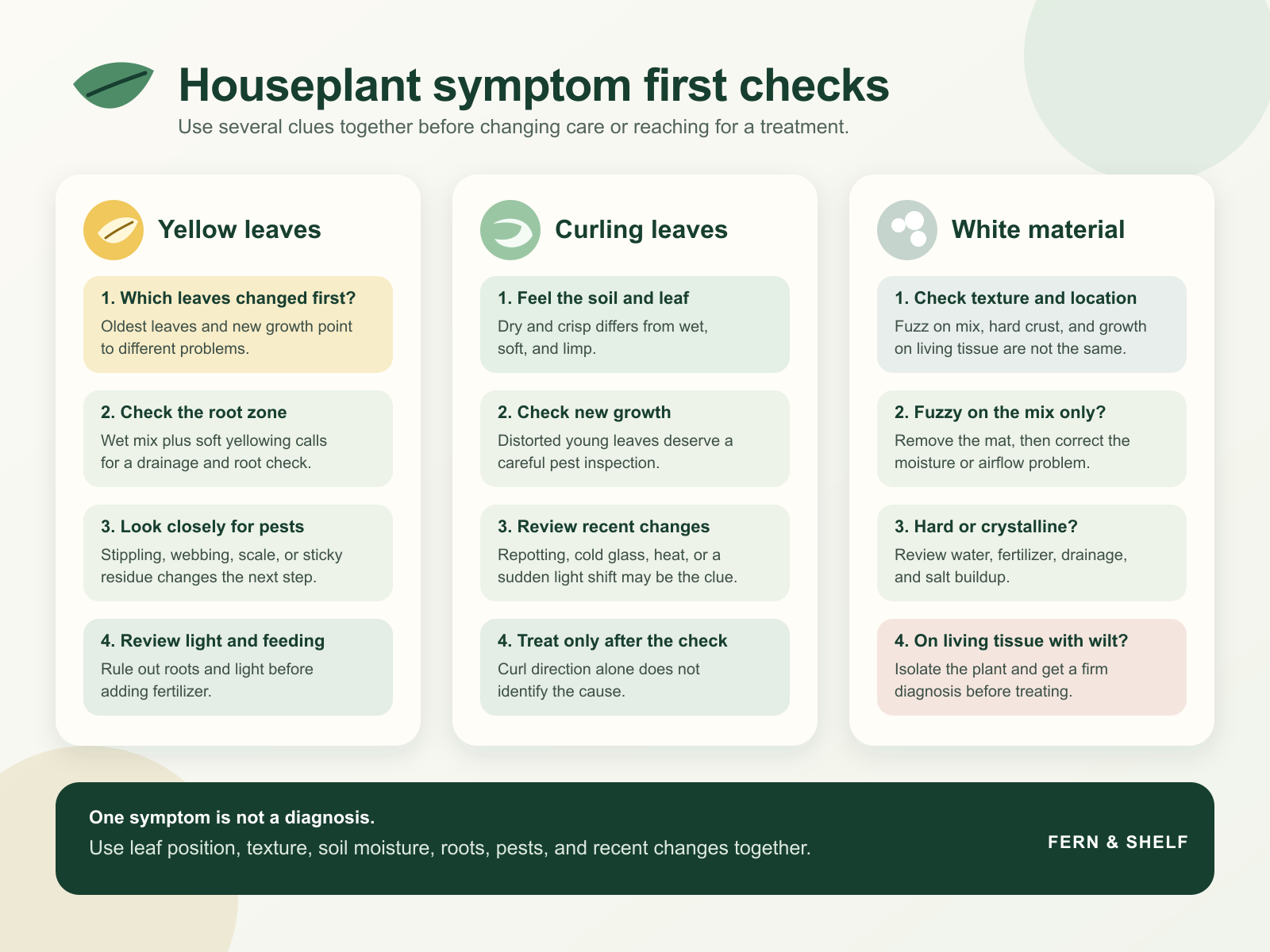
Houseplant Problem Diagnostic: 7 Checks Before You Treat
Start here: For a complete overview, see our Indoor Gardening for Absolute Beginners.
Houseplant problem diagnostic tools can narrow the suspects, but one yellow leaf cannot tell the whole story. This one compares the symptom with the potting mix, light, damage pattern, pest clues, and recent changes. You will get a short list of likely causes and a safer order for checking them.
Rule based plant triage
Houseplant problem diagnostic: check the whole pattern
Pick the closest answer for each question. If you are unsure, say so. A careful unknown is more useful than a confident guess.
How to use the result without making things worse
Start with the highest match, then look for the physical evidence named in the card. Do not water, fertilize, repot, and spray on the same afternoon. When four things change at once, you lose the clues that could have separated a dry root ball from damaged roots or a pest from sun scorch.
Take a few photos before you act. Include the whole plant, both sides of a damaged leaf, the stem at soil level, and the potting mix. Write down the last watering date and any recent move or feeding. This may feel fussy, but it gives you something real to compare in three or four days.
| Check | What to look for | What it can clarify |
|---|---|---|
| Root ball | Dry center, standing water, dense circling roots, or dark soft roots | Underwatering, poor drainage, a tight pot, or possible root decay |
| Leaf undersides | Webbing, pale stippling, cottony material, bumps, insects, or black specks | Spider mites, mealybugs, scale, whiteflies, or thrips |
| Damage pattern | Old leaves only, new growth only, one exposed side, or random spreading spots | Normal aging, root or nutrient trouble, light injury, or a possible leaf disease |
| Recent history | A move, repot, fertilizer dose, draft, heat vent, or watering change | Environmental shock, salt stress, root disturbance, or a changed moisture cycle |
What this houseplant problem diagnostic can and cannot do
The scoring is intentionally simple. Each answer adds points to causes that commonly fit that clue. Certain combinations add more weight. Wet mix plus wilting, for example, points more strongly toward oxygen starved or damaged roots than either clue alone. You can open “Why this matched” on every result card and see the exact clues used.
It cannot identify a pathogen, measure light, inspect roots, or account for every species. A calathea, cactus, fern, and citrus tree do not want the same moisture or light. Use the result as a checking order, then compare it with care guidance for the plant you own. If symptoms keep spreading after you correct the obvious condition, your local Cooperative Extension office or a plant diagnostic laboratory can examine a sample.
Frequently asked questions
Why does the tool show several causes?
Houseplant symptoms overlap. Wilting can come from a dry root ball, but damaged roots in wet mix can also leave foliage without enough water. Showing a short differential is more honest than pretending one symptom proves one cause.
Should I water a plant because its leaves are yellow?
No. Check moisture below the surface first. Yellow leaves can appear with wet roots, dry roots, low light, salt stress, pests, or normal loss of an old leaf. Watering before that check may deepen the original problem.
Is a strong match the same as a diagnosis?
No. “Strong match” means several of your answers point in the same direction inside this rule set. It is not a measured probability and it does not confirm a disease or pest species.
Can fungus gnats make houseplant leaves yellow?
Adult fungus gnats are mostly a nuisance. Their presence often tells you that organic potting mix has stayed moist. Heavy larval populations can affect roots and plant vigor, but dark flies alone do not prove they caused the leaf symptom.
When should I ask an expert to inspect the plant?
Get help when collapse is sudden, soft or water soaked spots spread quickly, several plants develop the same unexplained symptom, or the plant keeps declining after the basic growing condition has been corrected. A local Extension office can tell you whether its diagnostic lab accepts houseplant samples.
Sources and further reading
The rules and safety notes were checked against university Extension and integrated pest management guidance. These sources describe symptom overlap, root checks, environmental problems, and recognizable pest signs.