
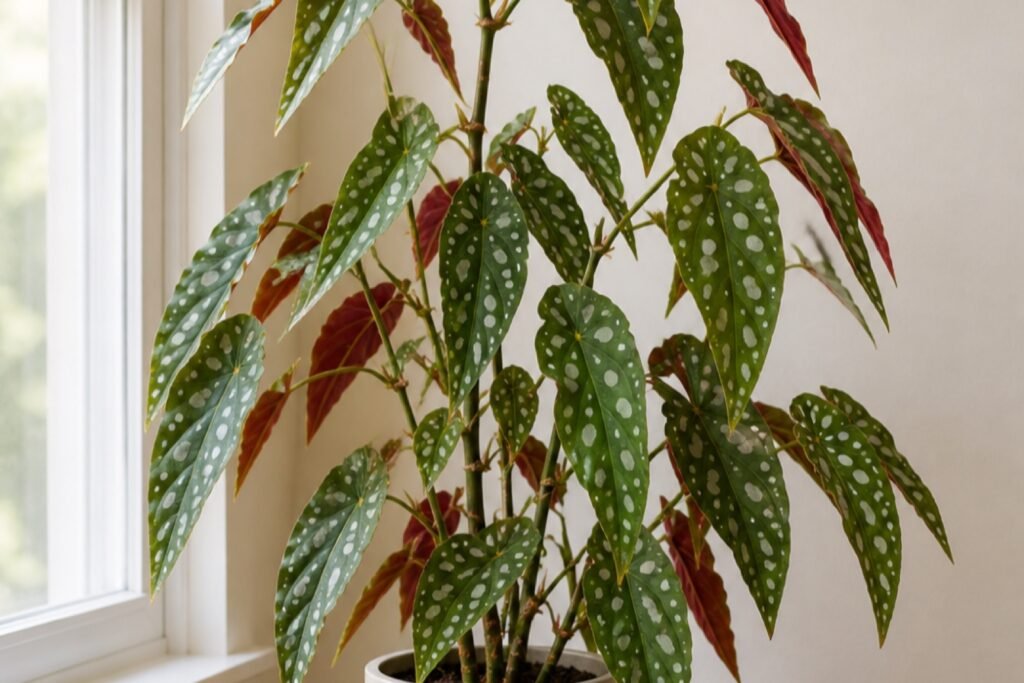
Begonia maculata care starts with identifying the right spotted plant. Begonia maculata is a cane Begonia with asymmetric angel-wing leaves, silver-white dots on top, and burgundy color underneath. It is not the low, pink-speckled Hypoestes sold as Polka Dot Plant. The cane form needs bright filtered light, careful watering, and pruning before it becomes top-heavy.
Retail plants may be cane Begonia hybrids under the same nickname. A reliable botanical label and the red-backed dotted leaves keep this profile species-specific.
Begonia maculata care at a glance
| Care point | Practical indoor target |
|---|---|
| Light | Bright indirect light with gentle morning sun |
| Water | Water when the upper inch dries, then drain fully |
| Soil | Airy moisture-holding mix in a modest draining pot |
| Humidity | Moderate humidity with room for leaves to dry |
| Temperature | About 65 to 80 F |
| Mature indoor size | Commonly 2 to 4 feet tall and 1 to 2 feet wide |
| Growth rate | Moderate to fast during warm active growth |
| Pet safety | ASPCA lists Begonia species as toxic to cats and dogs |
Begonia maculata care needs bright filtered light
An east window is often a good fit. Near stronger south or west glass, filter midday sun or move the plant back. Direct heat can bleach the dots and leave dry patches, while weak light stretches the canes and reduces leaf size.
Rotate the pot gently as new growth leans. A mature cane can become heavy on one side, so use a simple support before the stem bends. If the gaps between leaves are widening, follow the checks in why a plant gets leggy before cutting. Pruning without better light produces the same thin replacement growth.
Clean leaves with a soft damp cloth instead of routine misting. The silver spots are natural; a dull film or powdery residue is not. Leave air space between the foliage and wall.
Water the root ball and keep the crown dry
Feel the upper inch of potting mix and lift the container. When that layer is dry and the pot is lighter, water slowly until excess runs out. Empty the saucer. Avoid daily sips that wet only one section of the root ball.
Begonias have fine roots and fleshy stems. Constant wetness can soften both, yet a complete dry-out crisps the broad leaves. The physical cues in how often to water indoor plants are more reliable than a calendar.
If the plant droops while the mix is damp, check the root and cane bases before watering. A firm cane and dry upper layer suggest a normal need for water. A dark soft base on wet soil points to rot.
Use a small airy pot and repot gently
Choose a pot only a little wider than the roots, with a clear drainage hole. A loose mix should hold moisture without packing around the fine roots. The potting soil comparison gives useful texture tests.
Repot when roots circle densely, the mix has collapsed, or the plant dries much faster despite a thorough watering. Keep the cane at its old depth and do not bury soft stem tissue. The measured approach in the repotting guide reduces the wet-soil risk of an oversized container.
Feed lightly during active growth, following the product label. Pause after repotting or during a cool winter slowdown. Salt buildup can burn fine roots and show up as brown leaf margins.
Prune above a node for branching
Cut a tall cane just above a healthy node during active growth. Buds below the cut can branch, making the plant steadier and fuller. Do not remove every tall stem at once; the remaining leaves still power root recovery.
Stem cuttings root from nodes in water or a clean moist medium. Remove any leaf that would sit below the surface. A large leaf can be trimmed to reduce water loss, but a short healthy cane section is more useful than a leaf without a node. The water propagation guide covers clean vessels and the move into soil.
Leaf cuttings may produce plants in some Begonias, but cane cuttings preserve this growth habit more predictably. Label cuttings so Polka Dot Plant and Polka Dot Begonia do not get mixed later.
Common Begonia maculata problems
| Symptom | Likely checks | First sensible move |
|---|---|---|
| Brown crisp edges | Dry root ball, dry air, or salt buildup | Stabilize moisture and flush the mix if drainage is sound |
| Yellow soft leaves | Saturated mix or root decline | Let the surface dry and inspect the fine roots |
| Long weak canes | Light that is too weak | Move gradually brighter, then prune above a node |
| White powdery patches | Powdery mildew or residue | Improve air movement and confirm the pattern before treatment |
| White cottony clusters | Mealybugs | Inspect nodes, petioles, and cane supports |
Crowded leaves and damp stagnant air favor disease. Remove fallen tissue and avoid keeping the foliage wet overnight. For cottony insects, use the repeated inspection plan in our mealybug guide.
Pet and household safety
The ASPCA Begonia record is genus-level, not an exact B. maculata test. It lists Begonia as toxic to cats and dogs and notes that the underground parts contain the highest concentration of toxic material. Chewing can cause oral irritation and vomiting. Keep the pot, dropped leaves, and propagation pieces away from pets and children. Contact a veterinarian if exposure causes symptoms. Our pet-safe indoor plant guide explains why genus-level evidence should remain explicit.
Frequently asked questions
Why is my Begonia maculata dropping leaves?
Check cold drafts, abrupt relocation, wet roots, and a severe dry spell. Stabilize the plant in bright filtered light and inspect the root zone before changing fertilizer.
How do I make Begonia maculata bushier?
Give it useful light, then cut a healthy cane just above a node. New branches may grow below the cut. Root the removed top as a backup plant.
Should I mist Begonia maculata leaves?
No routine misting is needed. It changes humidity only briefly and can leave the foliage wet. A room humidifier plus air movement is more useful when the air is very dry.