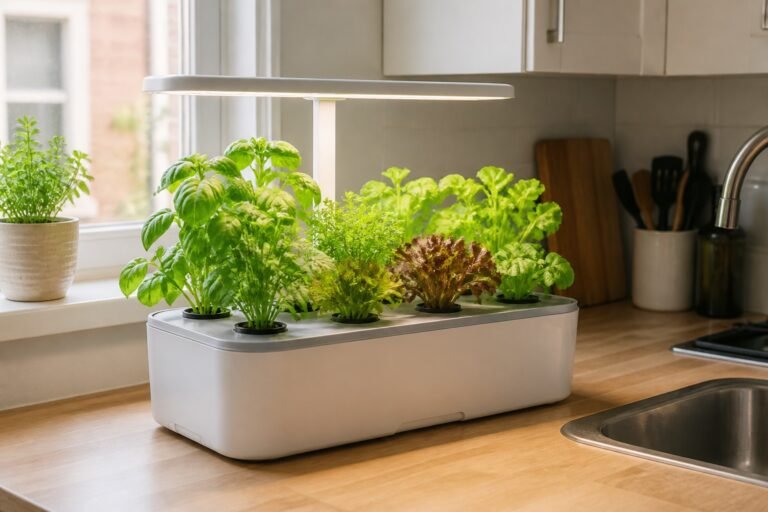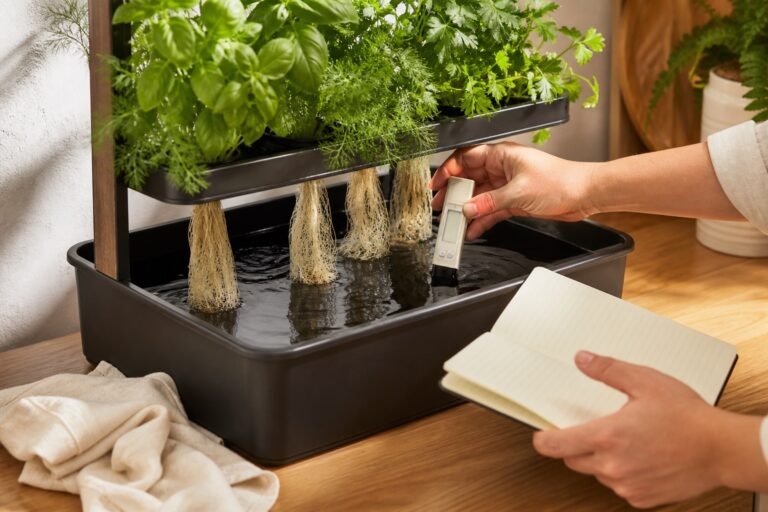
How to Clean a Hydroponic System: 7 Easy Steps
Last updated: July 21, 2026.
Affiliate disclosure: As an Amazon Associate I earn from qualifying purchases. Links marked “paid link” may earn Fern & Shelf a commission at no extra cost to you. Read our full Affiliate Disclosure.
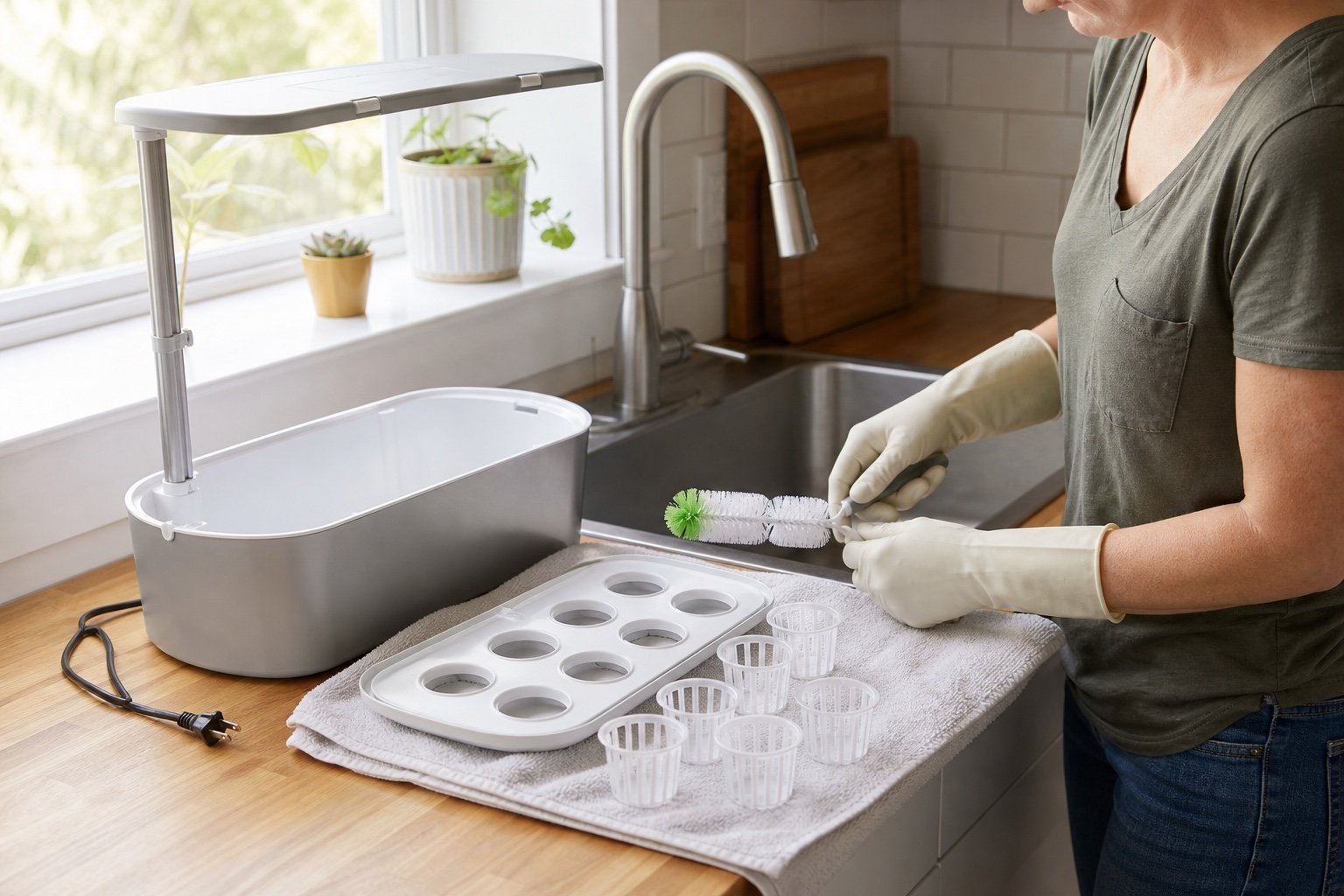
How to clean a hydroponic system safely comes down to a rather unglamorous order: empty it, remove the plant mess, wash, rinse, sanitize, and rinse again when directed. Jumping straight to bleach is the shortcut that causes most of the confusion. Sanitizer has a harder job when roots, algae, and dried nutrients still cling to the plastic.
For a countertop garden, this covers the reservoir, deck, pump, tubing, baskets, and filter. A passive system may have fewer parts. Check the manual before soaking anything, and keep every electrical part dry. This guide is for use between crops, not around living plants.
How to clean a hydroponic system at a glance
- Harvest or remove the old plants, then unplug the garden.
- Drain the nutrient solution and pull out loose roots and leaves.
- Separate the removable water contact parts listed in the manual.
- Scrub those parts with warm water, dish soap, and a soft brush.
- Rinse away soap and loosened residue with potable water.
- Sanitize the empty system according to its manual and the sanitizer label.
- Complete any required rinse, dry the parts, reassemble, and test the water flow.
Once that order feels familiar, model differences are easier to handle. The sequence matters more than fancy products. The guide to hydroponics versus soil indoors explains the wider difference in upkeep.
Cleaning and sanitizing are two different jobs
Cleaning removes roots, slime, mineral residue, dirt, and other material from a surface. Soap, water, and a little scrubbing do that work. Sanitizing comes afterward and reduces microorganisms on the clean surface. The US Environmental Protection Agency treats those as separate processes, not two names for the same bottle.
Much of the bad advice about how to clean a hydroponic system collapses those jobs into one. University of Minnesota Extension notes that biofilm can develop on hard system surfaces and may harbor bacteria. Sanitizer circulated through a reservoir full of roots and slick film can miss sheltered spots. Start with the mess. A narrow brush often does more useful work than a longer soak.
Gather a small cleaning kit
You don’t need a shelf of chemicals. Set out dish soap, a soft sponge, a bottle brush, narrow tubing brushes, clean towels, and a container for loose roots. Add gloves and eye protection if the sanitizer label calls for them. Keep any measuring tool out of food use afterward.
Search Amazon for a hydroponic tubing brush set (paid link)
Use a soft tool on plastic. Rough pads may scratch it and give residue another place to collect. A wider bottle brush works well on reservoirs and grow decks.
Search Amazon for non scratch reservoir brushes (paid link)
Keep the system manual open. Consumer gardens differ in pump design, removable parts, dishwasher tolerance, and approved sanitizers. Advice suited to a plain reservoir may ruin a gasket or sensor.
How to clean a hydroponic system in 7 steps
1. Harvest, unplug, and make room
Cut the power first. Remove the crop, supports, and anything clipped to the deck. Unplug the pump and light. Move a detachable light away from the sink, and put a towel beneath the unit before lifting it. Roots hold plenty of water. Put them in household trash or compost when the plant was healthy, not down the drain.
2. Drain the old solution and remove debris
Drain the nutrient solution as the product instructions and local rules allow. Don’t tip a unit with fixed electronics unless its manual shows that method. Pull roots away from the pump intake, filter, water level float, and tubing entrances. Remove fallen leaves and pieces of grow sponge too. Expose the washable surfaces before adding soap.
People shopping for their first unit often focus on lights and pod count, but access to the tank and pump matters every few months. The beginner hydroponic system guide covers that broader buying decision.
3. Take apart only what is meant to come apart
Remove the deck, baskets, pump cover, filter, tubing, and level parts only when the manual identifies them as removable. Take a phone photo before disconnecting similar tubes. It saves guessing later.
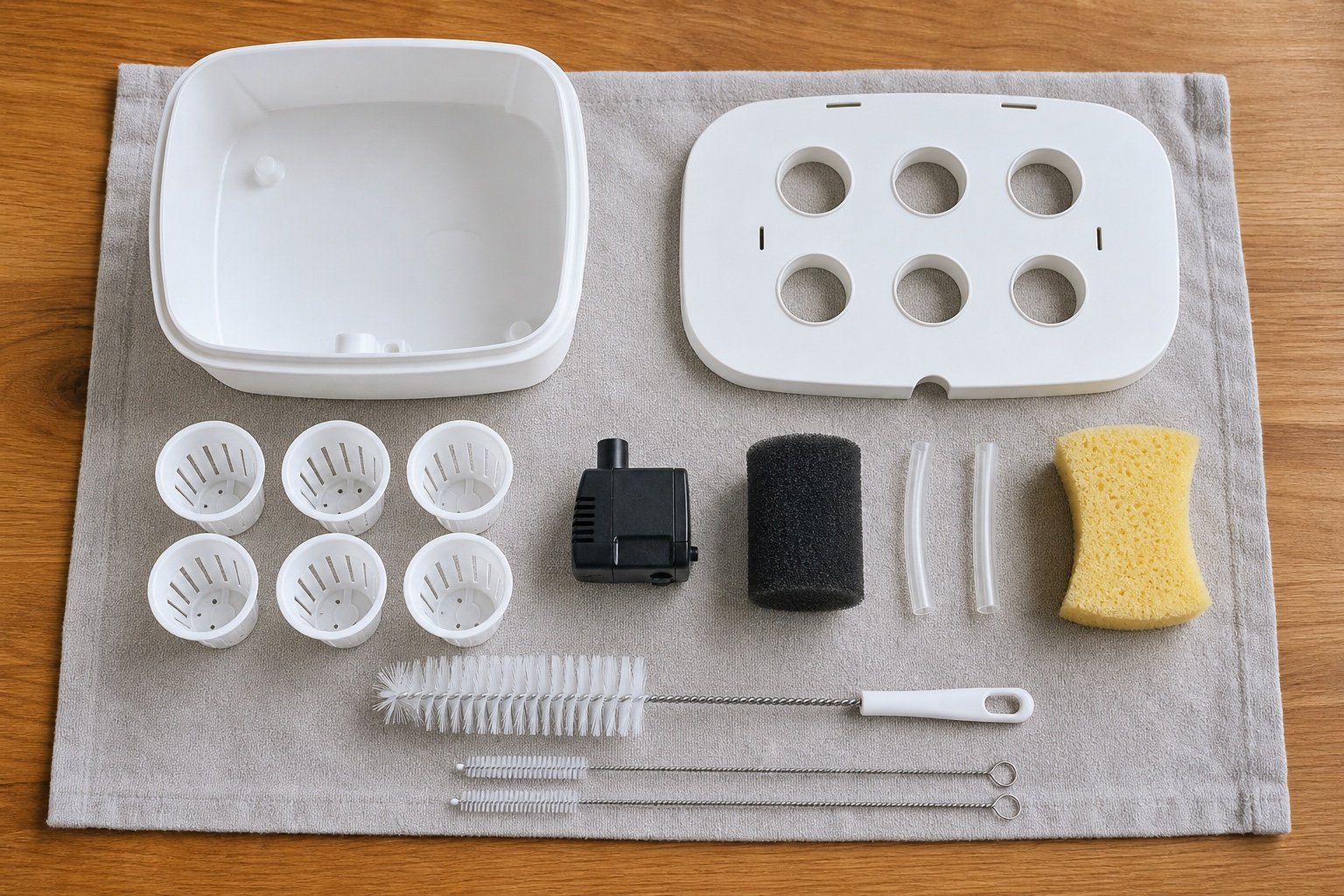
Keep electrical pieces out of the wash pile. Never submerge controls, cords, plugs, or a base with fixed electronics. Removable doesn’t mean dishwasher safe. Use a dishwasher only when the manufacturer names the permitted part, rack, cycle, and drying setting.
4. Wash with warm soapy water
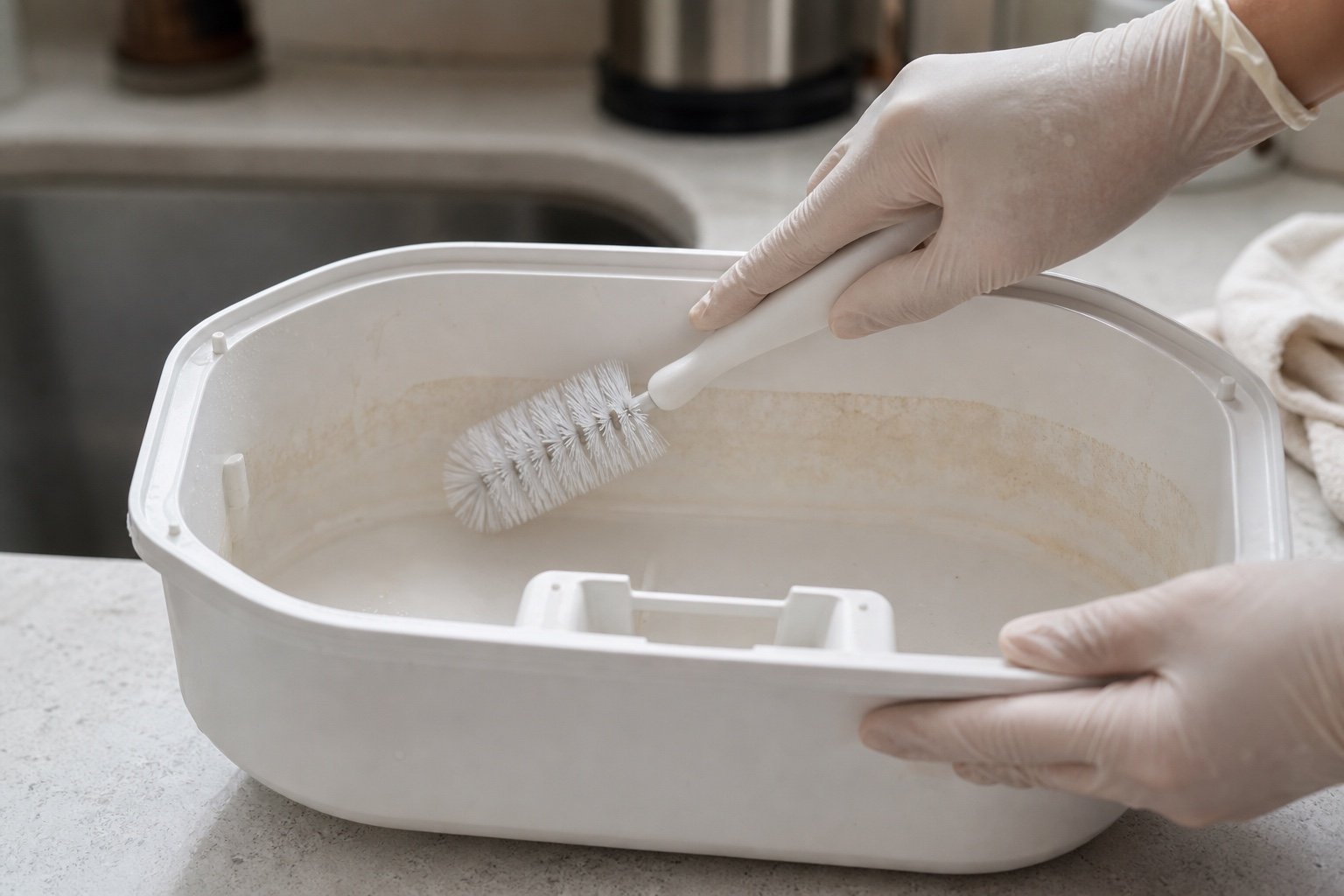
Scrub the reservoir, deck underside, baskets, pump exterior, and other washable pieces with warm water and dish soap. Work around corners, seams, pod openings, and the waterline. Brush tubing from both ends without forcing a tool around a sharp bend. Clean the pump intake and removable cover, but open the housing only when the manual explains how.
University of Minnesota Extension recommends this warm soapy wash before sanitation. It removes the material that would otherwise shield the surface below.
5. Rinse the soap away
Rinse every washed surface with potable water, including tubing and the ribs beneath the deck. Soap left behind can foam when the pump restarts. A stain is not always dirt, but a slick patch needs more brushing. Cracked tubing, a brittle seal, or a damaged cable needs replacement or support, not a stronger soak.
6. Sanitize by the manual and label
Any guide to how to clean a hydroponic system should slow down here. Start with the exact model instructions. If the manufacturer specifies a cleanser, dilution, circulation time, or rinse, use those directions. For a generic system, choose a sanitizer labeled for the intended food contact surface and material. The label controls the dose, contact time, and rinse.
University of Minnesota Extension describes a 150 to 200 ppm chlorine treatment for an empty hydroponic system. Its tablespoon example assumes unscented bleach containing 5.25 to 6 percent sodium hypochlorite. That concentration detail cannot be dropped. The Centers for Disease Control and Prevention says regular household bleach may contain 5 to 9 percent sodium hypochlorite, so the same spoonful of a stronger product makes a stronger solution.
Don’t copy a volume based bleach recipe unless the bottle concentration matches. Follow the label or calculate for the stated concentration. Test strips can confirm the intended ppm range, but they don’t replace the label or make an incompatible product safe for the machine.
Search Amazon for 0 to 200 ppm chlorine sanitizer test strips (paid link)
Never mix bleach with vinegar, ammonia, dish soap, hydrogen peroxide, acids, or any other cleaner. Dangerous fumes or reactions can result. Ventilate the room, wear the protection named on the label, and keep children and pets away. Drain and rinse away soap or descaler before a separate sanitation step.
Keep live plants out of the system during bleach sanitation. University of Minnesota Extension advises against using bleach during a crop because residue that is not properly rinsed can damage plants.
7. Rinse when directed, dry, and test
Some products require a potable water rinse. Others are specifically labeled as no rinse at the stated concentration. Follow that distinction. When bleach has circulated through a consumer garden, complete its manual’s clear water rinse before replanting.
Air dry removable parts on a clean towel, reassemble the system, and run it with plain water to check flow, leaks, noise, and trapped debris. Drain the test water if the manual requires fresh water for planting.
Give each part the attention it needs
The job gets easier when you stop treating the system as one large object. Smooth plastic, narrow tubing, a pump intake, and a porous sponge do not clean the same way.
Reservoir and grow deck
The reservoir collects film at the waterline and in molded corners. The deck catches roots underneath and splashes around pod holes. Wash both sides. Cover unused openings where the design permits it, since less light reaches the water.
Pump and filter
Roots around the intake restrict flow. Remove them gently, wash the pump exterior, and service the filter as directed. If the pump still rattles, switch it off and inspect again.
Tubing and narrow channels
Flush loose material, then brush any tube wide enough to clean safely. Replace tubing that stays blocked, cracked, or slimy after a proper wash.
Baskets, collars, and grow sponges
Wash and sanitize hard reusable baskets when the manual allows it. Replace porous sponges, wicks, and pods sold for one cycle unless their maker provides a reuse method. Trapped roots make a used sponge much harder to clean than a smooth basket.
If you are comparing how different countertop designs handle pods, pumps, and refills, see the Click & Grow, AeroGarden, and LetPot comparison or the current list of AeroGarden alternatives.
Algae, slime, and white crust need different responses
If you are learning how to clean a hydroponic system because of algae, deal with the light as well as the green film. Scrub it away, clear the pump and channels, then check for an uncovered reservoir or empty pod hole. Oklahoma State University Extension recommends covering hydroponic tanks to reduce light at the solution surface.
Slime needs physical scrubbing before sanitation, even when it is colorless. White or tan crust is more likely mineral or nutrient residue. Some manufacturers permit vinegar as a descaler for specific plastic parts. Use it only when the manual allows, as a separate cleaning step. Vinegar isn’t a universal sanitizer.
And the warning deserves repeating: never combine vinegar and bleach. Do not add one after the other without draining and thoroughly rinsing the system.
What to do while a crop is still growing
Deep cleaning waits until the system is empty. During a crop, remove leaves, keep roots clear of the pump intake, wipe splashes, and follow the reservoir schedule. If the water smells wrong or roots show disease symptoms, diagnose the problem before adding anything. A harsh treatment may cost the crop.
Automated gardens still need this basic attention. The discussion of whether smart indoor gardens are worth it explains where automation helps and where the owner still has work to do. For a smaller kitchen setup, the indoor herb garden kit guide offers another useful comparison.
Cleaning mistakes that cause new problems
- Sanitizing over visible residue leaves protected pockets beneath the mess. Wash first.
- A random bleach recipe can be too weak or too strong because bottle concentrations differ. Read the percentage and label.
- Mixing cleaners can release dangerous fumes. Use one method at a time and rinse between separate steps.
- Submerging a control panel or fixed electrical base can ruin the unit and create a shock hazard.
- Rough pads can scratch plastic. Reach for a soft brush before more force.
- A quick reservoir wipe misses the pump intake, underside of the deck, tubing, and water level parts.
- Bleach around live roots may injure the crop. Reserve sanitation for an empty system unless the manufacturer explicitly directs otherwise.
- Replanting before the required rinse can leave unwanted residue in the next nutrient solution.
Frequently asked questions
How often should I clean a hydroponic system?
Clean and sanitize the water contact parts between crops. During growth, remove debris and follow the manual’s reservoir and pump schedule. Visible algae, blocked flow, or an odor calls for earlier attention.
Can I clean a hydroponic system with vinegar?
Vinegar may help with mineral scale when the manufacturer permits it. It isn’t automatically a sanitizer and must never be mixed with bleach. Drain and rinse before a separate sanitation step.
Can I use hydrogen peroxide?
Use a peroxide based sanitizer only when its label covers the intended food contact surface and system materials. Follow the dose, contact time, protection, and rinse directions. Bottle strength alone is not a complete instruction set.
Should I run the pump during sanitizing?
Run it only when the manual or an appropriate procedure directs circulation. The pump must be compatible with the product and concentration. Never run it dry.
Can I clean the garden without removing the plants?
You can remove leaves, clear an intake, and wipe spills during growth. A full wash and sanitation requires an empty system. University of Minnesota Extension doesn’t recommend bleach during a crop because an incomplete rinse may harm plants.
Is a countertop garden dishwasher safe?
Maybe, but only for approved removable parts. Heat can warp plastic, and electronics stay out entirely.
Why does algae return so quickly?
Light and nutrient rich water allow algae to return. Check the lid, unused pod holes, and clear tubing. Keep light away from the solution where the design allows, and use the correct nutrient dose.
Related guides and tools
Start the next crop with a genuinely clean system
The safest answer to how to clean a hydroponic system is not a stronger chemical. It is a dependable order: remove debris, wash, rinse, sanitize according to the manual and label, then complete the required rinse before replanting.
That routine handles the reservoir, deck, pump, and tubing without treating every garden as the same machine. It also makes the next round easier. Roots are gone, flow is visible, and fresh nutrient solution is not sharing space with the remains of the last crop.
New to the rest of indoor plant care? Indoor gardening for absolute beginners is a sensible place to continue.