How to Grow Lettuce Indoors: 8 Easy Steps
Last updated: August 23, 2026.
Affiliate disclosure: As an Amazon Associate I earn from qualifying purchases. Links marked “paid link” may earn Fern & Shelf a commission at no extra cost to you. Read our full Affiliate Disclosure.
Start here: For a complete overview, see our How to Grow Herbs Indoors Without Sunlight.
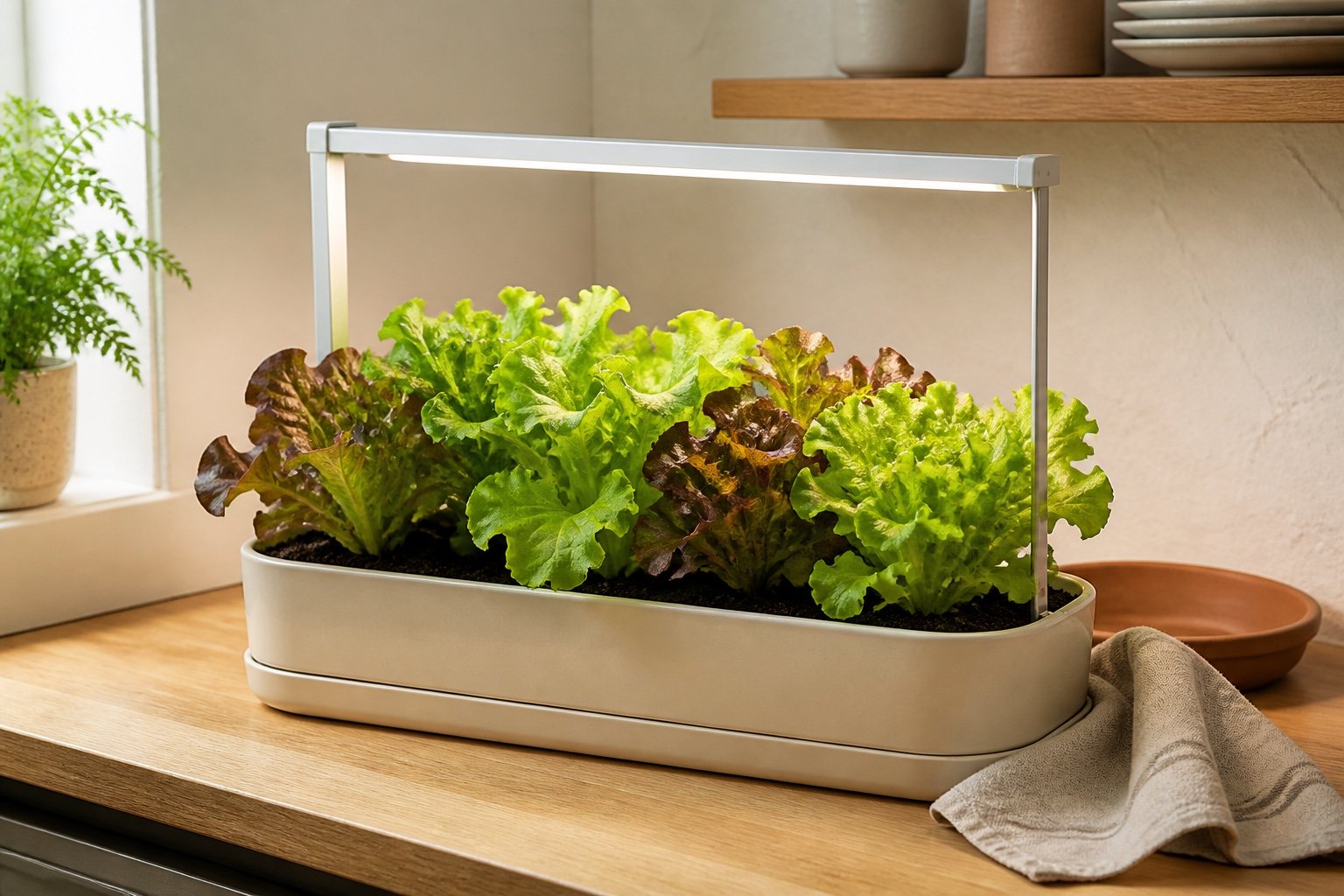
Learning how to grow lettuce indoors is mostly a matter of getting four things right: a loose potting mix, steady moisture, enough light, and a room that does not run hot. Lettuce grows quickly, has shallow roots, and does not need pollination. Those traits make it one of the more realistic food crops for a shelf or kitchen counter.
There is one catch. A dim windowsill can sprout lettuce without producing a worthwhile bowl of leaves. This guide follows a soil based crop from seed to harvest. It does not cover hydroponic reservoirs or pod systems, which need a different nutrient and sanitation routine.
The quick indoor lettuce setup
| Choice | Practical starting point | Why it matters |
|---|---|---|
| Lettuce type | Loose leaf, baby leaf, or compact butterhead | You can harvest leaves without waiting for a large, tight head |
| Container | A clean pot or planter with drainage, about 4 to 6 inches deep | Lettuce roots stay fairly shallow, but they still need air and room |
| Mix | Fresh, soilless container mix | Garden soil can compact in a pot and drain poorly |
| Light | Bright window plus a white or balanced grow light when needed | Weak light produces thin, floppy seedlings |
| Temperature | A comfortably cool room, away from heaters | Heat can make leaves bitter and encourage early flowering |
| Water | Moist throughout the active root zone, never waterlogged | Repeated drying slows growth; saturation cuts oxygen around roots |
| Harvest | Outer leaves or a cut above the crown | The correct cut can leave the center growing for another harvest |
These are starting points rather than a universal recipe. A small clay pot beside a sunny window dries faster than a broad plastic planter under an LED. Check the plants and mix instead of watering by weekday.
How to grow lettuce indoors in eight easy steps
1. Pick a lettuce that suits indoor harvesting
Loose leaf lettuce is the forgiving choice. It lets you take a few outer leaves or grow a dense patch for baby greens. Compact butterhead can work too, though it needs more space for each plant. Large crisphead types ask for more room and tighter temperature control, so they are a frustrating first indoor crop.
Read the seed packet before buying. Look for loose leaf, baby leaf, compact, or container friendly language, then note the days to harvest. That number is an estimate under good conditions, not an appointment. Indoor light, temperature, crowding, and harvest size can all move it.
Illinois Extension’s lettuce guide separates leaf, romaine, butterhead, and crisphead types and gives different spacing for each. That distinction matters indoors. A planter that holds several baby leaf plants may support only one or two lettuces grown toward full size.
Search Amazon for loose leaf lettuce seeds for containers (paid link)
2. Use a shallow container with working drainage
A broad planter uses shelf space better than several narrow pots. Four to six inches of mix is enough for a baby leaf crop, while larger individual lettuces benefit from more soil volume. Whatever shape you choose, the container needs open drainage holes and a waterproof tray.
Do not put gravel in the bottom and expect it to repair a sealed pot. Water still needs a route out. Fill the container with fresh potting mix made for containers, not soil dug from a yard. Our guides to choosing indoor plant pots and making a loose potting mix explain why pore space matters in a container.
Penn State Extension recommends drainage holes and moist, not waterlogged, media for container vegetables. If a new mix holds a puddle or remains heavy for days, stop and use the potting soil drainage checklist before sowing.
Search Amazon for a shallow planter with drainage and a tray (paid link)
3. Moisten the mix, sow lightly, and label the crop
Pre moisten the mix until it feels evenly damp but does not drip when squeezed. This keeps tiny seeds from floating into corners during the first watering. Smooth the surface without pressing it into a hard slab.
Sow according to the packet. Lettuce seed is small and normally receives only a light covering. Illinois Extension’s indoor lettuce activity uses about one eighth inch of cover and emphasizes good seed contact with moist mix. A label with the variety and sowing date is worth adding, especially if several trays share one shelf.
For baby leaves, sow evenly rather than dropping a thick mound in the middle. For full plants, sow a little more than you need and thin after true leaves appear. Crowding may look productive for the first week, then light and air fail to reach the center.
4. Keep germinating seed damp, then remove the cover
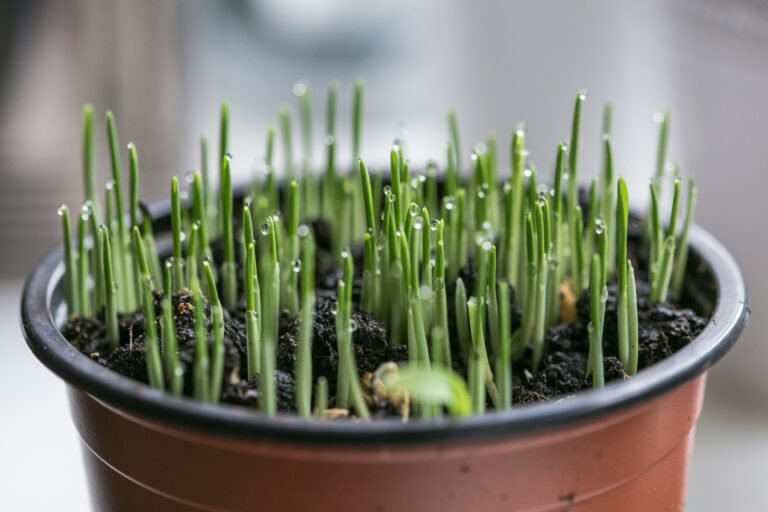
The top layer must stay damp while seed absorbs water and germinates. A clear cover can slow evaporation, but it should not remain sealed after shoots appear. Open or remove it promptly so air reaches the seedlings and the surface does not stay swampy.
Water gently. A hard stream can uncover seed, flatten new stems, and make channels through the mix. A fine spray works during emergence; later, switch to a small watering can that wets the root zone more evenly.
Do not leave the container standing in runoff. Empty the tray after the mix has drained. Constantly wet conditions invite weak roots and algae, while repeated hard drying can stop a fast crop in its tracks.
5. Put useful light close to the leaves
Window light changes with the season, glass, trees, and nearby buildings. A bright looking room can still be dim at leaf level. Watch the seedlings. Long stems that lean toward one side, pale leaves, or plants that fall over are practical signs that the usable light is weak.
A white or balanced LED over the whole tray gives a more even crop. University of Minnesota Extension recommends blue or mixed light for leafy greens and explains that fixture distance affects intensity. Start with the lamp manufacturer’s placement instructions, then keep the top of the crop evenly spaced below it. Raise the light as the lettuce grows.
Use a timer so the plants get a dependable light period and a dark rest. The exact setting depends on fixture output and natural light. Our separate guides cover grow light duration, distance from a grow light, and PPFD and DLI without pretending wattage alone tells the whole story.
Search Amazon for a white LED grow light with a timer (paid link)
6. Thin seedlings before the tray becomes a thicket
Wait until you can tell which seedlings are sturdy, then cut extras at the mix line with clean scissors. Pulling can disturb the roots you mean to keep. Use the packet’s final spacing when you want mature plants. Baby leaf crops can stay closer, but every seedling still needs some light and air.
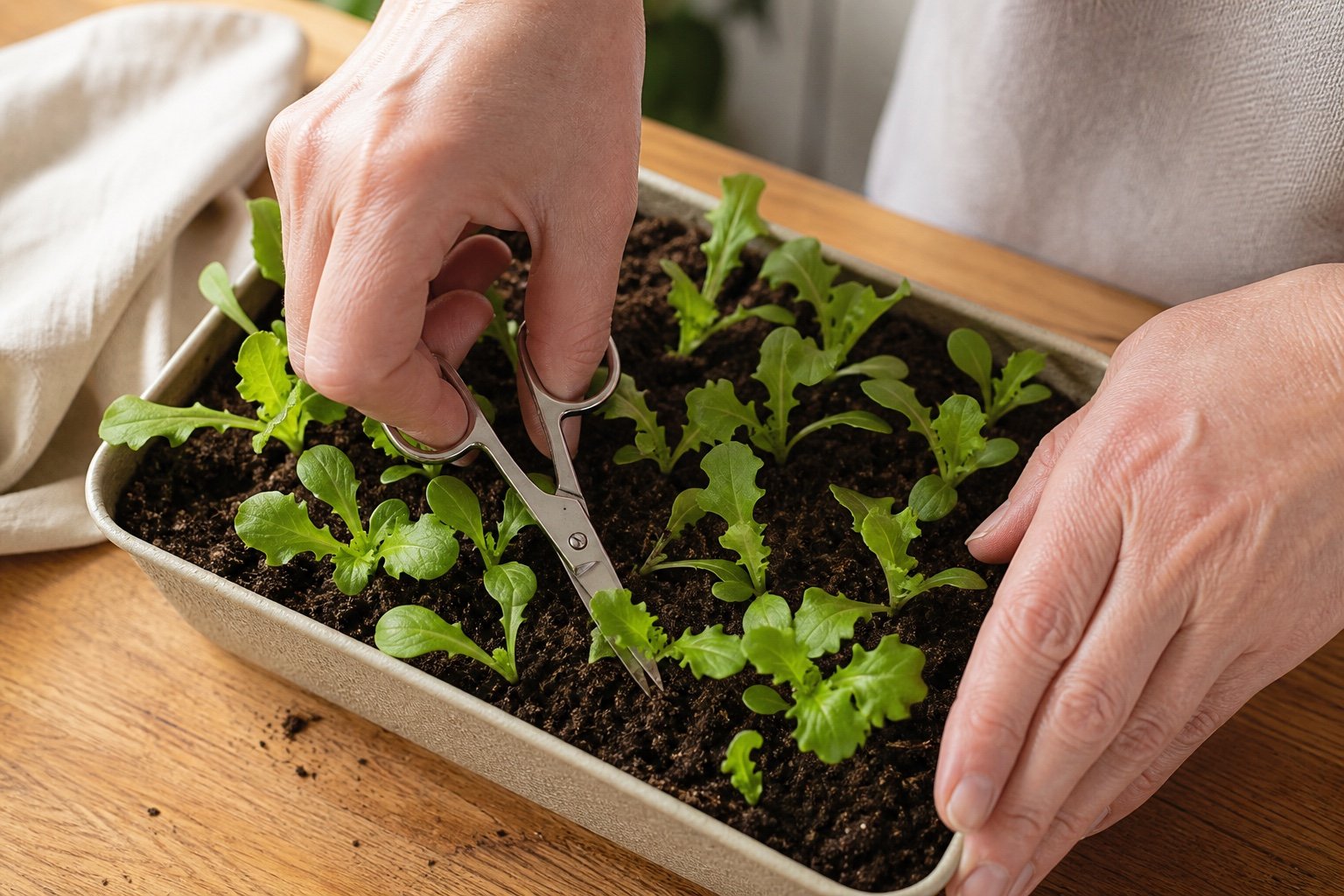
Crowded lettuce often stays damp around the base and stretches upward. It also makes inspection difficult. Thin in stages if removing most of the tray at once feels wasteful. The smallest edible thinnings can be rinsed and used immediately if they are clean, healthy, and grown with inputs labeled for edible crops.
7. Keep moisture steady and feed with restraint
Feel the mix just below the surface and notice the container’s weight. Water when the upper layer begins to lose moisture, before the root zone becomes dry and the leaves wilt. Apply water across the planter, let excess drain, and empty the tray.
Lettuce has shallow roots. Illinois Extension notes that shallow rooting makes moisture management important. There is no honest fixed interval for an indoor planter because foliage size, heat, light, pot material, and airflow keep changing. The broader indoor watering guide explains how to replace a calendar with repeatable checks.
Fresh mixes sometimes contain starter fertilizer. Read the bag before adding anything. If the mix has none, use a complete fertilizer labeled for edible container crops at the label rate. If it already contains fertilizer, wait for the stated feeding window. Pale, stretched lettuce under a weak lamp does not need a stronger dose. It needs more light.
8. Harvest without cutting out the crown
For a loose leaf plant, remove clean outer leaves near the base while leaving the center intact. For a baby leaf patch, gather the leaves and cut above the crown so the growing point remains. A clean cut reduces crushing, though regrowth depends on the variety, plant health, and how much tissue you leave.
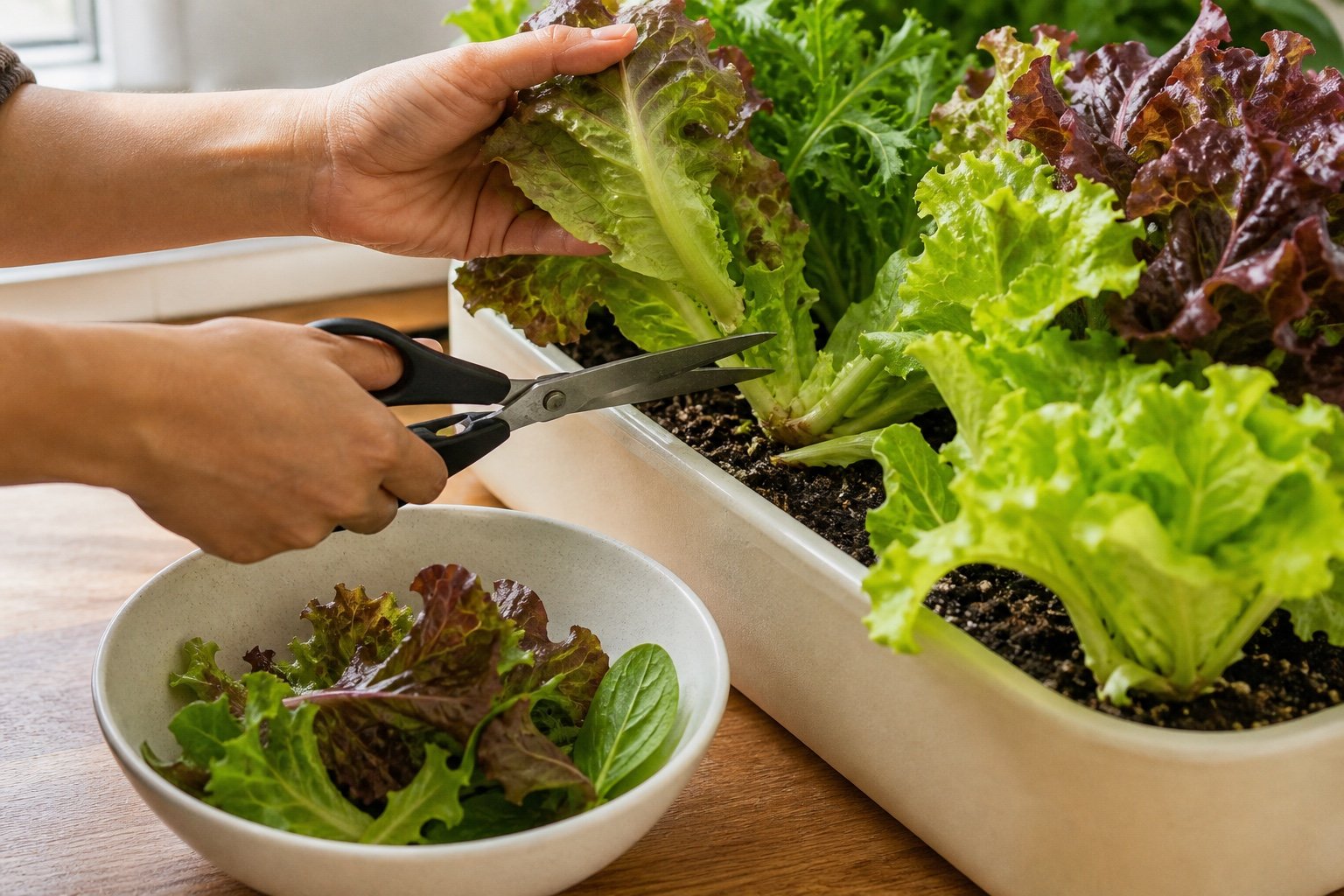
Harvest before leaves become oversized, tough, or bitter. Wash hands and tools first. Rinse the leaves under clean running water, dry them, and refrigerate promptly. Discard slimy, moldy, or badly damaged leaves rather than trimming around obvious decay.
Resow a small section every couple of weeks if you want a steadier supply. Succession sowing is more dependable than asking one aging tray to produce forever.
What indoor lettuce symptoms usually mean
| Symptom | Common possibilities | First check |
|---|---|---|
| Long stems and pale leaves | Light is too weak or too far away | Measure fixture distance and inspect light coverage |
| Brown, crisp edges | Root zone dried hard, excess salts, or hot dry air | Check mix moisture, feeding history, and heat sources |
| Soft lower leaves and a heavy pot | Saturated mix or blocked drainage | Empty the tray and inspect the drainage holes |
| Tiny leaves despite healthy color | Crowding, limited root room, or modest light | Thin plants and compare growth beneath the center and edges of the lamp |
| Bitter leaves or a rising center stalk | Warm conditions, age, or bolting | Harvest promptly and restart in a cooler position |
| Green film on the mix | Wet surface plus light exposure | Improve watering practice, spacing, and airflow |
| Chewed or stippled leaves | An insect problem | Isolate the tray and inspect both leaf surfaces before treating |
Do not diagnose by one mark. A dry edge and a wet pot can occur together when roots are damaged and no longer move water well. Check the whole setup before changing fertilizer or applying a spray.
Frequently asked questions
Can lettuce grow indoors without a grow light?
It can grow in a genuinely bright window, especially during a sunny season. Many homes do not provide enough even light for a dense tray, though. If seedlings stretch or the crop leans, add a lamp rather than moving the planter around every day. Illinois Extension recommends supplemental lighting when a window cannot provide sufficient bright light.
How deep should a container be for indoor lettuce?
A 4 to 6 inch depth is a practical start for baby leaf and loose leaf lettuce. A larger plant benefits from more mix and spacing. Drainage and width matter too. A deep pot that stays saturated is worse than a shallower planter with an airy mix and open holes.
How long does indoor lettuce take to grow?
Use the seed packet’s harvest estimate as a reference, then judge actual leaf size and quality. Baby leaves come sooner than full heads. Weak light, crowding, cool germination, or repeated drying can extend the timeline.
Can I regrow lettuce from a grocery store base?
A cut base may push a few leaves in water, but it is not the same as raising a healthy full crop from seed. The stored base has limited reserves and no balanced root environment. Sow fresh seed when you want a repeatable harvest.
Why is my indoor lettuce falling over?
Weak light is the first suspect, particularly when stems are long and pale. Crowding, a hard water stream, damping off, or roots in saturated mix can also make seedlings collapse. Inspect the stem at the soil line and review light and moisture before taking action.
Can I reuse the potting mix after harvest?
Healthy, clean mix may be refreshed for another leafy crop, but it no longer has the same structure or nutrient charge. Do not reuse mix from a crop with root disease, pests, or a persistent sour smell. Remove old roots, assess drainage, and follow the potting soil reuse guide before sowing again.
Keep the crop simple
The most reliable indoor lettuce setup is modest: one loose leaf variety, a draining tray, a balanced lamp, and a repeatable moisture check. Thin earlier than feels necessary. Harvest while leaves are tender, then sow again before the first tray runs out.
That routine produces less drama than chasing a perfect head of iceberg on a kitchen counter. It also produces more usable salad.
Sources and further reading
Sources were checked August 12, 2026.
- University of Illinois Extension: How to Grow Lettuce Indoors
- University of Illinois Extension: Lettuce
- University of Illinois Extension: Grow Herbs and Lettuce Indoors This Winter
- University of Minnesota Extension: Lighting for Indoor Plants and Starting Seeds
- University of Minnesota Extension: Starting Seeds Indoors
- Penn State Extension: Container Vegetable Gardening, Four Keys to Success