Best Pots for Indoor Plants: 7 Reliable Types for 2026
Last updated: July 19, 2026.
Affiliate disclosure: As an Amazon Associate I earn from qualifying purchases. Links marked “paid link” may earn Fern & Shelf a commission at no extra cost to you. Read our full Affiliate Disclosure.
Start here: For a complete overview, see our Indoor Gardening for Absolute Beginners.
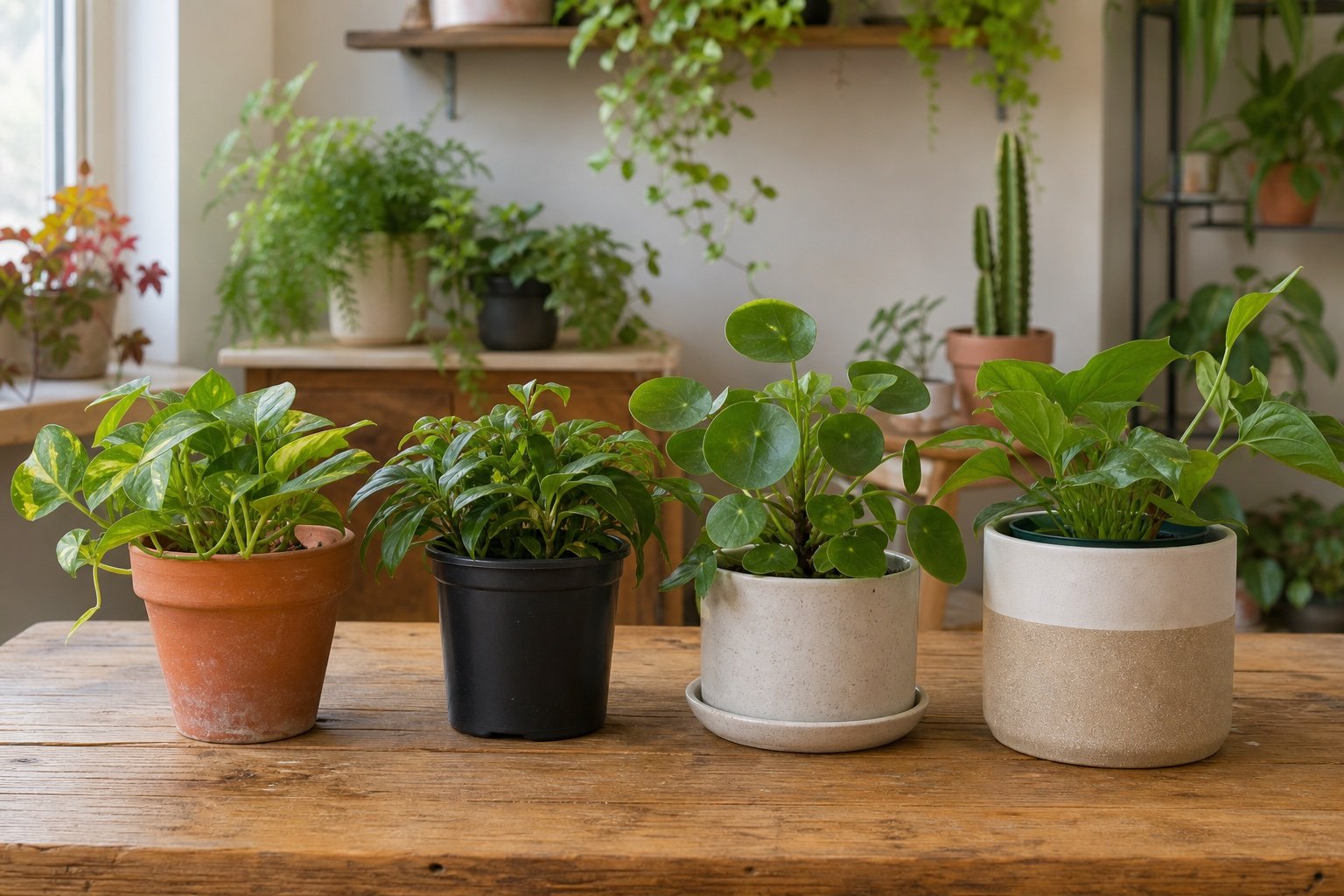
The best pots for indoor plants have a working drainage route, enough room for the roots, and a material that suits the way you water. For most houseplants, the best starting point is almost comically plain: a plastic nursery pot with open holes. Slip it inside a decorative cachepot if you want a cleaner look. Terracotta makes sense when the mix needs to dry faster, while glazed ceramic or plastic gives moisture-loving plants a little more time between waterings.
Looks still matter. A pot lives in the room with you, after all. But a beautiful container becomes a nuisance when it traps water, tips over, or holds three times more wet mix than the root ball can use.
This guide looks at seven pot types. Brand names are beside the point. Fern & Shelf has not run a controlled pot trial, so the recommendations come from current university Extension guidance and the practical tradeoffs created by size, porosity, weight, and drainage.
Best pots for indoor plants at a glance
| Pot type | Best fit | How the mix behaves | Main drawback |
|---|---|---|---|
| Plastic nursery pot | Most everyday foliage plants | Holds moisture longer than unglazed clay | Light pots can tip, and thin plastic may split |
| Unglazed terracotta | Succulents, cacti, and generous waterers | Loses moisture through the porous walls | Dries faster, collects mineral deposits, and breaks easily |
| Glazed ceramic with drainage | Decorative tabletop plants | Holds moisture more like plastic | Heavy and often sold with a small or blocked hole |
| Nursery pot inside a cachepot | Anyone who wants style and easy drainage control | Depends on the removable inner pot | Standing water can hide in the outer pot |
| Self-watering pot | Plants that prefer steadier moisture | A reservoir supplies water through a wick or insert | Poor fit for plants that need a pronounced dry period |
| Slotted orchid pot | Epiphytic orchids in bark-based media | Large openings increase airflow and speed drying | Bark can spill, and ordinary potting mix dries unevenly |
| Heavy floor planter with an inner liner | Large, top-heavy plants | Depends on the liner and mix | Hard to move and easy to leave sitting in runoff |
What matters more than the logo on the pot
Start any comparison of the best pots for indoor plants with drainage. Iowa State University Extension puts it first when evaluating a container. Size comes next indoors because a pot that is far too large can leave a small root system surrounded by wet mix. Material changes the drying rate, but it cannot rescue a container with trapped runoff.
Five questions cover most buying decisions:
- Does excess water have a clear way out?
- Is the pot only modestly larger than the current root ball?
- Will the material dry at a pace that suits the plant and your habits?
- Is the pot stable enough for the plant at mature size?
- Can you water it without damaging the shelf or leaving hidden water below the roots?
Color and shape come after those. That order sounds boring until the first time you lift a cachepot and find a cold inch of forgotten water at the bottom.
1. Plastic nursery pots: the useful default
Thin black or colored nursery pots don’t often win a design contest, yet they solve the basic job well. They are light, inexpensive, easy to lift for a root check, and usually have several drainage openings. Flexible sides also make it easier to release a root ball without pulling on the stems.
Plastic is nonporous, so moisture leaves mainly through the surface and drainage holes rather than the side walls. That gives pothos, peace lilies, philodendrons, and many other foliage plants more time between waterings than unglazed terracotta would. It also means a large plastic pot can stay wet longer than expected in a cool or dim room.
Before buying a multipack, squeeze one pot gently. A small flexible pot is fine, but a larger one should support wet mix without buckling. Confirm that the drainage openings are already punched through. Some decorative nursery-style pots arrive with removable plugs still in place.
Search Amazon for plastic nursery pots with drainage and saucers (paid link)
2. Unglazed terracotta: useful when drying speed matters
Unglazed clay is porous. Water can move through the pot wall and evaporate, so the same mix generally dries faster in terracotta than in plastic or glazed ceramic. Penn State Extension describes that porosity as an advantage or a drawback depending on the plant and the person watering it.
Terracotta often suits cacti, succulents, and plants kept by someone who tends to water early. It doesn’t make overwatering impossible. A large clay pot full of dense mix can still remain saturated around the roots, especially in weak light.
Expect to water more often. White mineral deposits may collect on the outside, and a dry new pot can pull moisture from fresh mix. Soaking a new porous pot before repotting helps with that first watering. The material also chips and cracks more readily than plastic.
Search Amazon for terracotta pots with drainage holes and saucers (paid link)
3. Glazed ceramic with drainage: decoration without a hidden reservoir
A glazed ceramic pot can sit directly on a shelf and still provide a real drainage hole and saucer. The glaze makes the walls far less porous than raw terracotta, so treat its drying behavior more like plastic. That can work well for ferns, peace lilies, and tropical foliage that dislike an abrupt dry-out.
Inspect the bottom rather than trusting the product name. A tiny hole partly blocked by glaze may drain slowly. A flat pot can also seal against a flat saucer, leaving almost no gap for water to escape. Small feet, a ridged saucer, or a raised drainage channel prevents that seal.
Ceramic adds useful weight to a plant that leans. The charm fades when a twelve-inch planter full of damp mix needs to reach the sink. Picture that job before buying.
Search Amazon for ceramic plant pots with a drainage hole and removable saucer (paid link)
4. A nursery pot inside a cachepot: the easiest style compromise
A cachepot is a decorative outer container, often made without drainage holes. The plant stays in a slightly smaller nursery pot that lifts out. This arrangement gives you the appearance of ceramic, metal, basketry, or stone without planting directly into a sealed bowl.
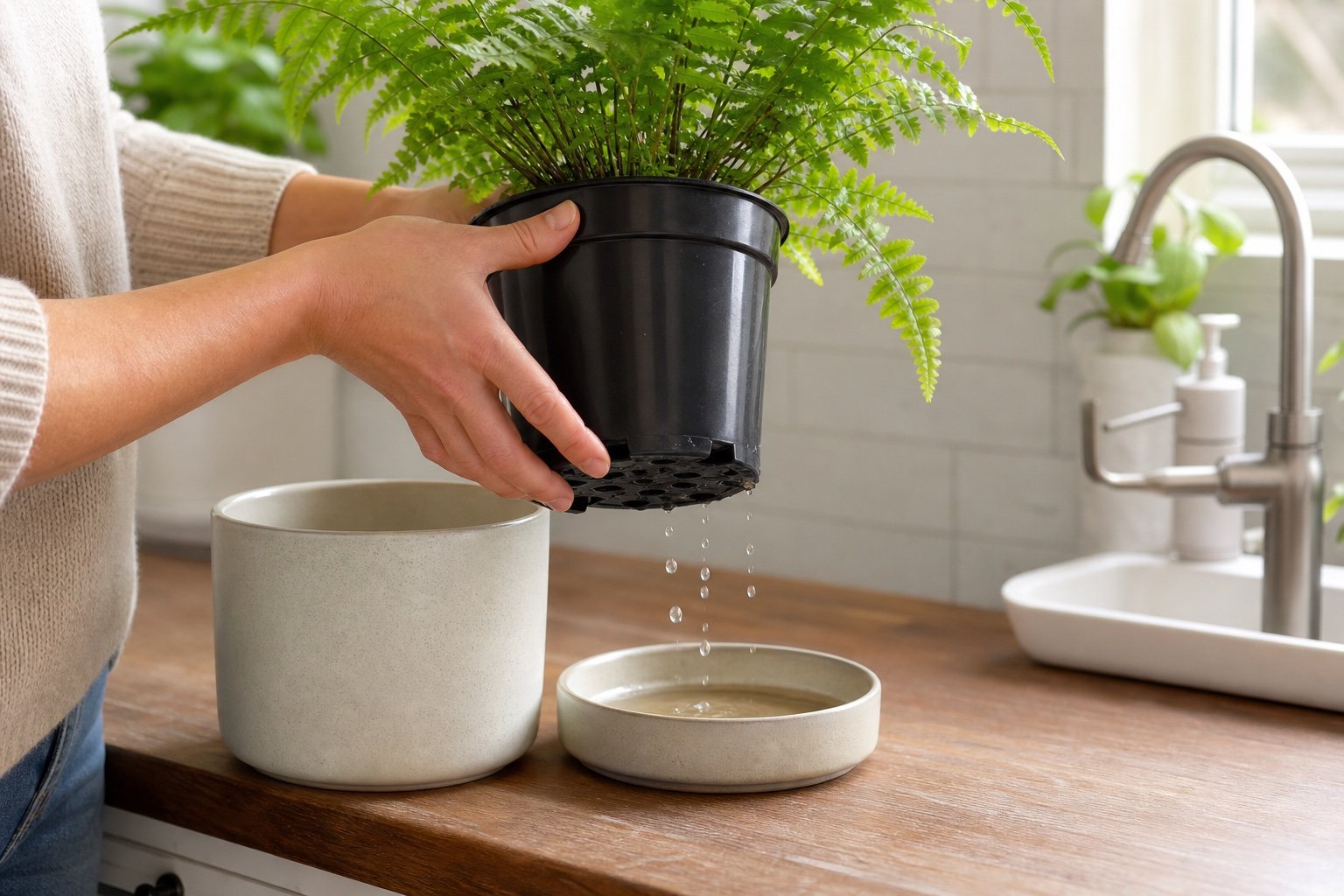
Water the inner pot over a sink or tray. Let it drain, check the bottom of the outer pot, and return the plant only after the runoff has stopped. If you prefer watering in place, lift the inner pot afterward and empty every bit of collected water. A spacer or inverted saucer can keep the drainage holes above the cachepot floor, but it does not remove the need to empty runoff.
This setup is especially useful for renters and small apartments because one decorative pot can hide an ordinary nursery container. The plant-corner guide covers placement and furniture protection without turning the pot itself into a drainage experiment.
5. Self-watering pots: a specialist tool, not an automatic upgrade
Self-watering containers store water in a separate reservoir and move it toward the root zone through a wick, column of mix, or porous insert. They can reduce sharp swings between wet and dry for plants that prefer more even moisture. They are also convenient when a pot is awkward to reach.
The reservoir doesn’t know what the plant needs. Some designs need top watering while a newly repotted root ball settles into the wicking system. A cactus or succulent may also need a longer dry interval than the reservoir provides. Algae, mineral residue, and old roots can accumulate when the reservoir never gets cleaned.
Use the fill indicator and instructions for that design, then check the mix rather than refilling by habit. If travel is the main concern, the separate guide to self-watering planters for travelers compares that category in more detail.
6. Slotted orchid pots: extra openings for chunky media
Epiphytic orchids usually grow in bark or another coarse medium with large air spaces. Their pots often have side slots, raised bases, or open basket-like walls so water can leave and air can reach the root zone. Clear plastic versions also make it easier to see roots and moisture inside the pot.
That design isn’t a universal improvement. Fine all-purpose potting mix can wash through large slots or dry patchily. A slotted pot also needs a tray or outer pot that doesn’t block its openings. Use it for the plant and medium it was designed around.
Iowa State Extension’s orchid guide lists clear plastic, net pots, wooden baskets, terracotta, and glazed ceramic as workable options when drainage matches the medium. The separate Fern & Shelf comparison of indoor potting mixes explains why orchid bark is not ordinary houseplant soil.
Search Amazon for clear slotted orchid pots (paid link)
7. Heavy floor planters with removable liners: stability for large plants
A tall monstera, rubber plant, dracaena, or indoor tree can become top-heavy long before it needs a huge root volume. A heavier outer planter adds stability, while a removable plastic liner keeps the watering job manageable. This is usually safer than filling an enormous stone or ceramic vessel from top to bottom with potting mix.
The liner still needs drainage, and the outer planter needs to be checked for water. Choose a liner you can lift or siphon safely. For a very large setup, a wheeled caddy rated for the filled weight may be more useful than a fashionable stand.
Do not add a deep layer of filler and assume the remaining shallow pocket will behave like a normal pot. Container height, media texture, and drainage interact in ways that are easy to misjudge. Iowa State’s explanation of potting media and container shape is a useful reminder that the wettest zone usually remains at the bottom of the media.
Choose the pot size from the root ball
The number printed on the pot matters less than the root ball inside it. When a plant genuinely needs more space, move up one size rather than jumping from a six-inch nursery pot to a twelve-inch decorative planter. University of Minnesota Extension recommends one size larger, while Clemson gives a typical increase of one or two inches in diameter for common houseplants.
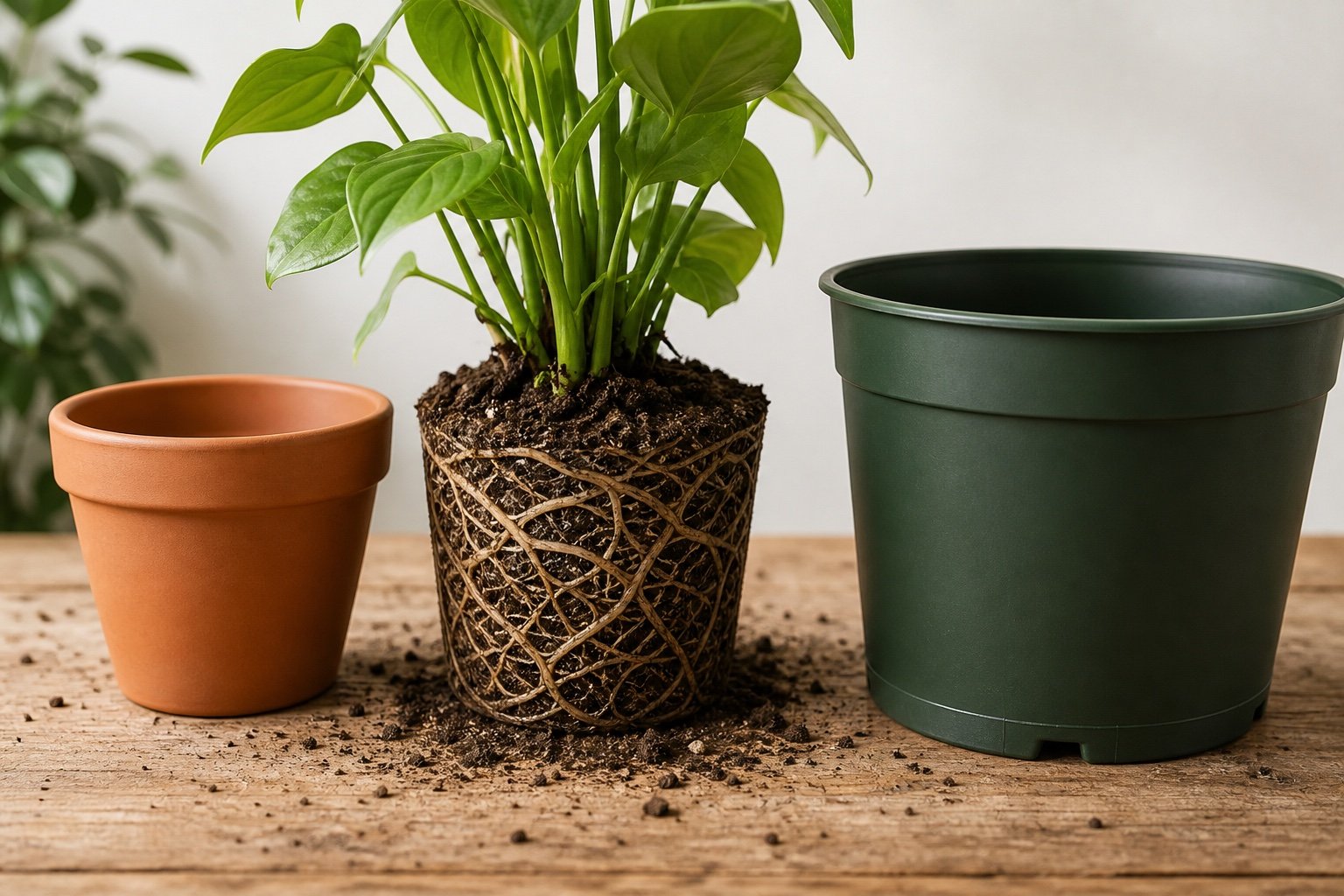
Extra mix holds extra water. A small root system may use that water slowly, leaving the center of an oversized pot wet while the surface looks dry. The opposite problem appears when roots have replaced most of the mix: water runs through quickly, the plant tips, and watering becomes constant.
Roots circling densely, emerging from drainage holes, or drying the pot unusually fast are better repotting signals than the calendar. Once you have chosen the container, the step-by-step repotting guide covers the move itself.
Drainage holes do more than let a little water drip out
After a thorough watering, gravity moves drainable water through the mix and out of the container. The remaining pore spaces can refill with air. A sealed pot keeps all of that water inside, which narrows the margin for error.
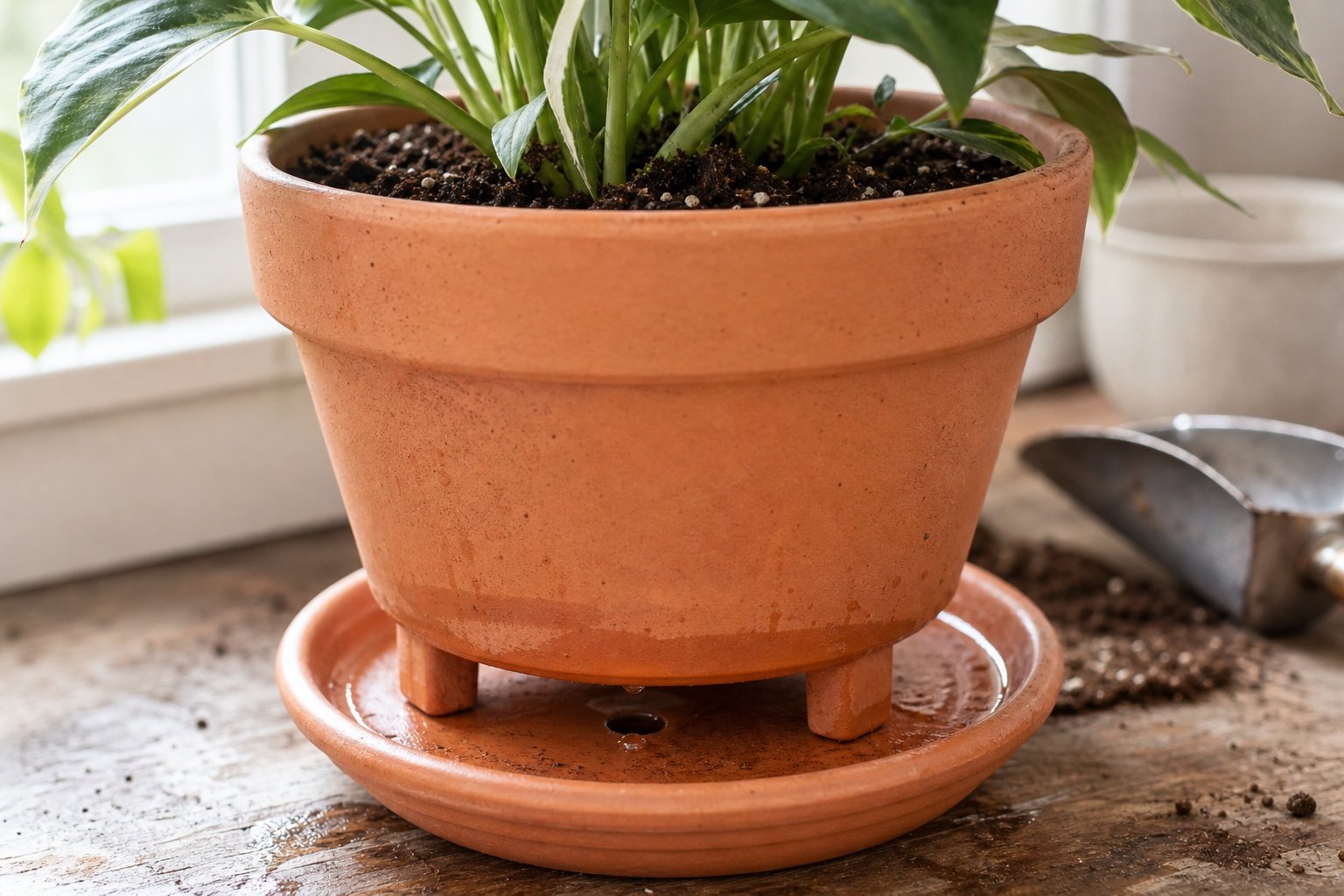
A layer of gravel does not turn a sealed pot into a drained one. Iowa State Extension explicitly warns that gravel cannot replace a drainage hole. Water can still collect above and between the stones, while the roots remain in a container with no exit for excess moisture.
One clear hole can be enough for a small pot when it stays open and the base is raised. Larger containers usually need more drainage area. Screen can keep coarse mix from spilling without plugging the route. Empty the saucer after watering unless it is a reservoir specifically designed as part of a self-watering system.
If water sits on the surface or races down the sides without wetting the center, the pot may not be the only problem. Compacted or water-repellent mix needs a different diagnosis. Use the guide to potting soil that is not draining before drilling random holes into a planted ceramic pot.
Match the container to the plant and your habits
When comparing the best pots for indoor plants, begin with the way the root zone should dry. The same material can be helpful for one plant and irritating for another.
For a succulent in ordinary apartment conditions, a modest terracotta pot with a drainage hole is often forgiving because it speeds drying. The plant still needs an appropriate succulent and cactus mix and enough light.
Thirstier ferns and peace lilies get a longer watering window in plastic or glazed ceramic. A cachepot works too when you remember to remove the runoff. Someone who chronically waters early may prefer terracotta; someone who forgets until leaves collapse may find a nonporous pot easier.
Large plants need stability, not automatically a much larger root zone. Trailing plants need a secure hanger, manageable filled weight, and a way to remove runoff without dripping on the floor. The guide to trailing plants for apartments helps match the plant to a hanging or shelf position.
Material changes your routine. Whenever you switch from plastic to clay, or from a small pot to a larger one, stop using the old watering interval. Check the mix and pot weight again. The indoor plant watering guide explains why a fixed weekly schedule fails across different rooms and containers.
Frequently asked questions
What are the best pots for indoor plants overall?
For most foliage houseplants, a plastic nursery pot with several open drainage holes is the simplest reliable choice. It is light, easy to inspect, and easy to place inside a decorative cachepot. Choose terracotta when faster drying is useful, or glazed ceramic with drainage when you want more weight and a decorative finish.
Do all indoor plant pots need drainage holes?
A working drainage route is the safest default. If a decorative pot has no hole, keep the plant in a removable inner pot with drainage. Water it separately or empty the cachepot after every watering.
How much bigger should a new pot be?
For an ordinary houseplant that is root-bound, move up one pot size, commonly about one or two inches wider. Very large plants may need a slightly bigger step, but the new pot should still match the root ball rather than the height of the foliage.
Is terracotta better than plastic for indoor plants?
Neither material wins for every plant. Terracotta loses water through its walls and dries faster. Plastic retains moisture longer and weighs less. Match that difference to the plant, room, mix, and the way you water.
Can rocks at the bottom replace a drainage hole?
No. Rocks reduce the volume available for roots but do not create an exit for water. Use a pot with a hole or place a drained inner pot inside the decorative container.
Should I leave water in the saucer?
Empty ordinary runoff after the pot has drained. A plant left in a full saucer can pull water back into the mix. A designed self-watering reservoir is different because its separation and wicking system are part of the container.
Are self-watering pots good for all houseplants?
No. They can work well for plants that prefer steady moisture, but they are less suitable when the root zone needs a pronounced dry period. New roots also need time to reach some wicking systems.
Can I plant directly into a cachepot with no hole?
For most houseplants, planting directly into a cachepot without drainage isn’t recommended. Watering becomes difficult to verify, and excess water has nowhere to leave. A removable nursery pot is easier to drain, inspect, and replace.
Start with the boring parts
The prettiest or most expensive container can still be the wrong pot. First choose a working drainage setup and a size that fits the roots. Then pick the material and finish you want to live with.
A plastic nursery pot inside a cachepot covers most households. Terracotta earns its place when faster drying helps. Glazed ceramic works when weight and appearance matter, while orchids and large floor plants benefit from containers built around their specific structure. Once the pot fits the roots and the room, the decorative decision becomes much easier.