Best Low-Light Indoor Plants: 10 Reliable Picks for 2026
Last updated: August 29, 2026.
Affiliate disclosure: As an Amazon Associate I earn from qualifying purchases. Links marked “paid link” may earn Fern & Shelf a commission at no extra cost to you. Read our full Affiliate Disclosure.
Start here: For a complete overview, see our Indoor Gardening for Absolute Beginners.
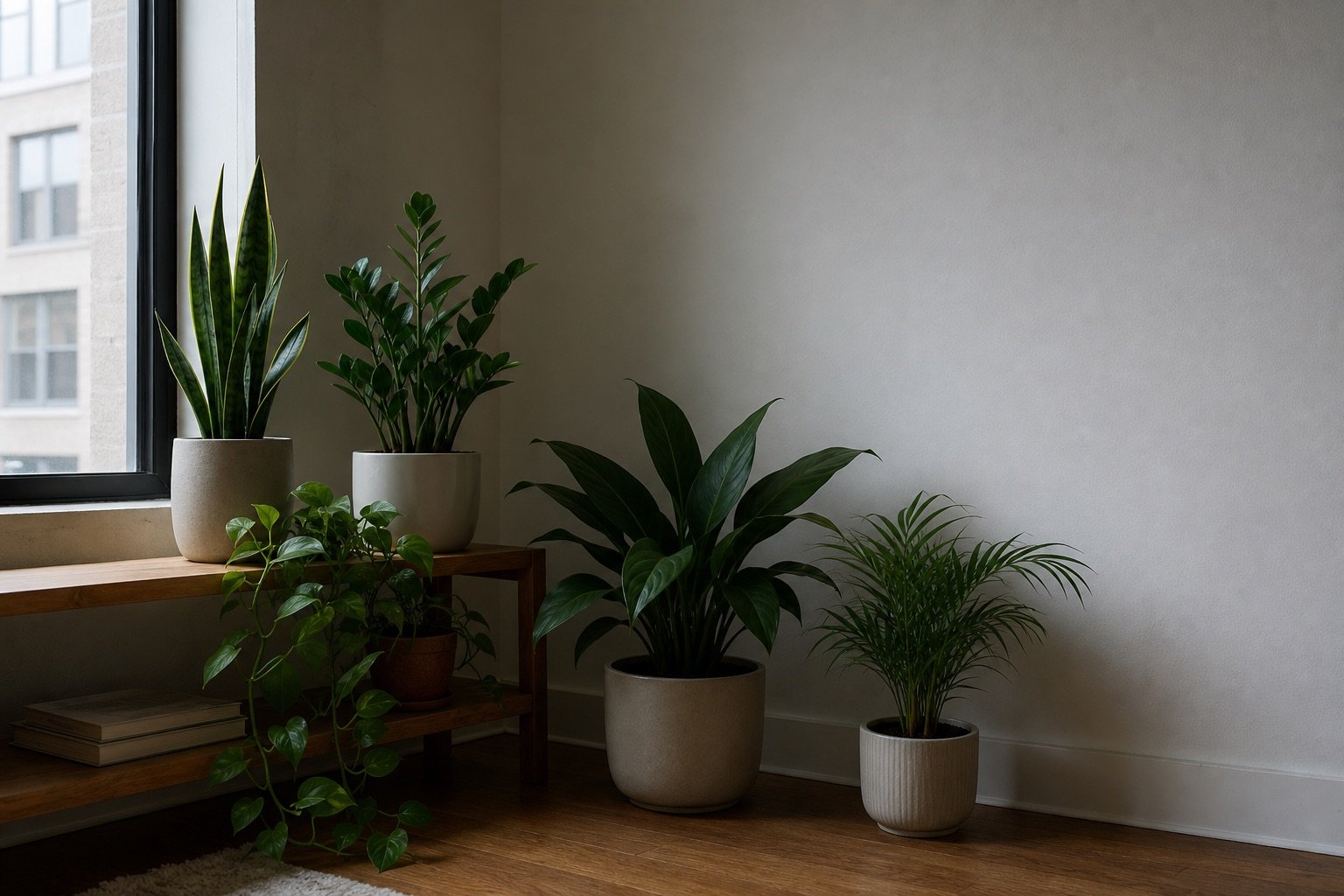
The best low-light indoor plants can keep healthy foliage in dim, indirect light, but none can live in darkness. For the darkest usable spots, start with cast iron plant or ZZ plant. If pets chew leaves, cast iron plant or parlor palm narrows the list. Floor space and watering habits will narrow it again.
“Tolerates low light” does not mean “thrives in a dark corner.” A pothos may hang on there, but growth slows and variegation often fades. Peace lily foliage can hold steady while flowering becomes unreliable.
The care notes draw from university Extension profiles. Toxicity information comes from the ASPCA and the North Carolina Extension Gardener Plant Toolbox. We reviewed the sources on July 17, 2026.
What “low light” means indoors
University of Minnesota Extension and Missouri Extension place low light around 50 to 250 foot-candles. That is roughly 540 to 2,700 lux. It is a useful household range, not a hard biological border. University of Arizona Extension uses a narrower, lower range for some indoor plants, which is one reason casual labels on nursery tags can be confusing.
Measure at leaf height in the exact spot where the plant will sit. Take readings more than once across the daylight period, then repeat in winter if the placement is permanent. Light falls quickly as a plant moves away from a window, and an overhang, neighboring building, tree, or blind can change the result. “North-facing” describes a direction. It does not tell you how much light reaches a leaf.
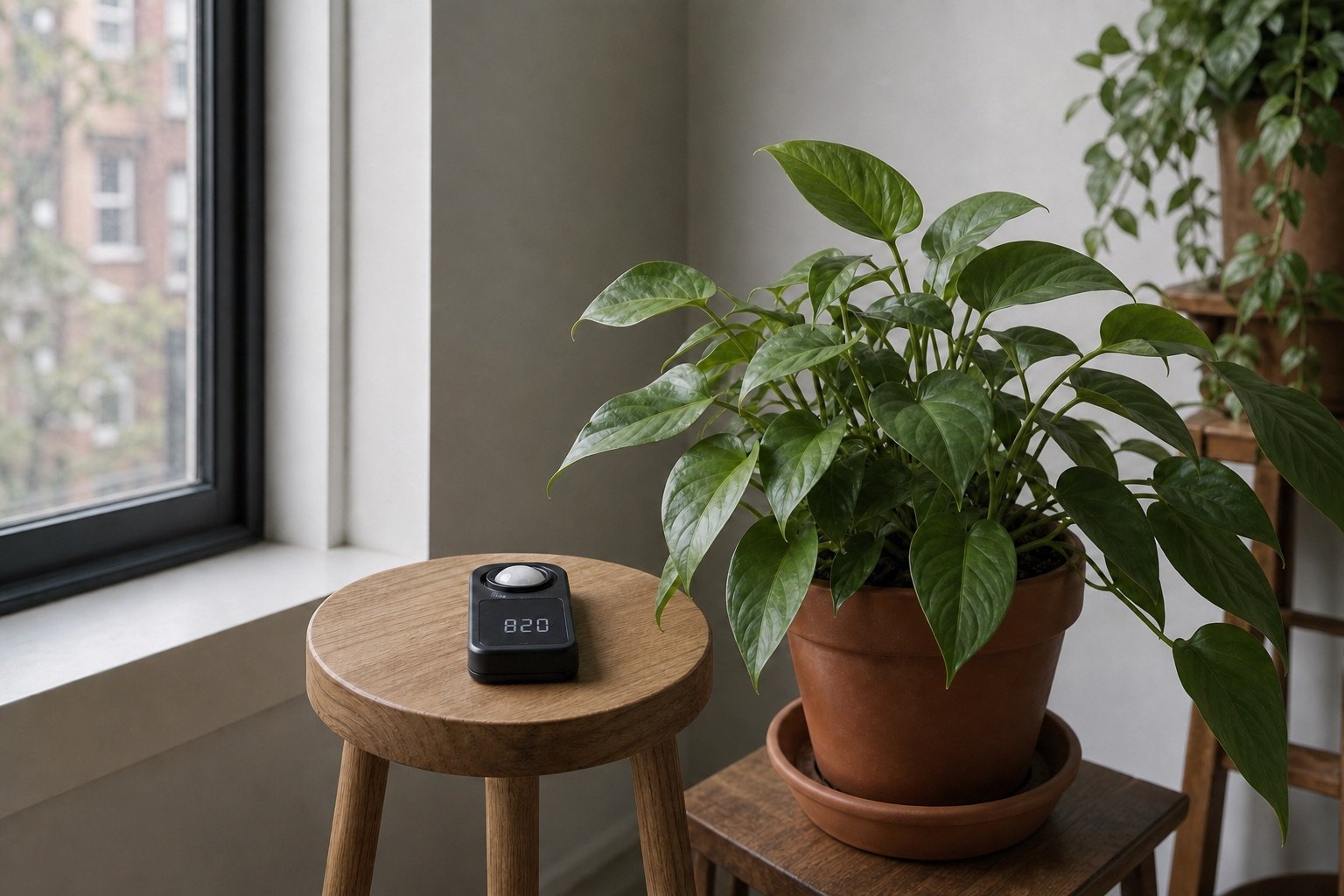
A phone app can help compare two spots, but phone sensors vary. A dedicated lux meter is easier to position and gives more repeatable household comparisons. Lux is weighted for human vision, so it is only a rough proxy for the light a plant can use. The guide to PPFD and DLI for indoor plants covers the more technical measurements.
Search Amazon for a digital lux meter (paid link)
Below 50 foot-candles, steady growth becomes less likely for most houseplants. Missouri Extension notes that only a few low-light species can be maintained at lower readings under artificial light. Soil also stays wet longer, and variegation often fades. A windowless room can support plants only when electric lighting supplies enough useful light for enough hours.
Best low-light indoor plants at a glance
| Plant | Low-light performance | Water when | Typical indoor size | Cats and dogs |
|---|---|---|---|---|
| Cast iron plant | One of the strongest true low-light choices; slow | The upper layer has dried | About 1 to 3 ft tall and wide | ASPCA non-toxic |
| ZZ plant | Endures very dim rooms, but grows better with brighter indirect light | The mix has dried fully | About 2 to 4 ft | Toxic |
| Snake plant | Strong tolerance; faster and denser with more light | The mix has dried fully | Leaves can reach 4 ft | ASPCA toxic |
| Chinese evergreen | Green cultivars handle low light better than heavily variegated ones | The surface has begun to dry | About 1 to 2 ft | ASPCA toxic |
| Golden pothos | Survives dim light; growth slows and variegation fades | The mix has partly dried | Trailing vines of several feet | ASPCA toxic |
| Parlor palm | Tolerates dim rooms; looks fuller near the brighter end of low light | The surface has slightly dried | Often 2 to 3 ft, sometimes taller | ASPCA non-toxic |
| Janet Craig dracaena | The dark green cultivar is the low-light choice | The top inch has dried | About 3 to 6 ft | ASPCA toxic |
| Heartleaf philodendron | Can survive low light; becomes looser and less dense | The surface has begun to dry | Vines of several feet | ASPCA toxic |
| Peace lily | Foliage tolerates low light; flowering improves in brighter indirect light | The surface has begun to dry | About 1 to 3 ft | ASPCA toxic |
| Spider plant | A choice for the brighter end of low light; medium indirect light gives better growth | The surface has lightly dried | About 1 to 1.5 ft tall | ASPCA non-toxic |
ASPCA “non-toxic” does not mean edible. Chewing any plant material can upset a pet’s stomach. If an animal develops symptoms or eats a plant listed as toxic, contact a veterinarian or animal poison service rather than waiting for an internet diagnosis.
1. Cast iron plant (Aspidistra elatior)
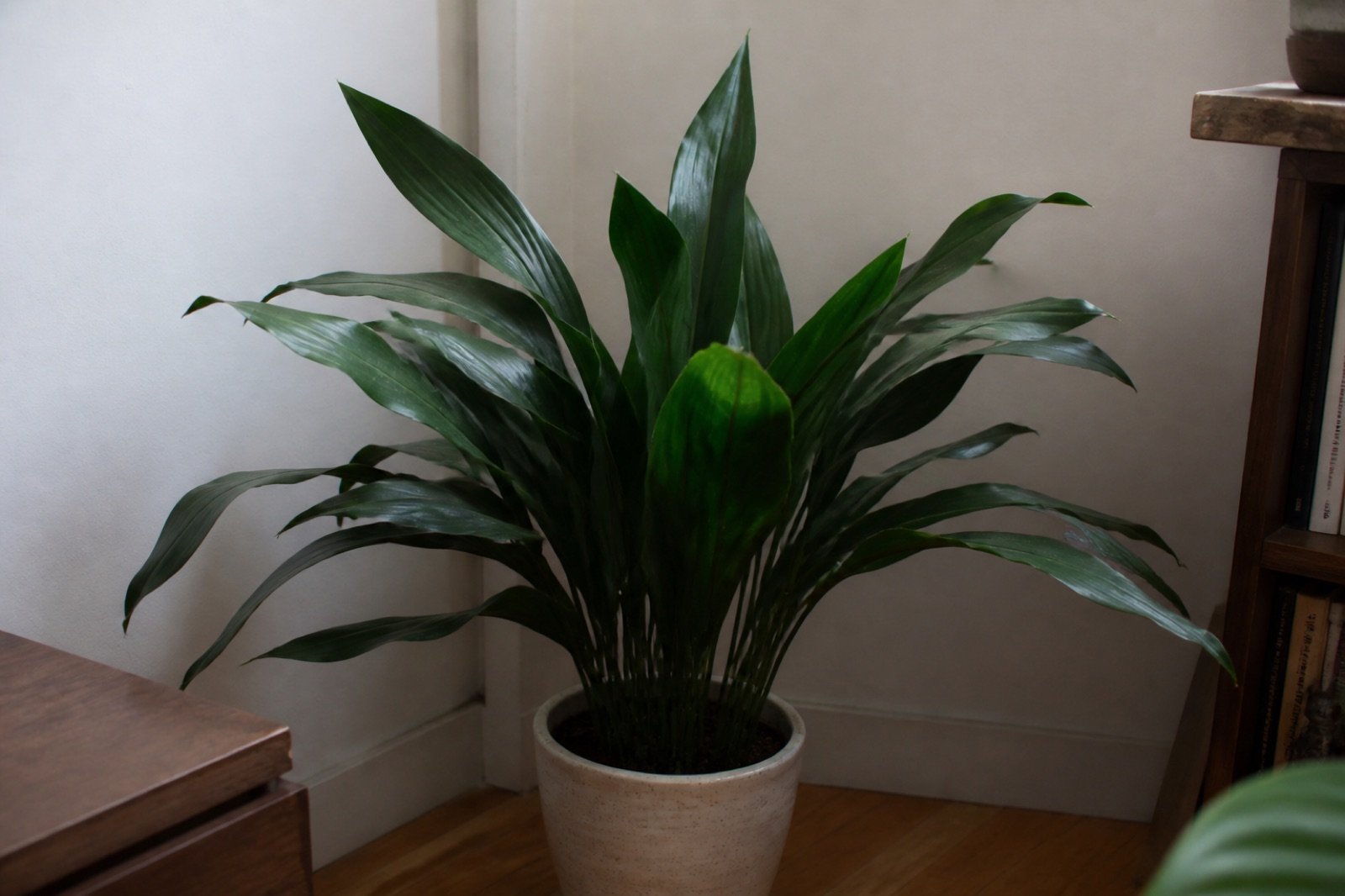
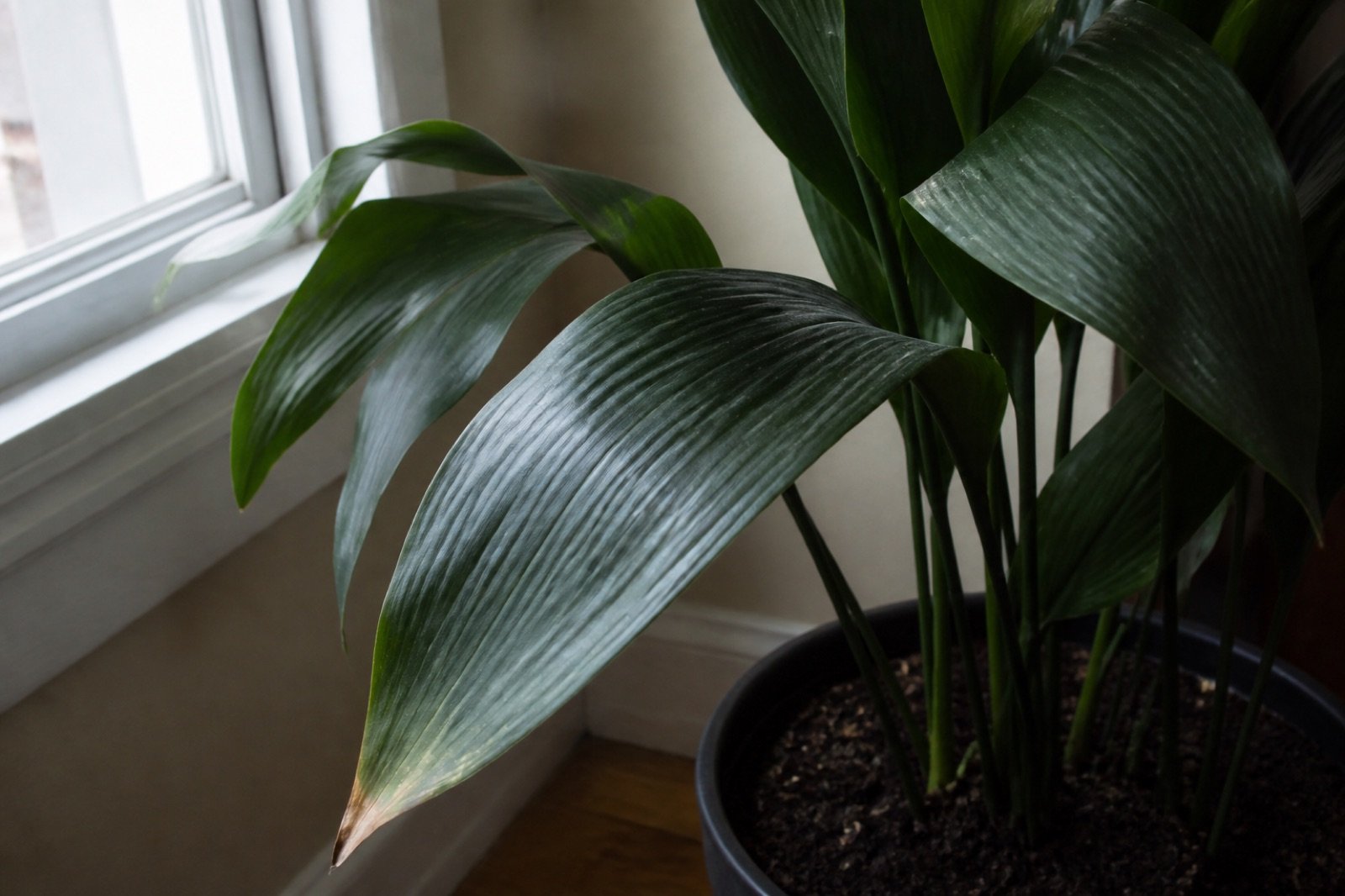
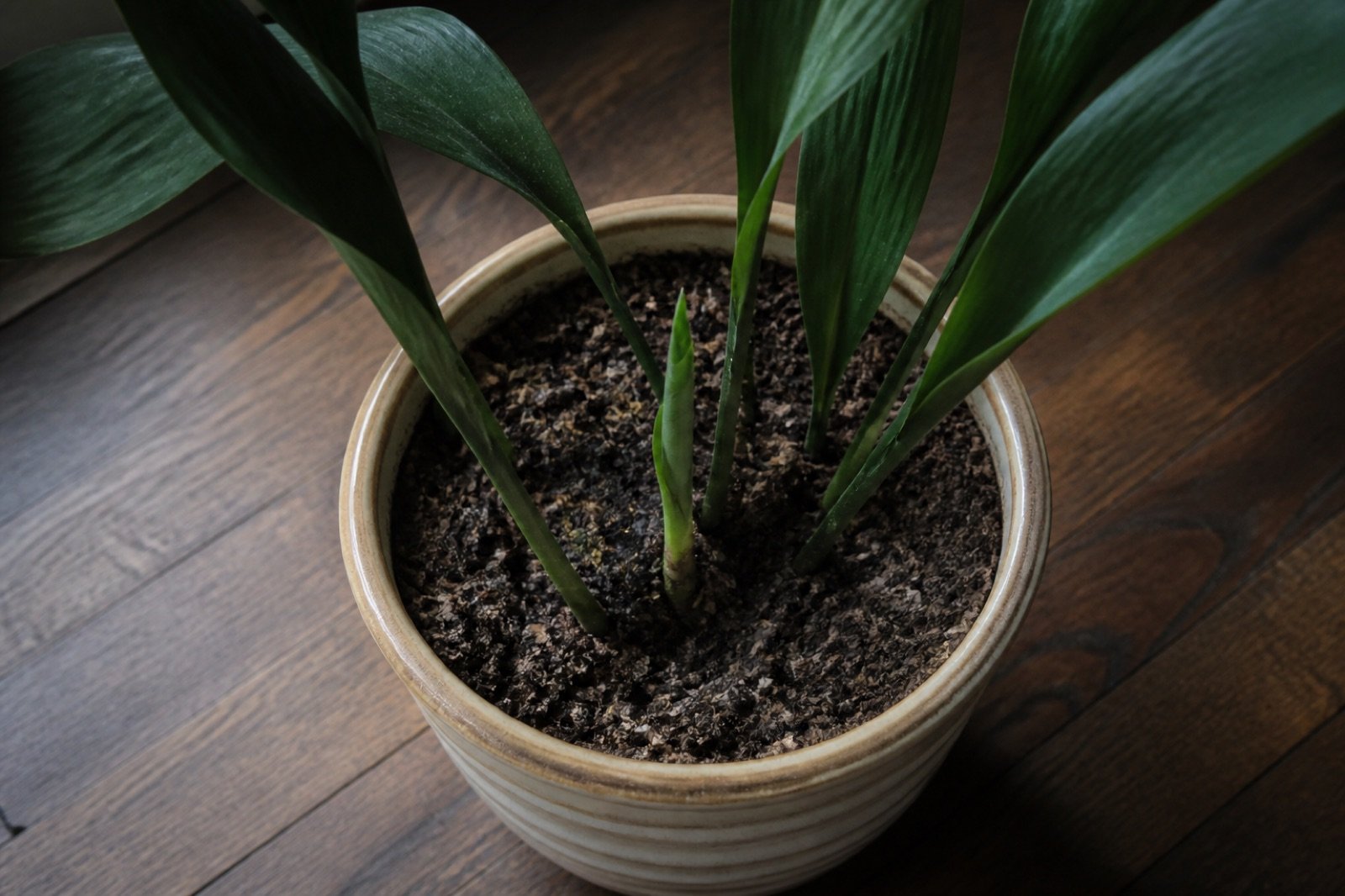
If the room is genuinely dim and slow growth is acceptable, cast iron plant is the cleanest recommendation here. North Carolina Extension lists deep shade among its cultural conditions, and Arizona Extension places it among plants suited to very low indoor light.
Its broad leaves rise directly from rhizomes, so it gives a dark corner some height without becoming a vine. Growth is slow even in decent conditions. That is part of the bargain, not a sign that more fertilizer is needed. A plant that is holding firm green leaves may be doing exactly what it can with the available light.
Let the upper layer of mix dry before watering, then drain the pot fully. Cast iron plants tolerate occasional dryness better than constant saturation. Most indoor specimens stay around one to three feet high and wide. It is also one of the few strong shade plants the ASPCA lists as non-toxic to both cats and dogs.
2. ZZ plant (Zamioculcas zamiifolia)
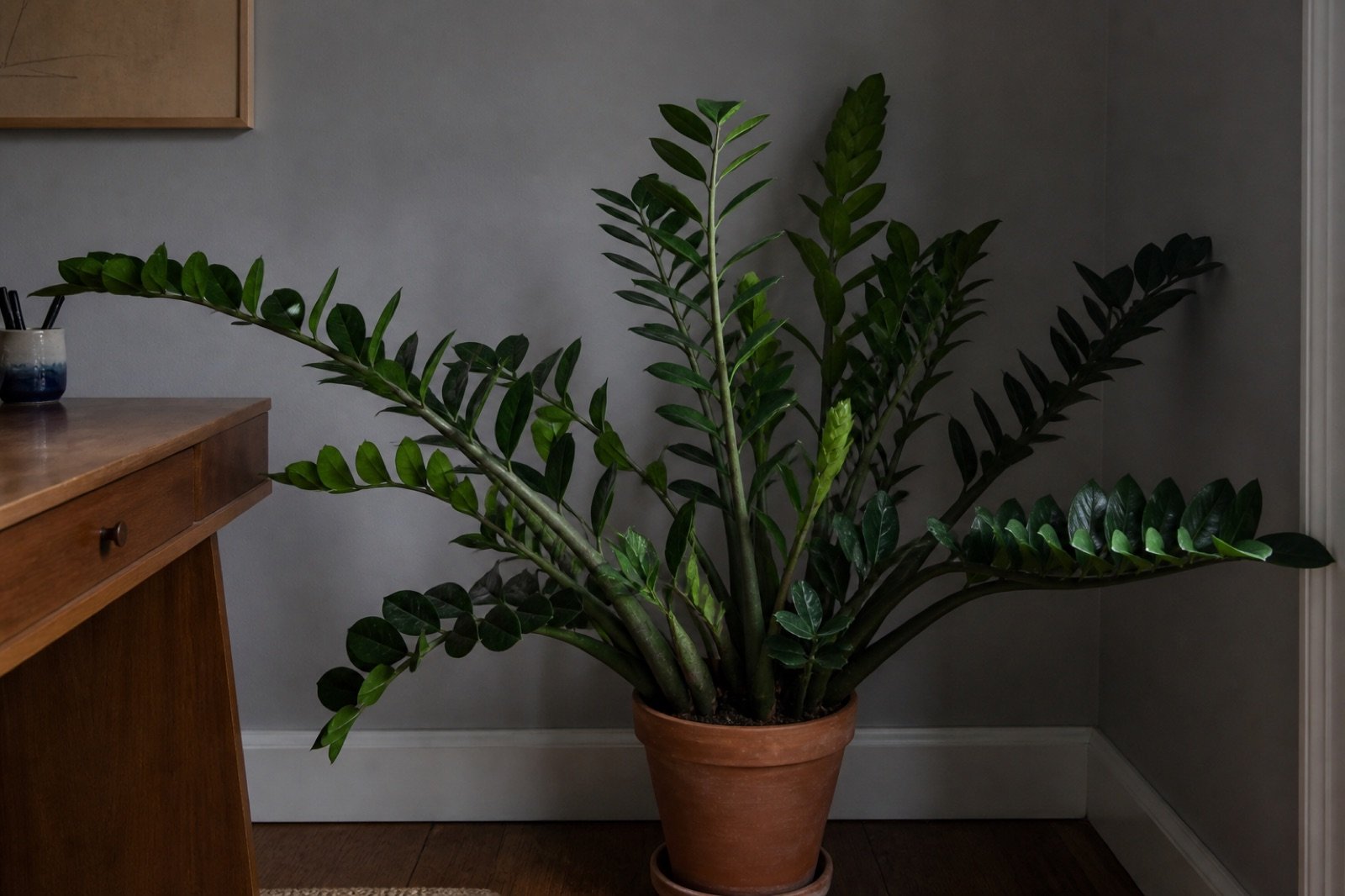
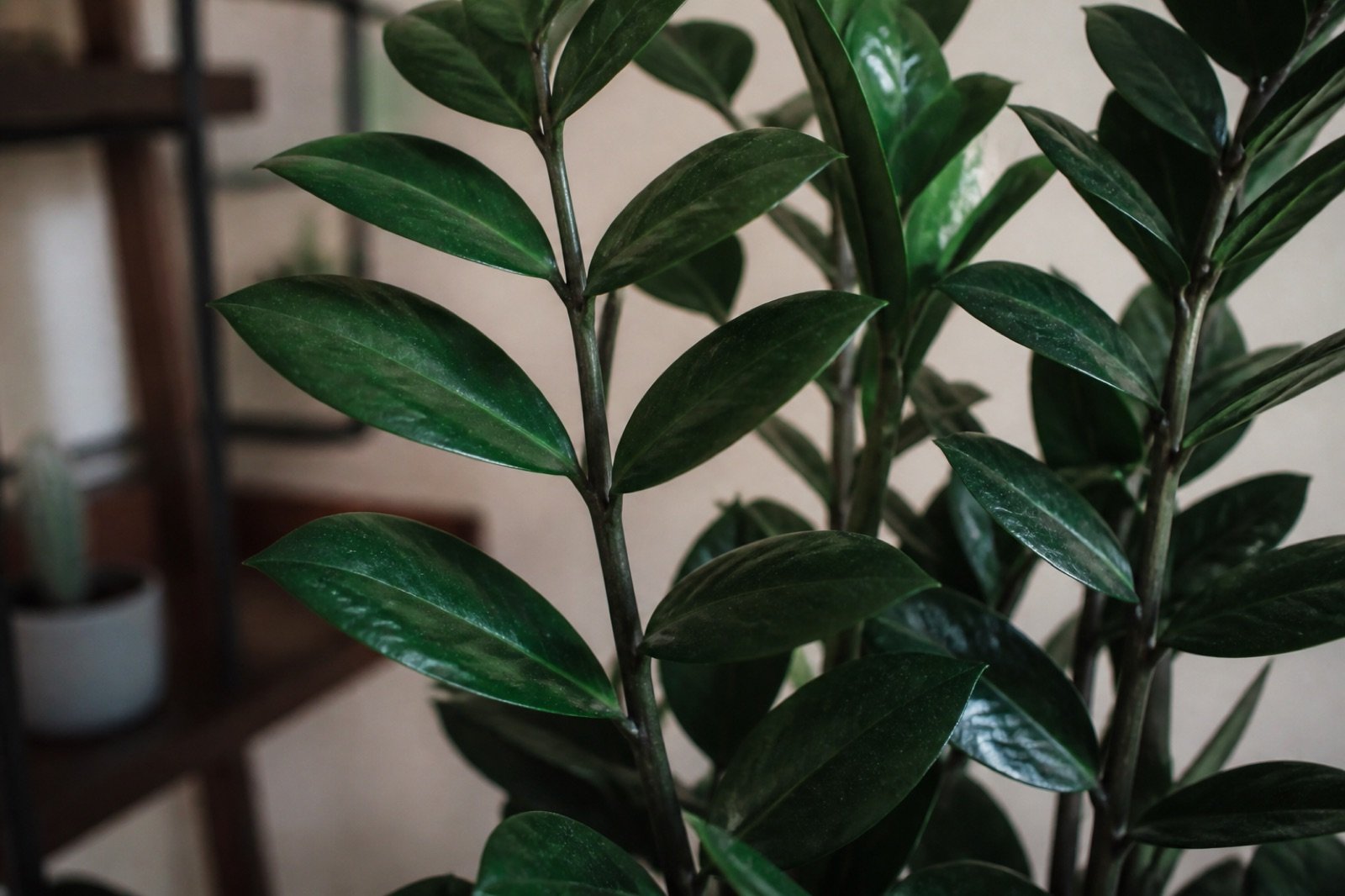
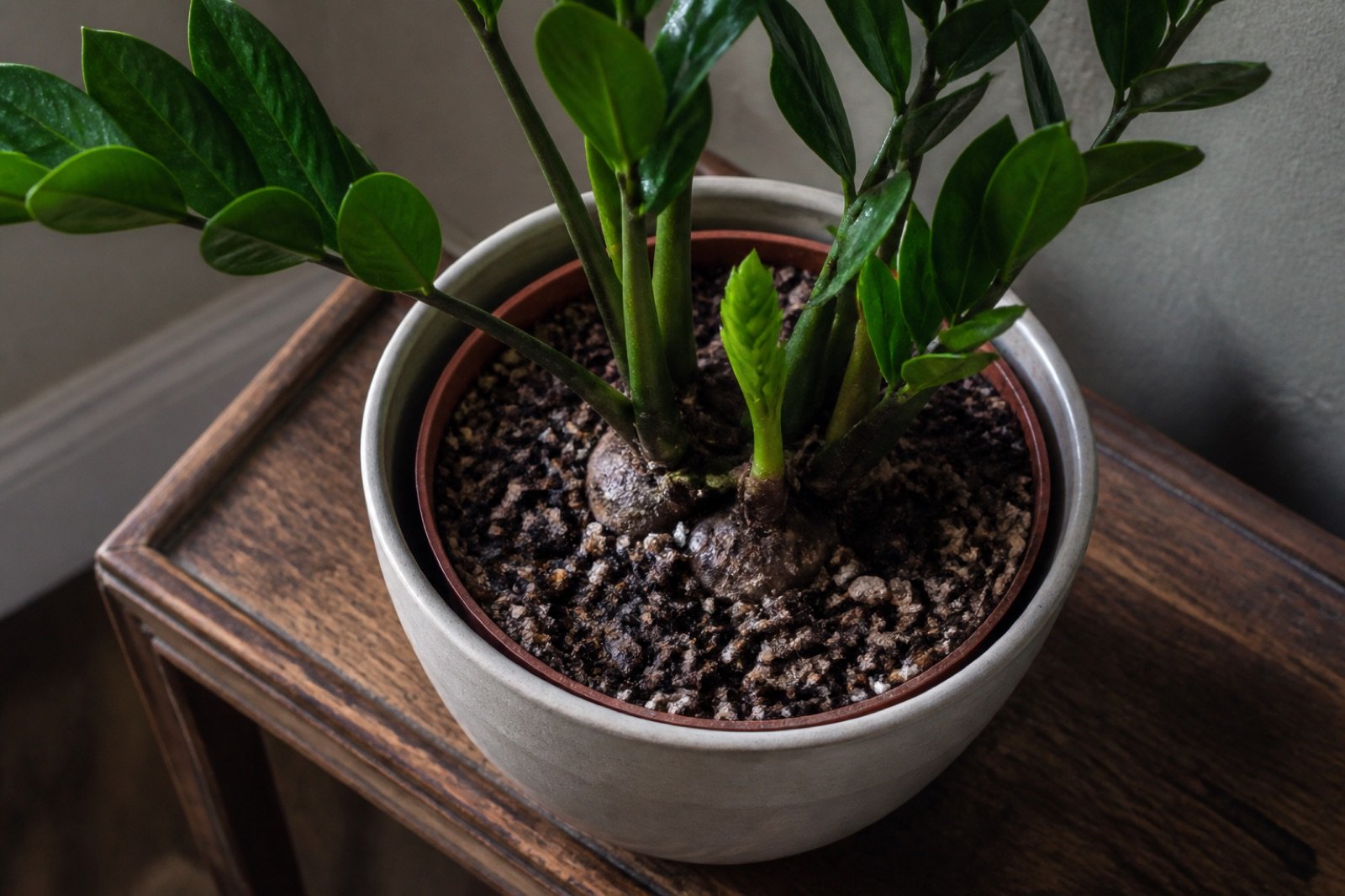
ZZ plant stores water in thick underground rhizomes and is unusually tolerant of low indoor light. The North Carolina Extension profile includes fluorescent office conditions among the settings it can handle. Brighter indirect light still produces better growth.
There is no useful “water every two weeks” rule. Pot size, light, temperature, mix, and season can stretch the interval far beyond that. Wait until the potting mix has dried fully, then water thoroughly and let the excess escape. The plant handles a missed watering better than a continually wet pot.
ZZ plants usually mature around two to four feet in a container. Their upright shape works on the floor, a low stand, or a broad console.
Keep this plant away from pets and small children. North Carolina Extension lists calcium oxalate toxicity and warns that ingestion can irritate the mouth and digestive tract.
3. Snake plant (Dracaena trifasciata)
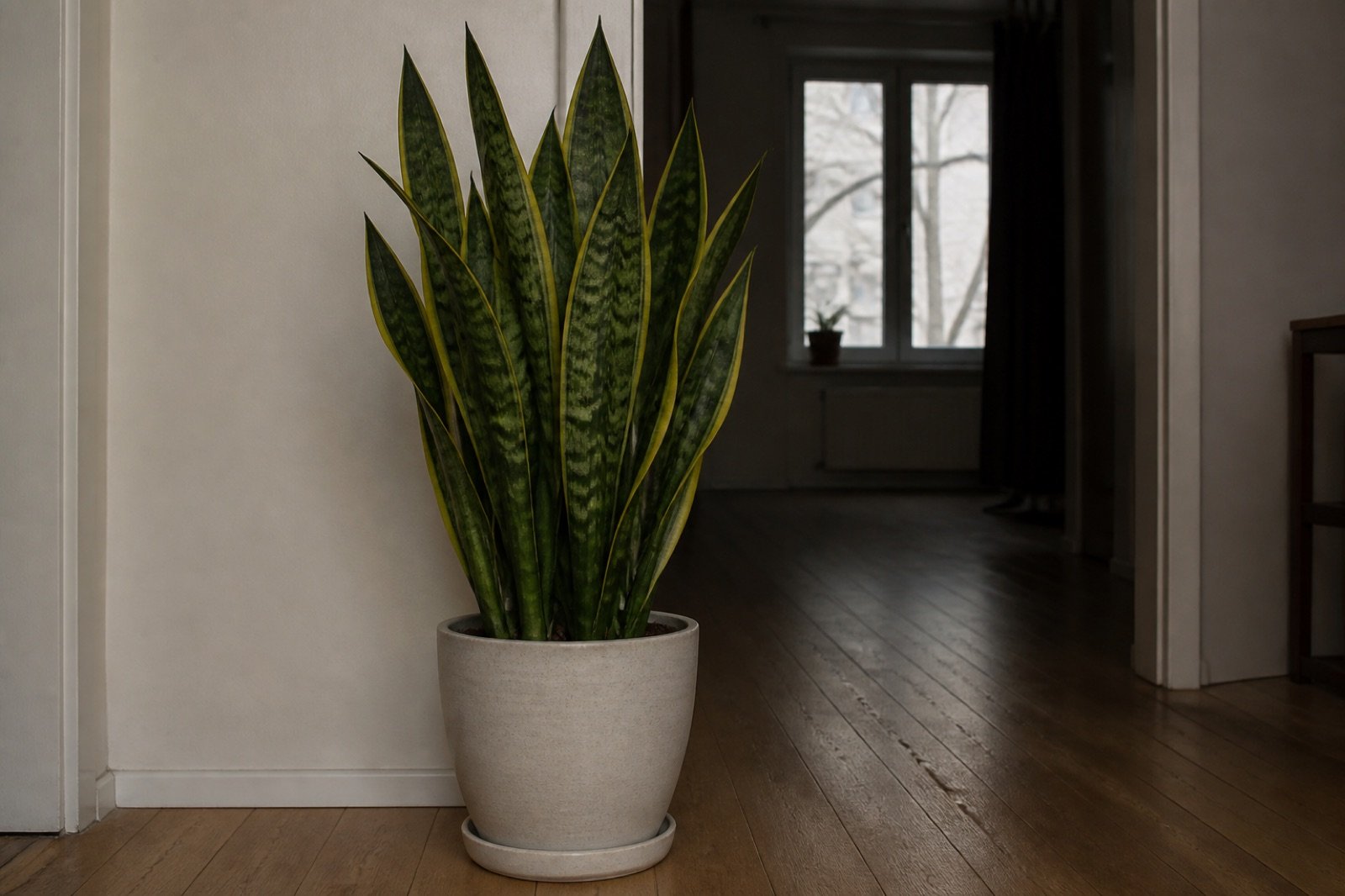
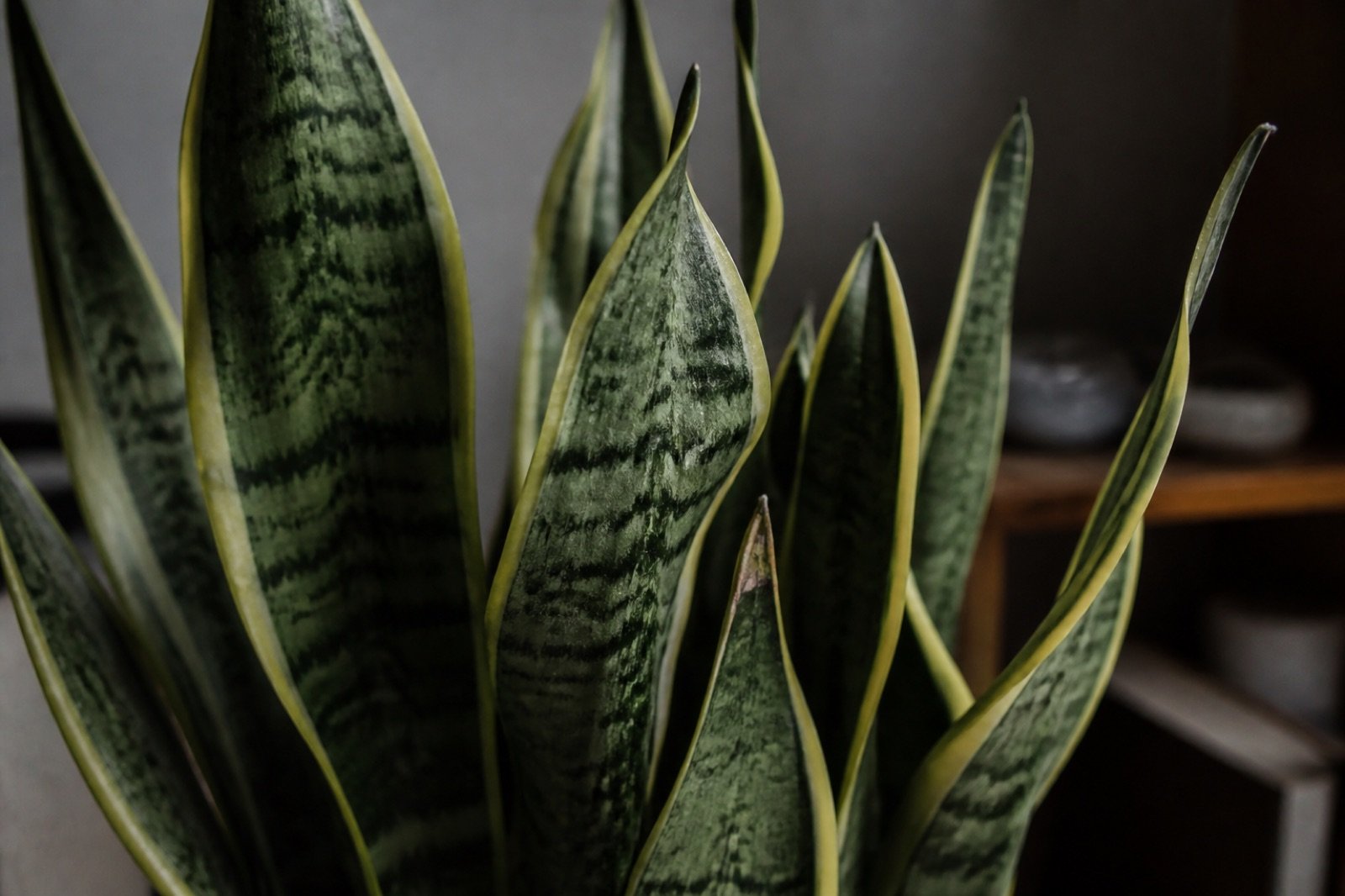
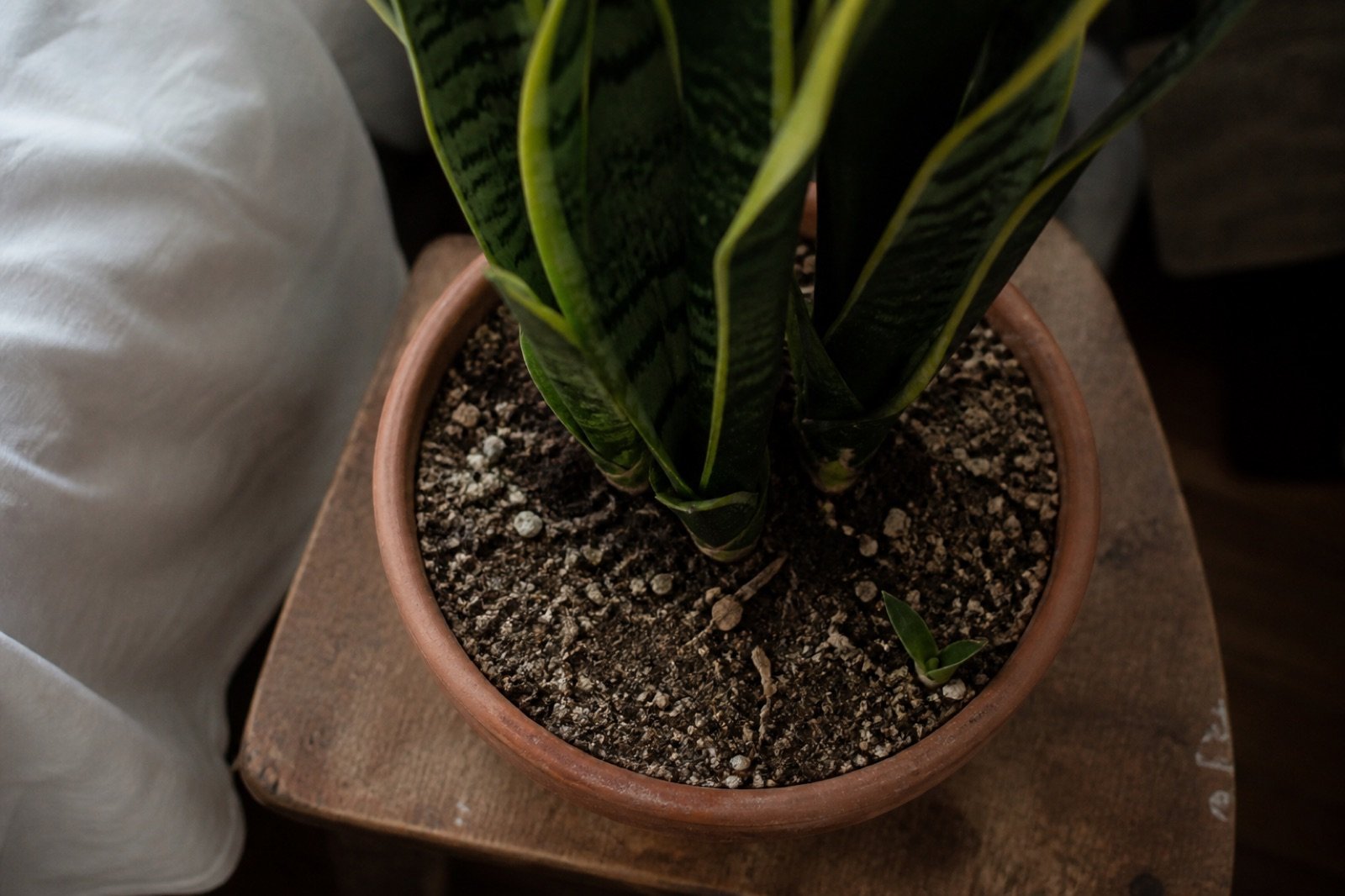
Snake plant keeps its upright shape in light that makes many softer plants stretch. North Carolina Extension lists deep shade tolerance, although a brighter indirect position gives faster growth and stronger pattern.
The weak point is wet soil. Let the mix dry all the way through before watering again. In a cool, dim winter room, that may take a month or longer. Checking the soil beats copying somebody else’s interval.
Standard cultivars can produce leaves around four feet tall while occupying little floor width. Bird’s-nest forms stay compact enough for a desk. The separate snake plant troubleshooting guide covers soft bases, leaning leaves, and root problems.
For homes with chewers, skip it. The ASPCA flags snake plant as toxic to cats and dogs because of saponins.
4. Chinese evergreen (Aglaonema spp.)
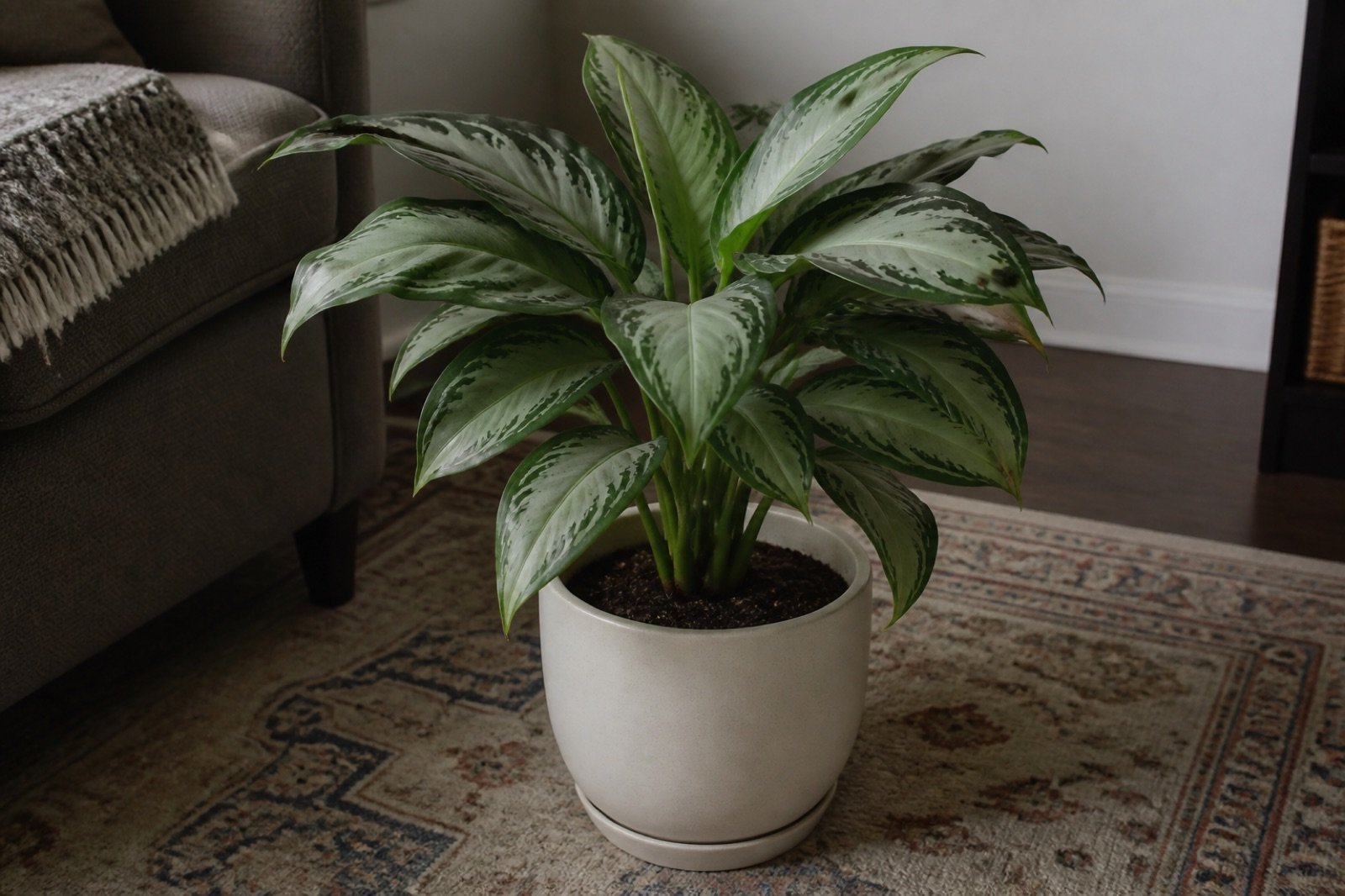
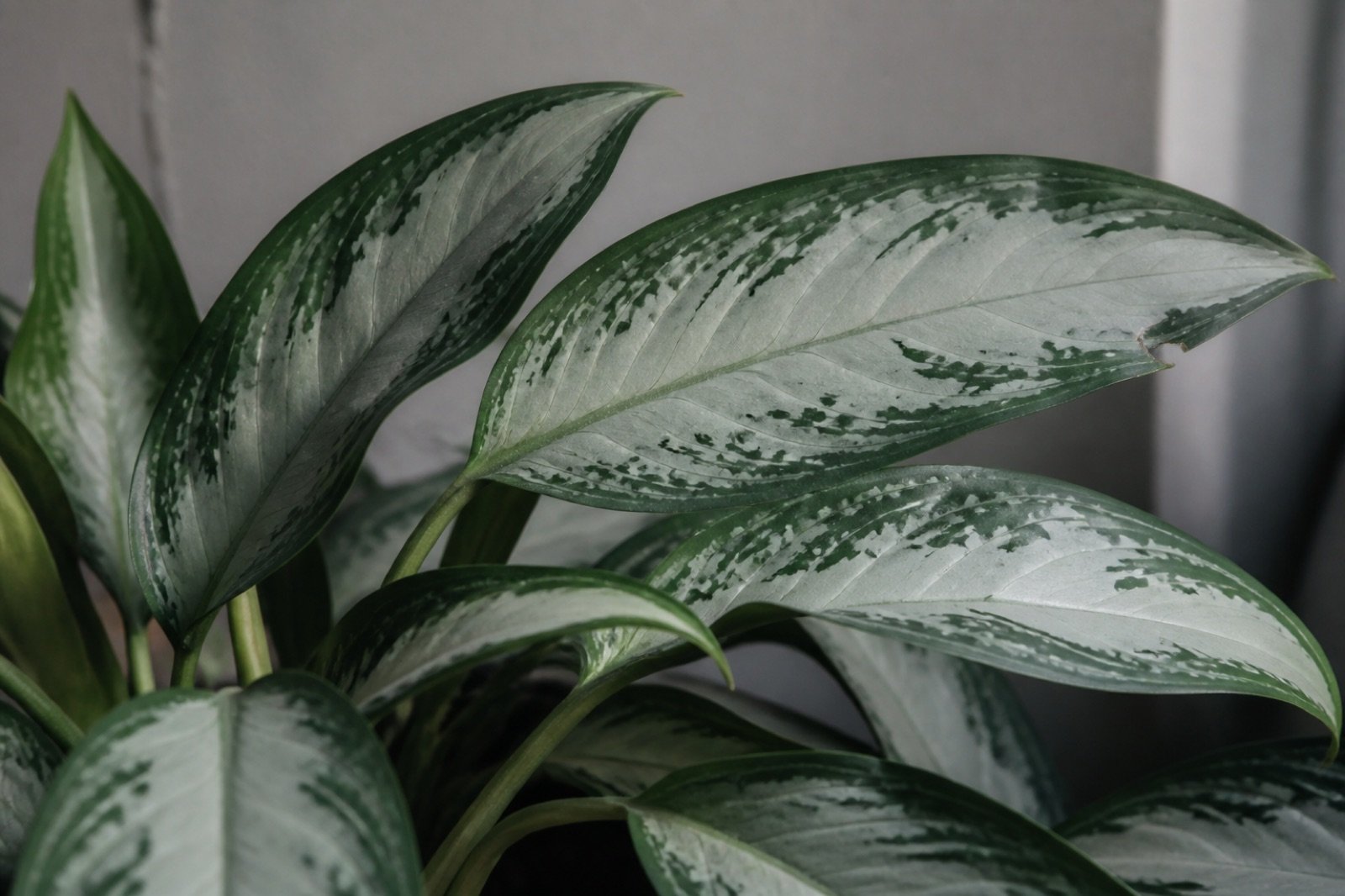
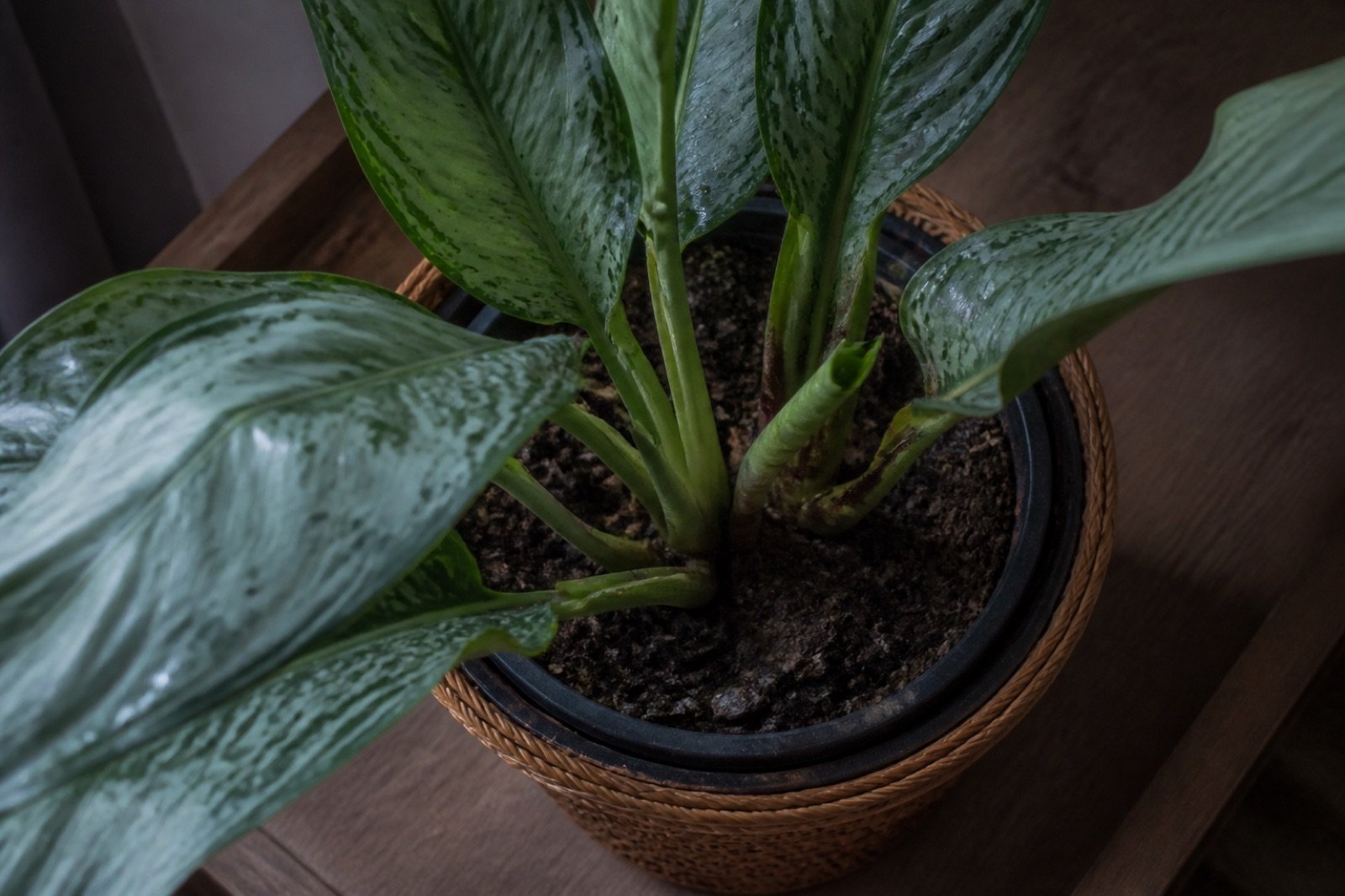
Green Chinese evergreens are among the better low-light plants for a tabletop or short stand. North Carolina Extension calls the genus suitable for low-light indoor locations. It also notes that flowering may not happen when light is low.
Cultivar choice matters. Leaves with a lot of white, pink, red, or silver need more light to hold their color and compact shape. A predominantly green cultivar is the safer bet for the darker end of the room.
Keep the mix lightly moist during active growth, but do not leave it saturated. Let the surface begin to dry and reduce watering when growth slows. Cold drafts are another common problem; this tropical plant dislikes chilly window glass and winter air leaks.
Most stay around one to two feet. One catch is pet safety: Chinese evergreen contains insoluble calcium oxalates and is toxic to cats and dogs.
5. Golden pothos (Epipremnum aureum)
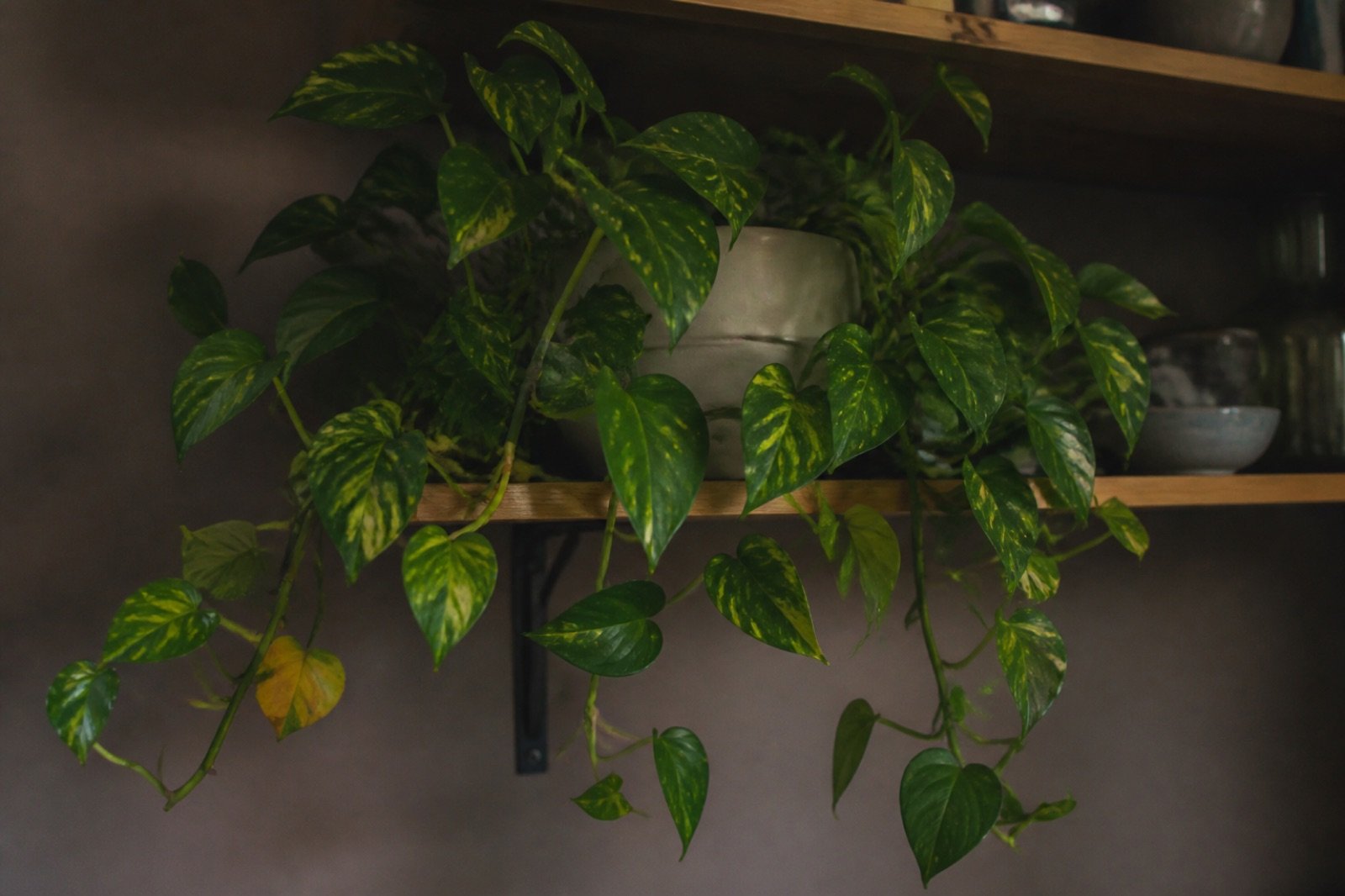
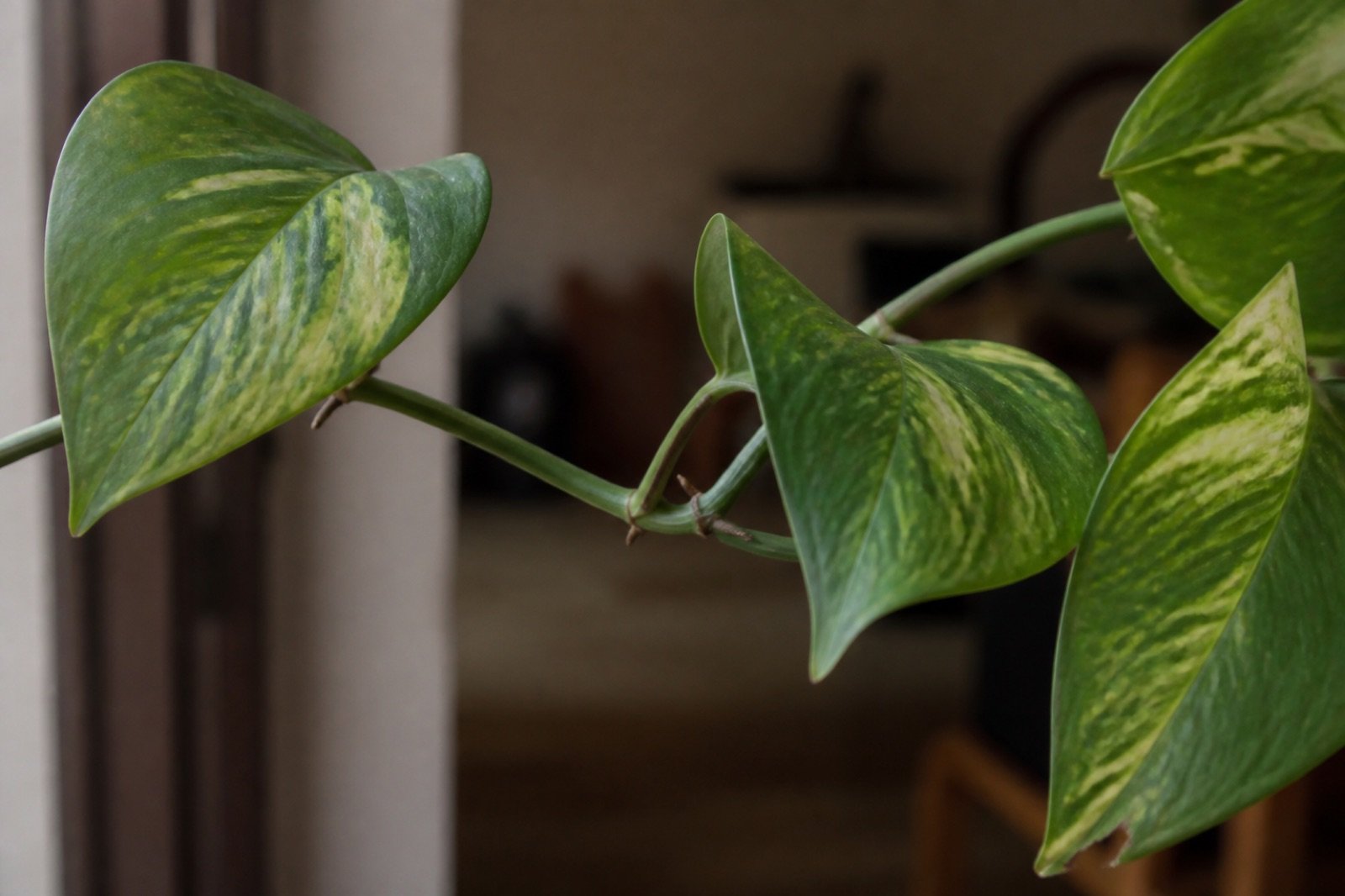
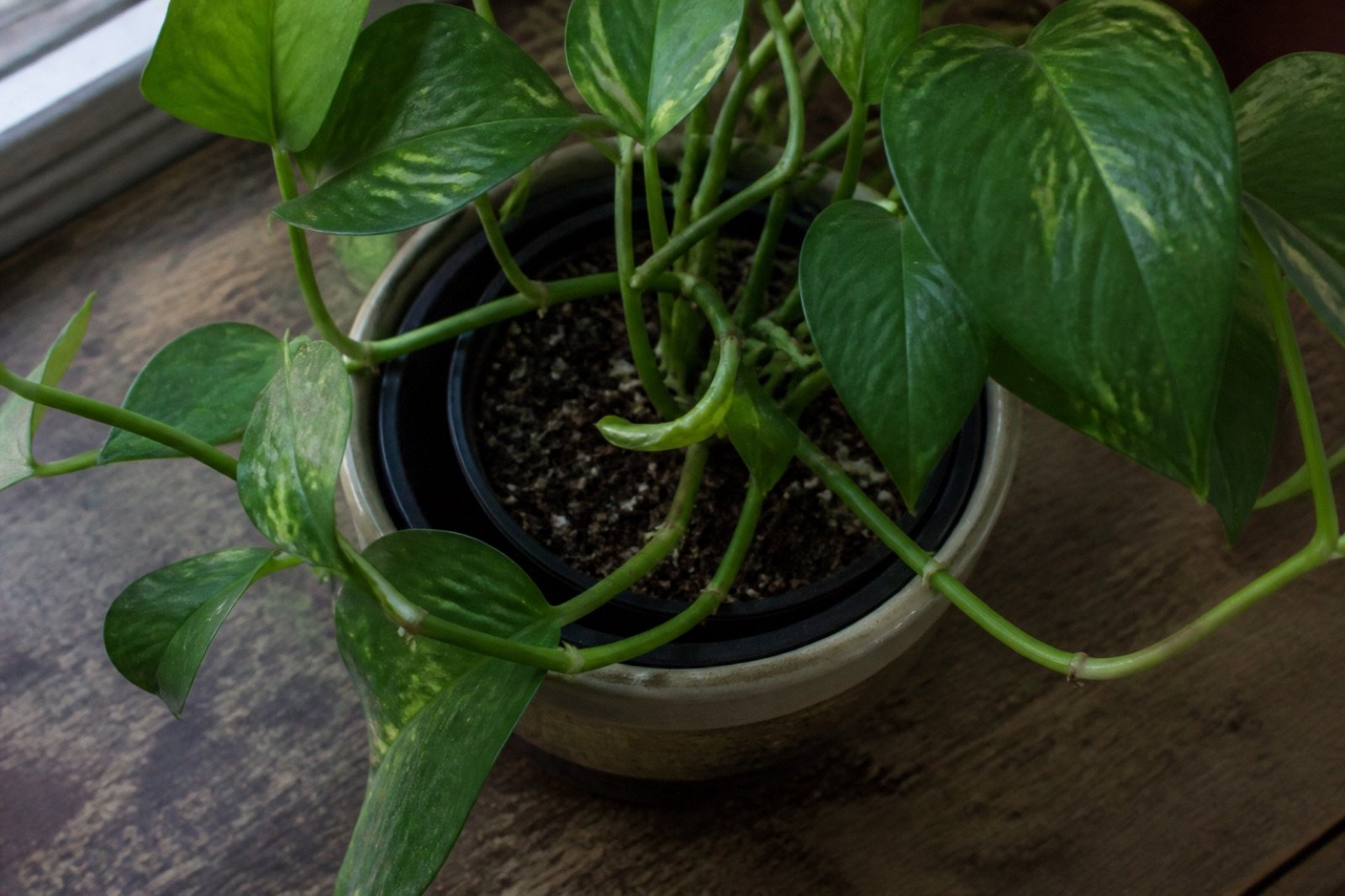
Golden pothos is easy to prune, which makes it practical on a shelf. It still reacts to poor light. Clemson Cooperative Extension explains that pothos tolerates low light while variegated cultivars can lose color there.
A greener plant is the better candidate for a dim spot. Expect longer gaps between leaves and slower extension than you would get near a brighter window. If the stems become thin and the leaves shrink, move it closer to useful light instead of pouring on fertilizer.
Water after the pot has partly dried, not as soon as the surface changes color. Pothos can trail several feet, climb a support, or stay compact with pruning. The guide to why pothos keeps dying covers yellow leaves, black stems, and watering mistakes.
A high shelf only works if every trailing stem stays out of reach. Golden pothos is toxic to cats and dogs.
6. Parlor palm (Chamaedorea elegans)
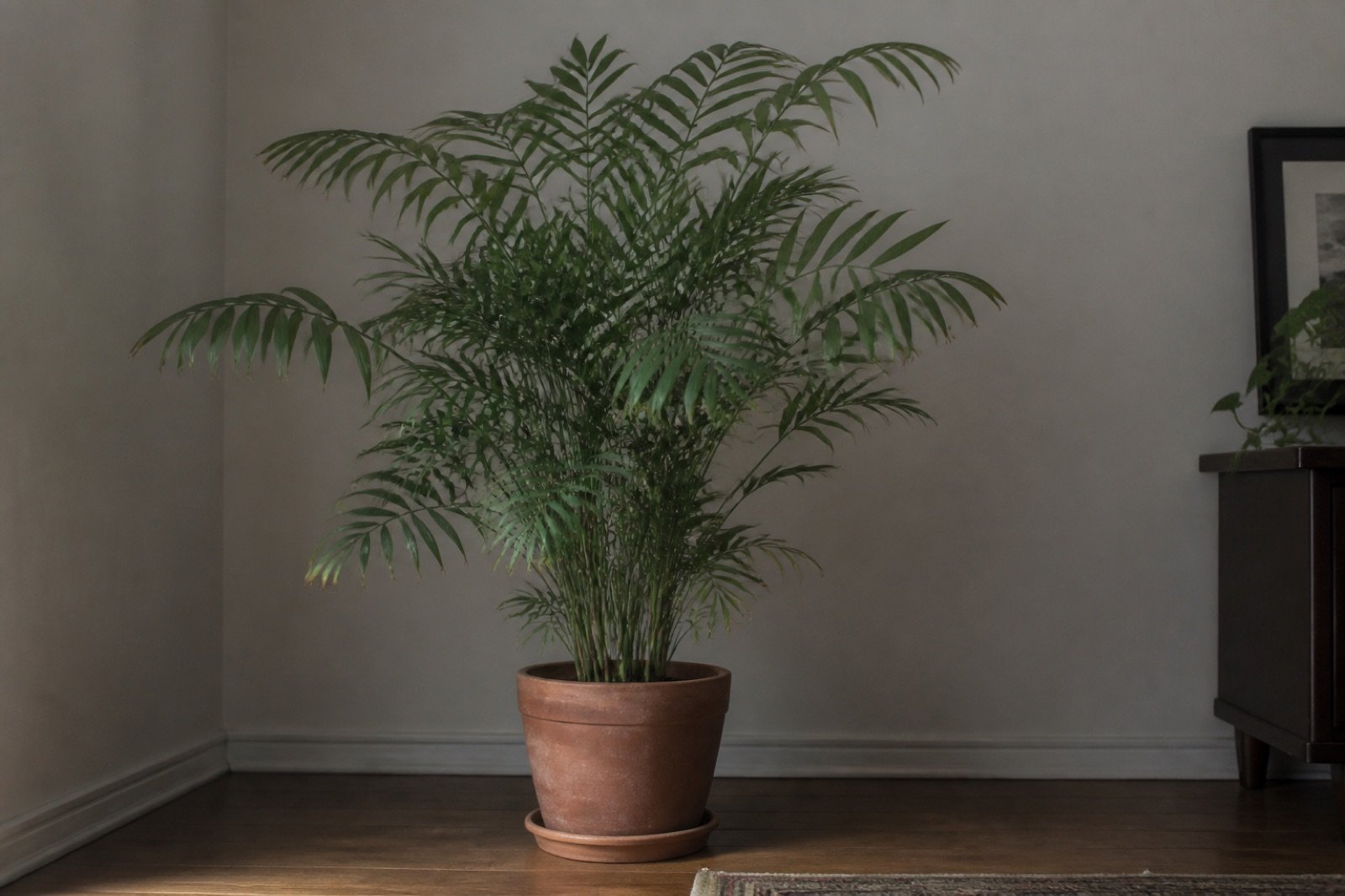
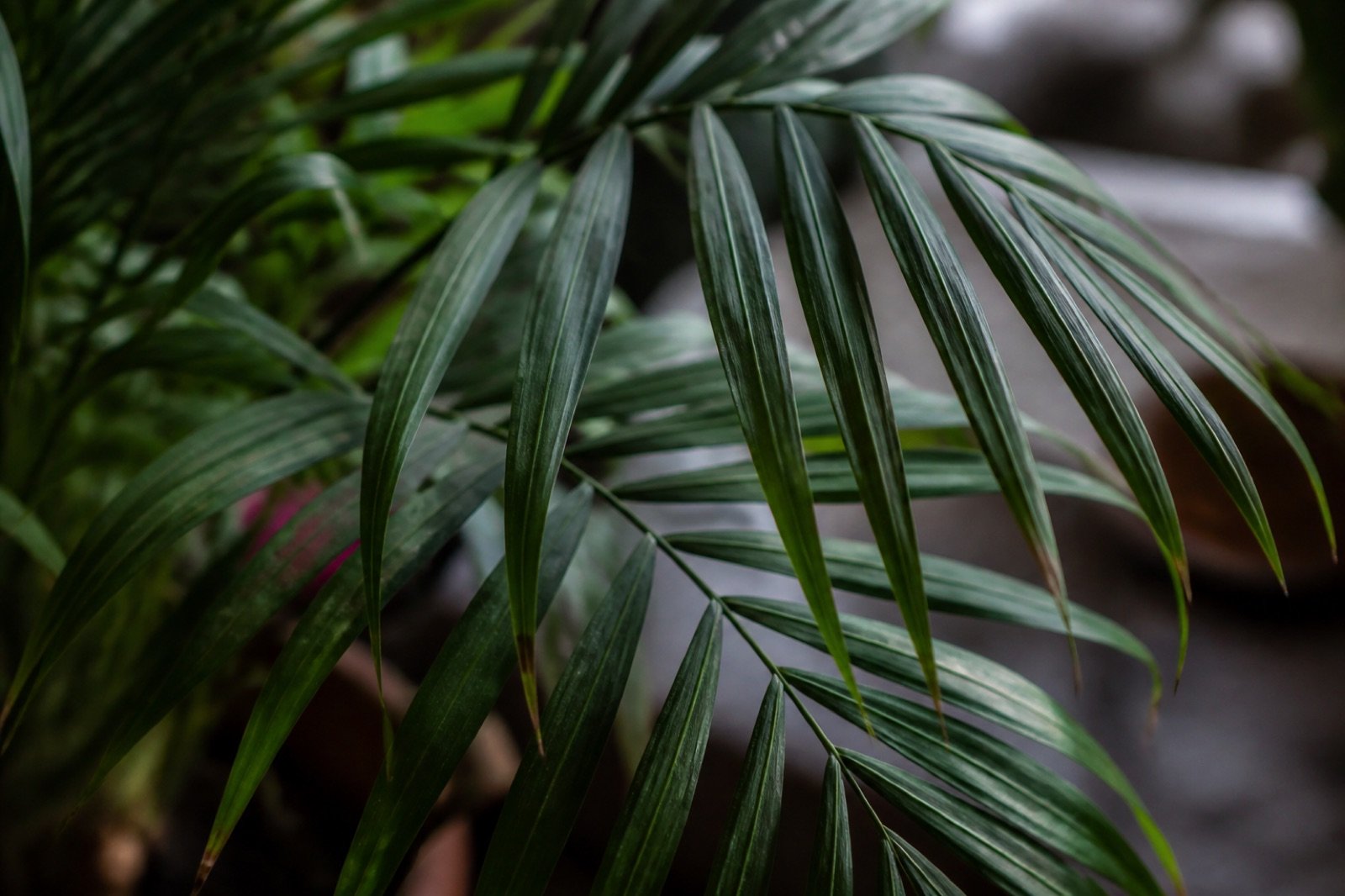
Parlor palm brings soft, narrow foliage to a dim room without asking for direct sun. North Carolina Extension includes deep shade in its light range. Missouri Extension also names it as a plant that tolerates low light.
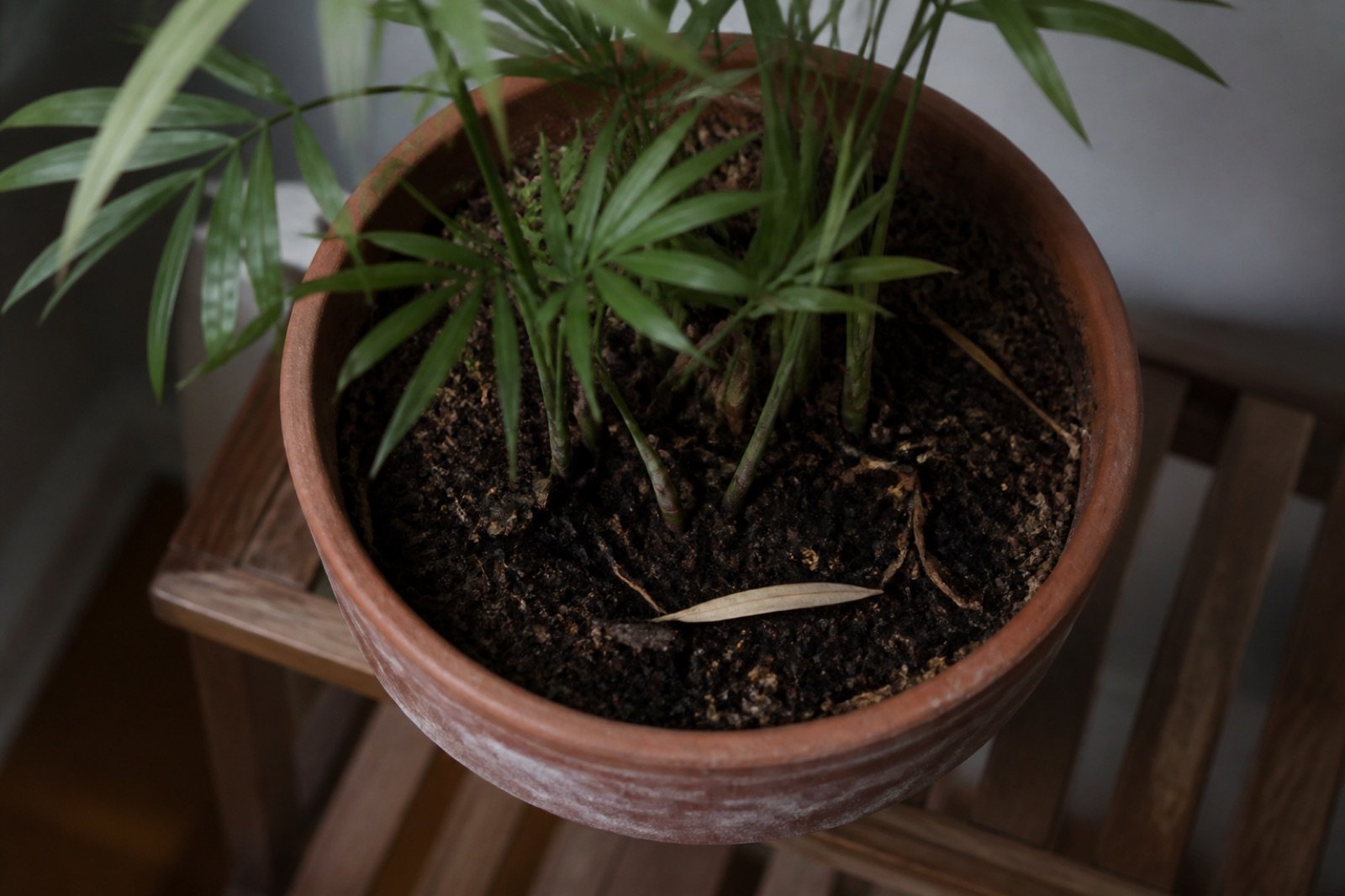
It still needs careful watering. A parlor palm looks fuller near the brighter end of the low-light range, often beside an unobstructed north- or east-facing window. Let the surface dry slightly, then water evenly. Constantly wet mix can damage roots, while repeated severe drought browns the leaflets.
Small plants begin on a desk, but many mature around two to three feet and can eventually become larger floor specimens. Give the fronds enough space that people do not brush past them every day.
Parlor palm is non-toxic to cats and dogs. Check the label, though: sago palm is a different and highly toxic plant.
7. Janet Craig dracaena (Dracaena fragrans ‘Janet Craig’)
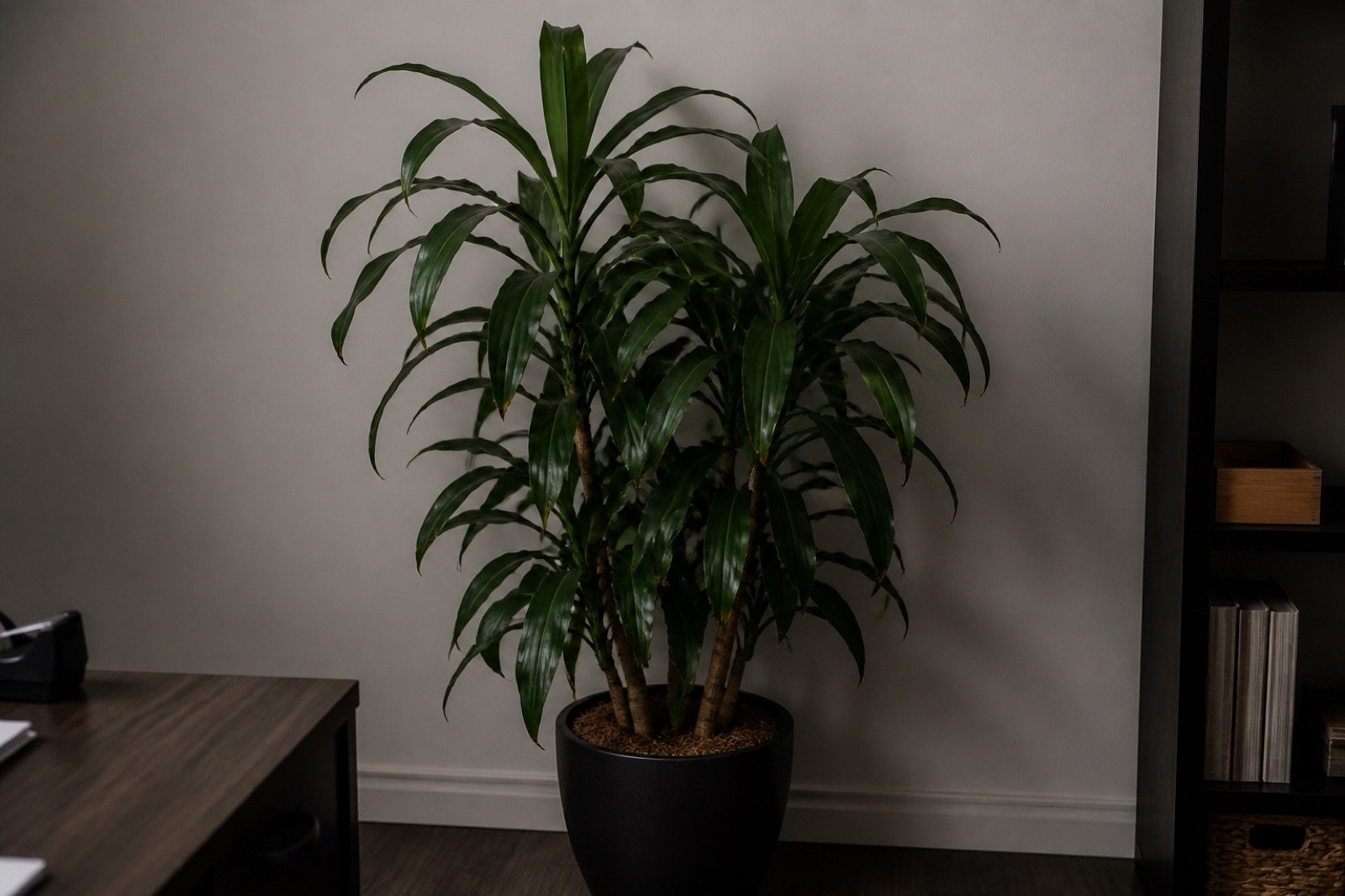
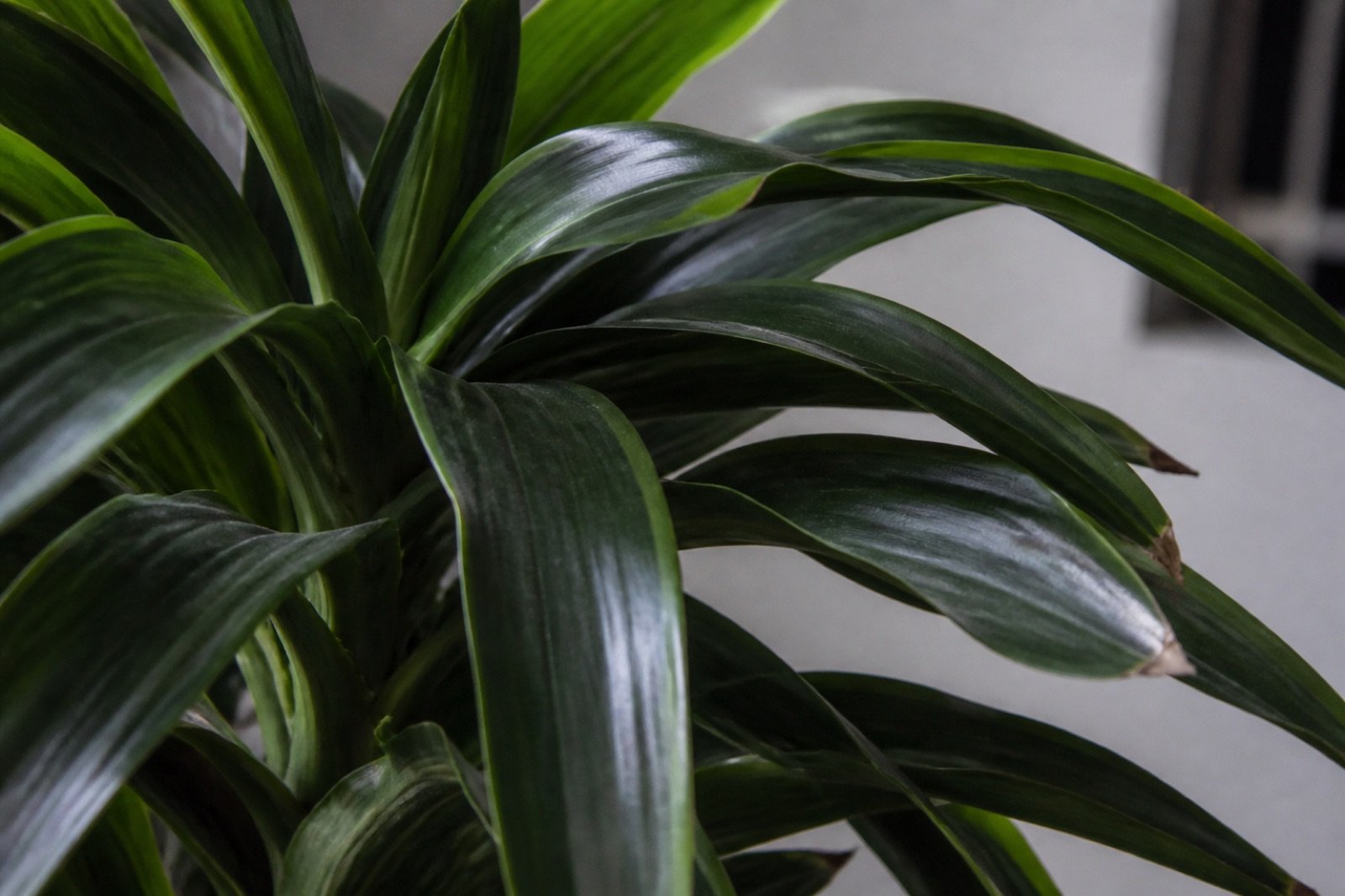
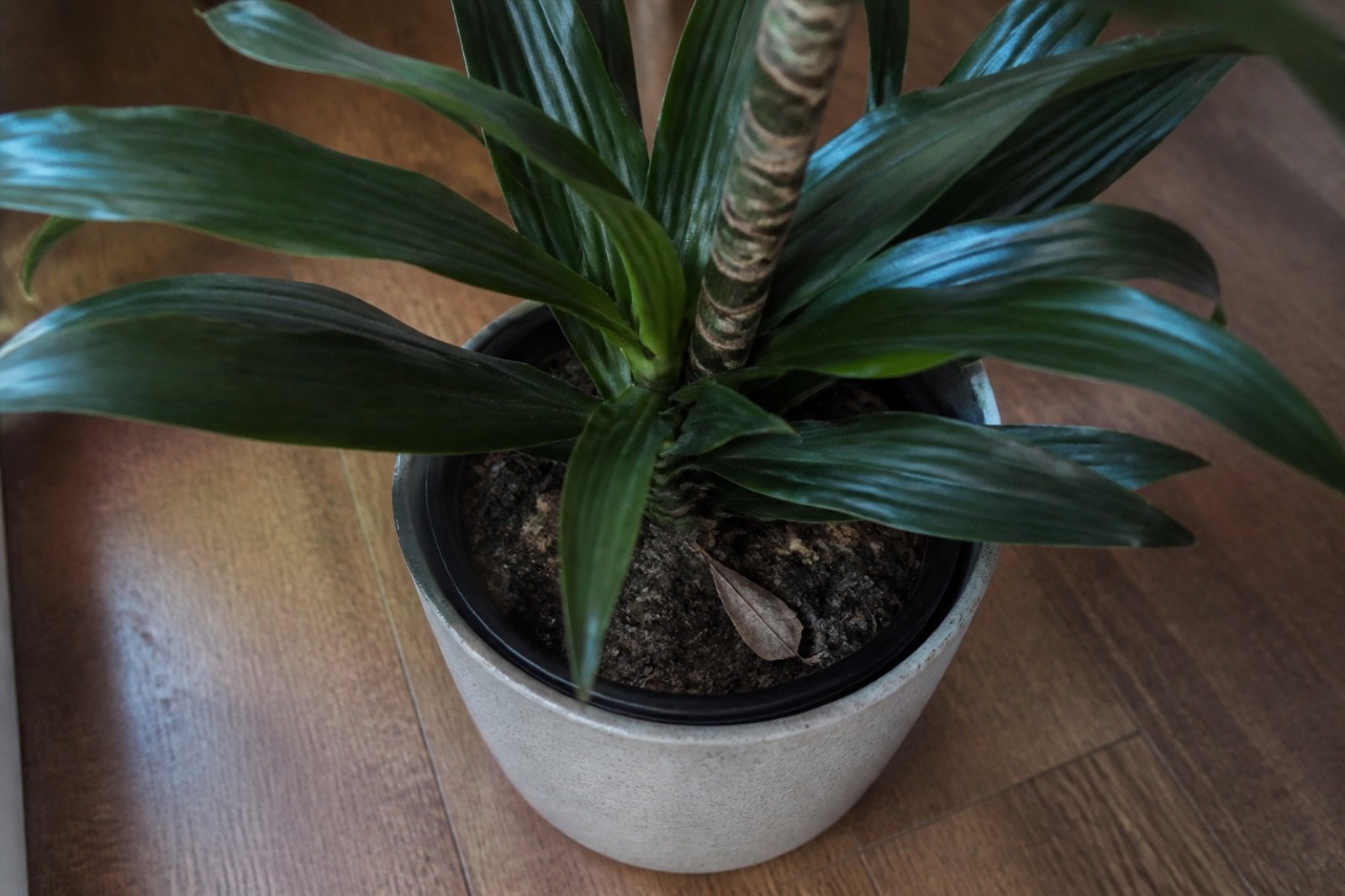
The dark green Janet Craig cultivar is the dracaena to choose for low light. University of Arizona Extension places it in the 25 to 75 foot-candle group, using its older botanical classification. North Carolina Extension covers its current species placement and warns that very weak light can narrow the leaves.
That reputation should not be applied to every striped or heavily variegated dracaena. Those forms need more light to hold their pattern. Janet Craig grows slowly in dim conditions but keeps a clean upright silhouette, usually three to six feet as a mature indoor cane plant.
Allow the top inch of mix to dry before watering and reduce the frequency when growth slows. Dracaenas can also react to salts or fluoride in water with brown tips, so do not assume every damaged tip means thirst.
Keep the canes away from pets. The ASPCA lists corn plant and related dracaenas as toxic to cats and dogs.
8. Heartleaf philodendron (Philodendron hederaceum)
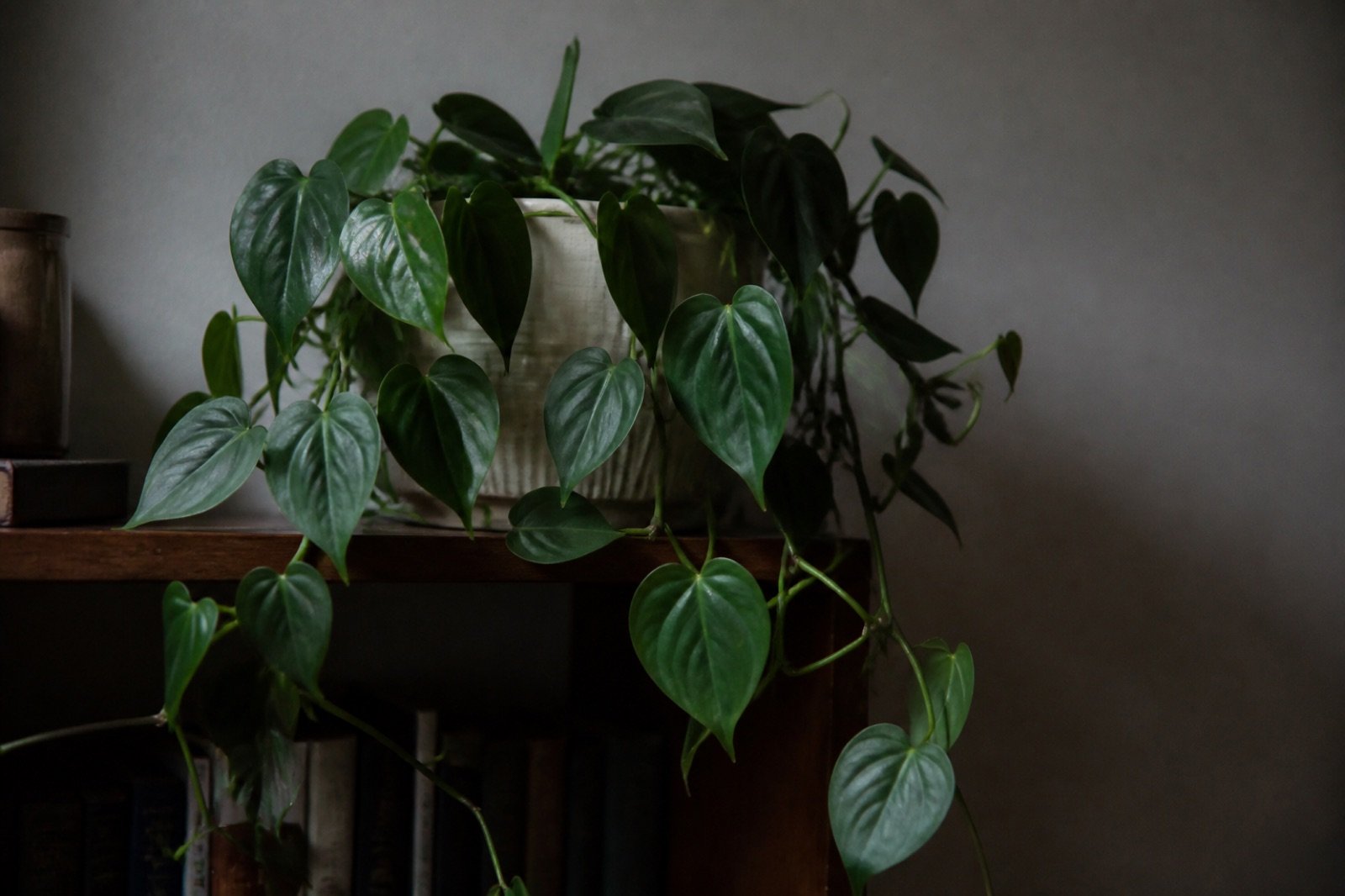
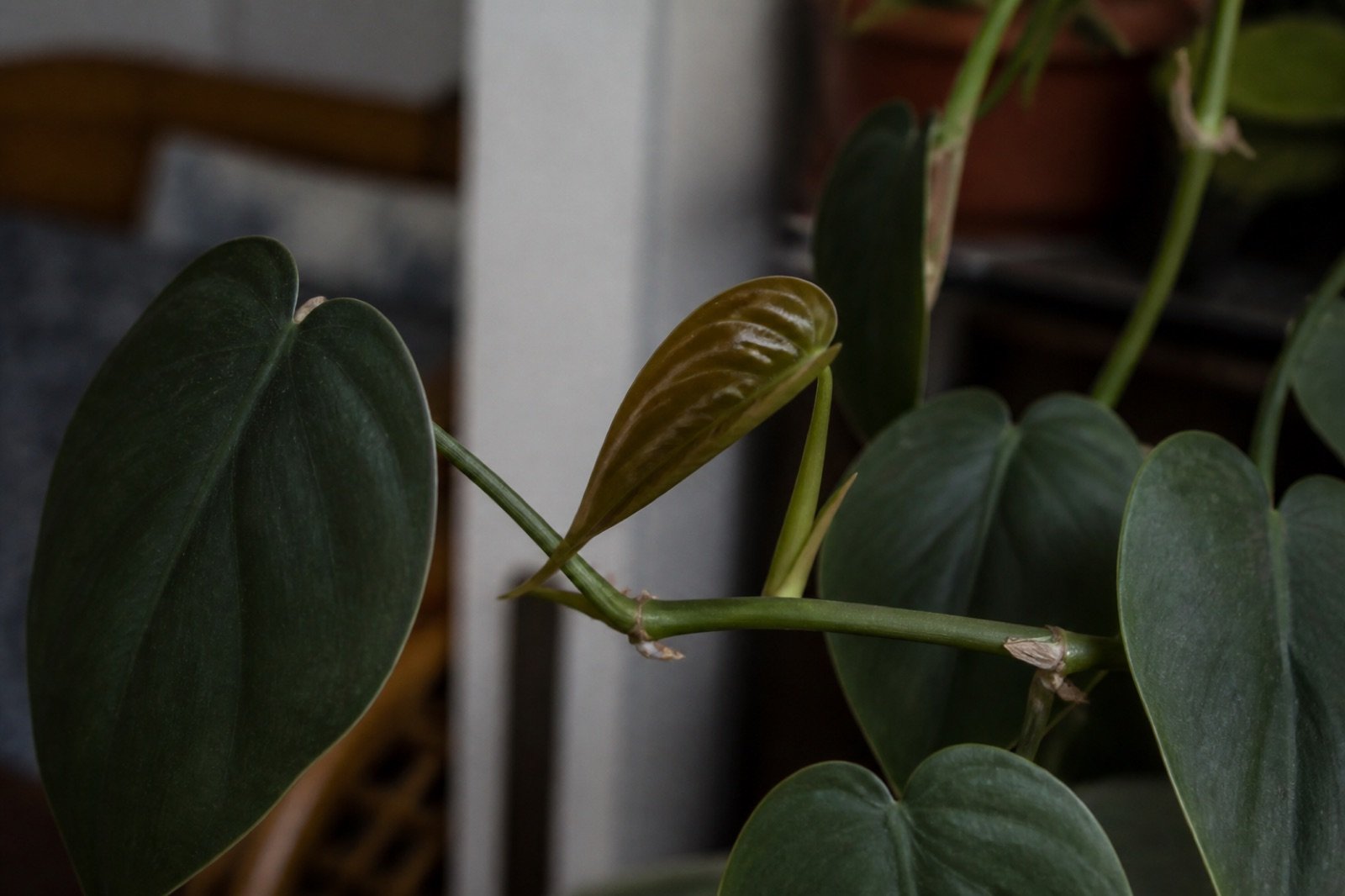
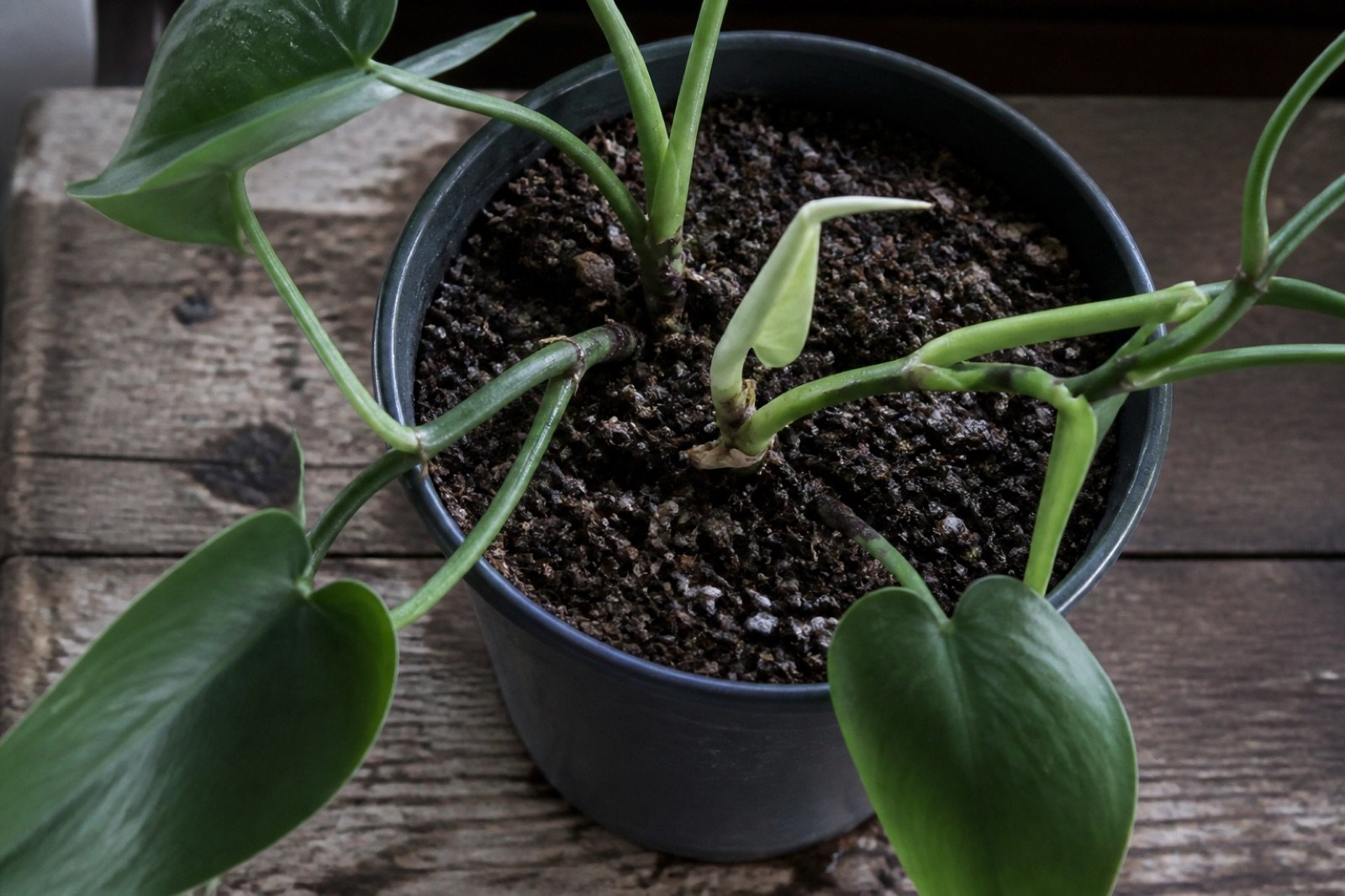
Heartleaf philodendron can remain alive in surprisingly weak light. North Carolina Extension recommends medium indirect light for stronger growth.
In a dim spot, stems stretch and the plant looks looser. That can be acceptable on a high shelf, but it is not the same as thriving. Move the plant closer to a window or add supplemental light if new leaves keep getting smaller.
Let the surface of the mix begin to dry, then water thoroughly. Do not dry the entire root ball as aggressively as a ZZ plant. Vines can reach several feet and are easy to shorten, train up a support, or propagate.
Trailing stems need to stay out of reach, not merely the pot. The ASPCA classifies heartleaf philodendron as toxic to cats and dogs.
9. Peace lily (Spathiphyllum spp.)
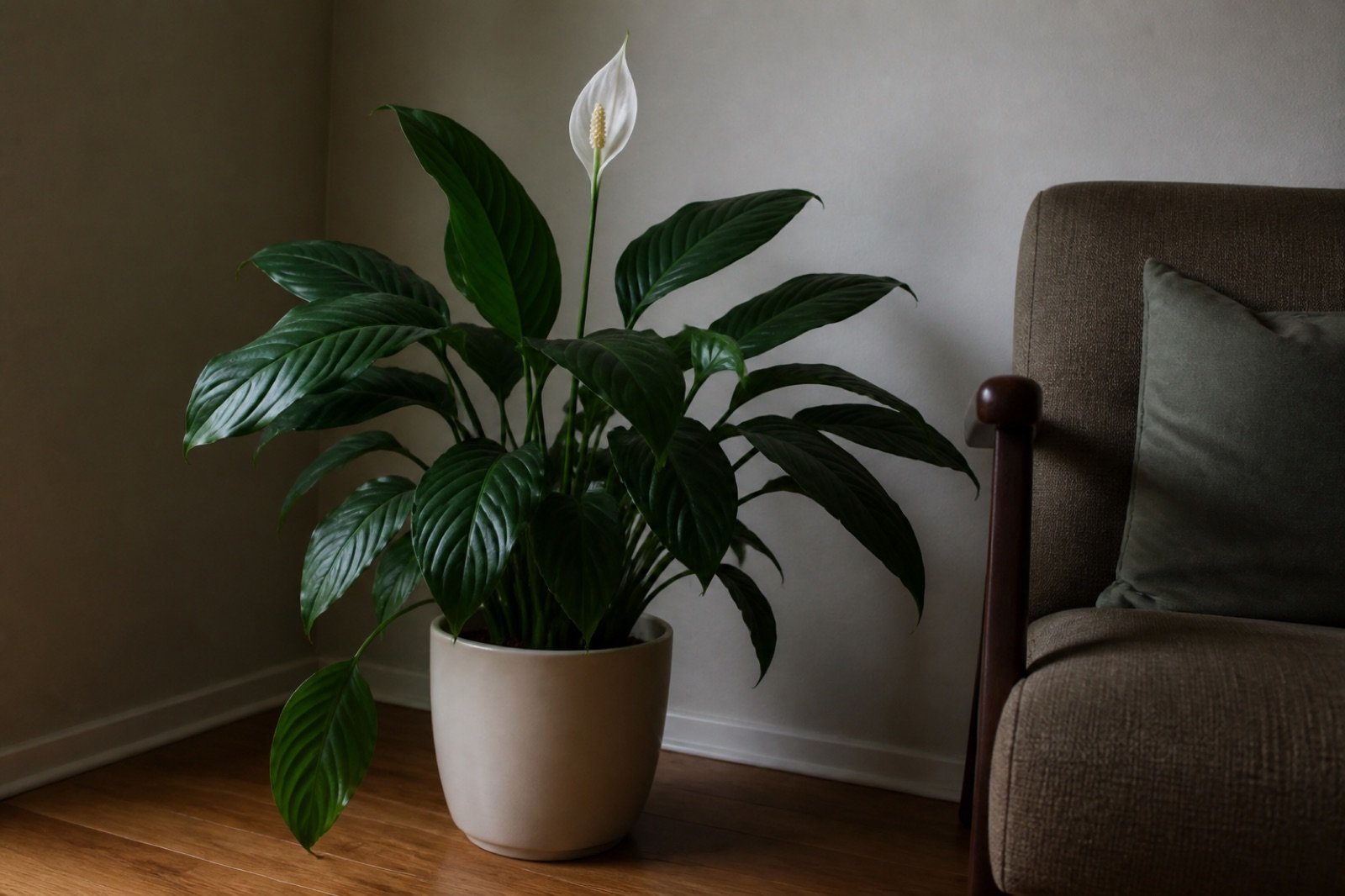
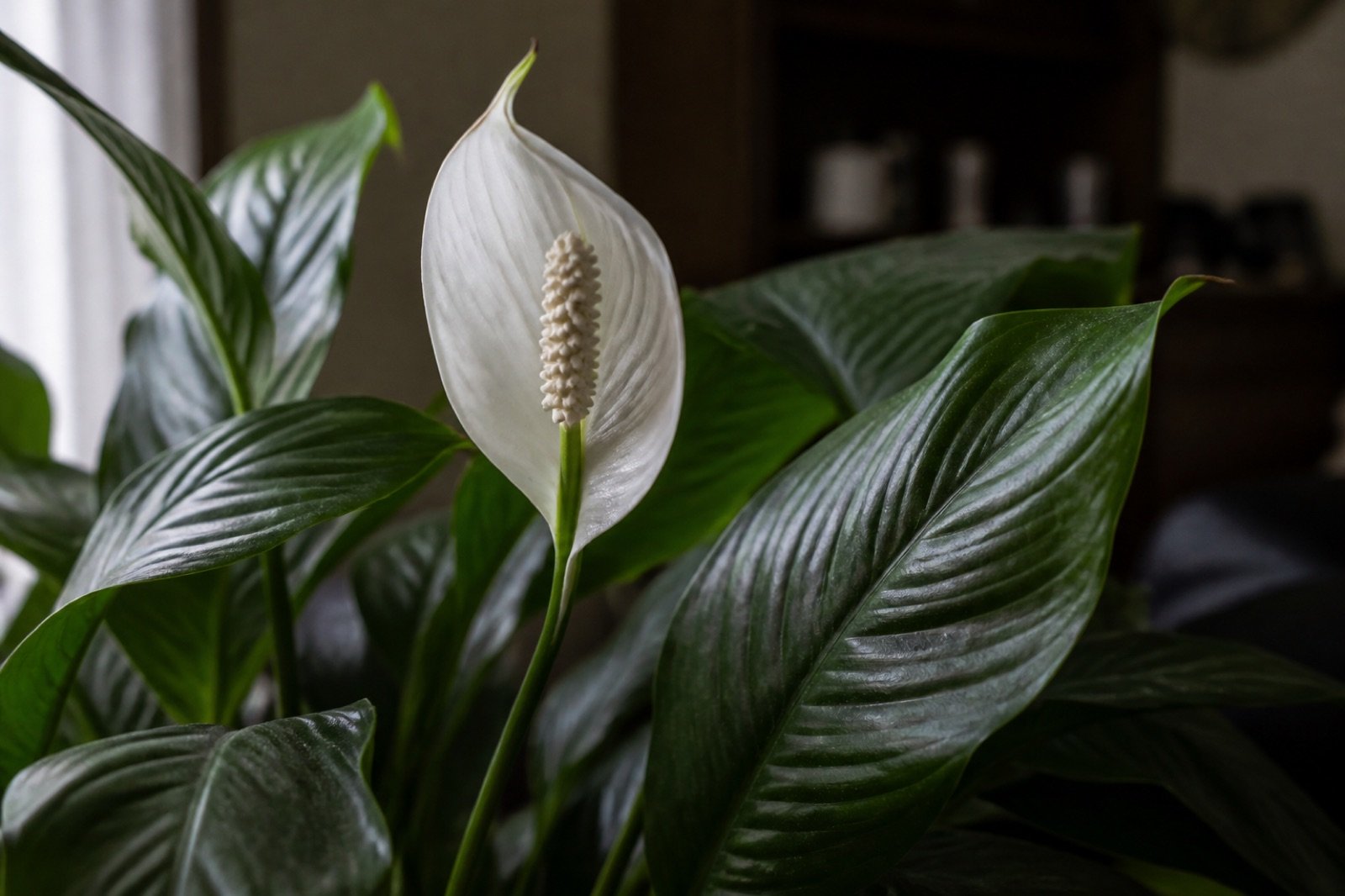
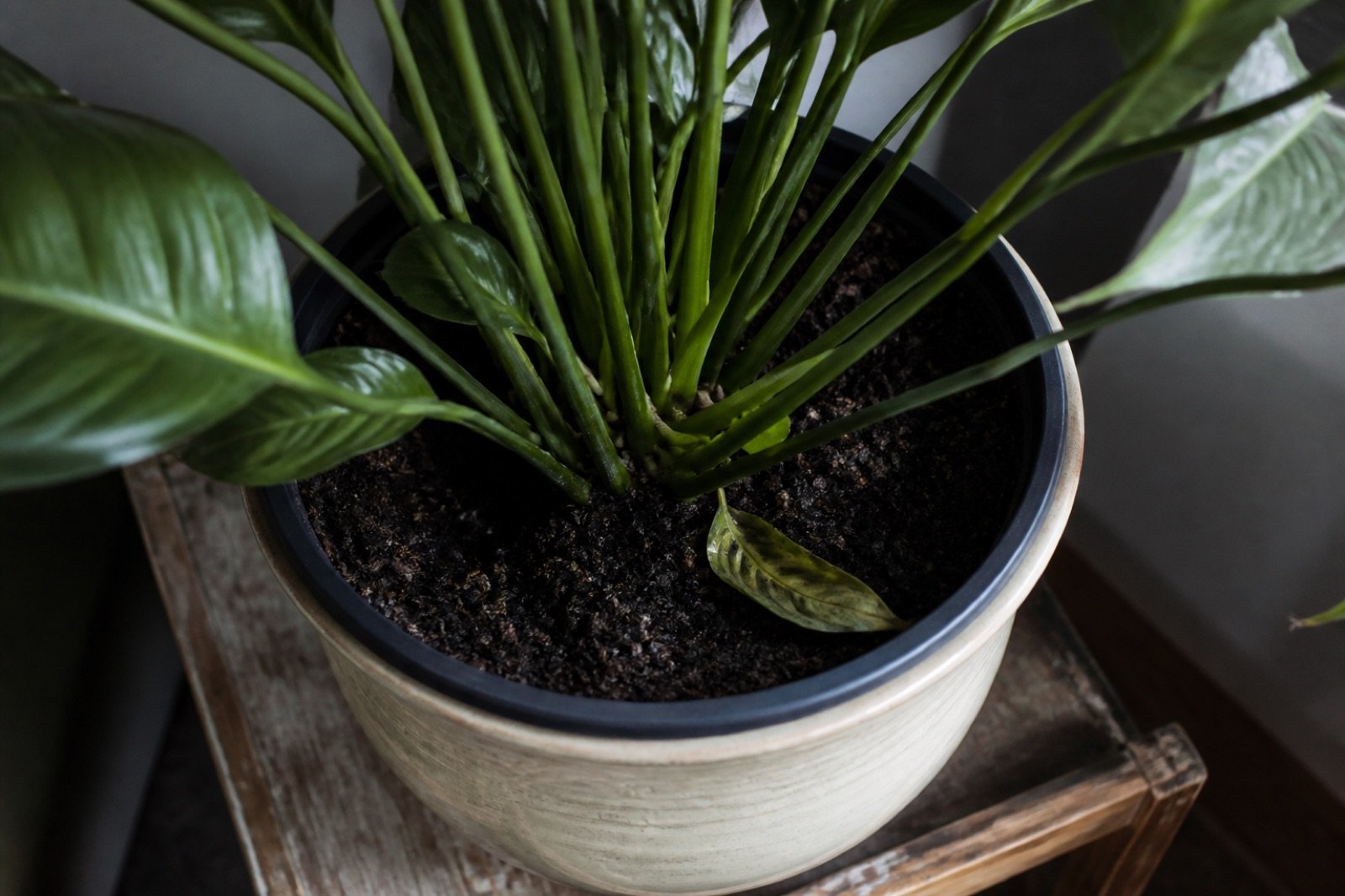
Peace lily belongs on a low-light list for its foliage, not for a promise of flowers in a dark room. Iowa State University Extension includes peace lily among adaptable houseplants, but brighter indirect light gives it a better chance of blooming.
The plant prefers more even moisture than ZZ or snake plant. Water when the surface begins to dry, before the whole root ball becomes hard and dry. Dramatic drooping is a late signal, not an ideal watering method. Repeated wilt-and-recover cycles stress roots and can brown leaf edges.
Most common forms stay between one and three feet, though large cultivars need more floor space. If a healthy plant produces leaves but no flowers, light is the first thing to review.
Peace lily is not a true Lilium lily, but its calcium oxalate crystals can still cause painful irritation. The ASPCA classifies it as toxic to cats and dogs.
10. Spider plant (Chlorophytum comosum)
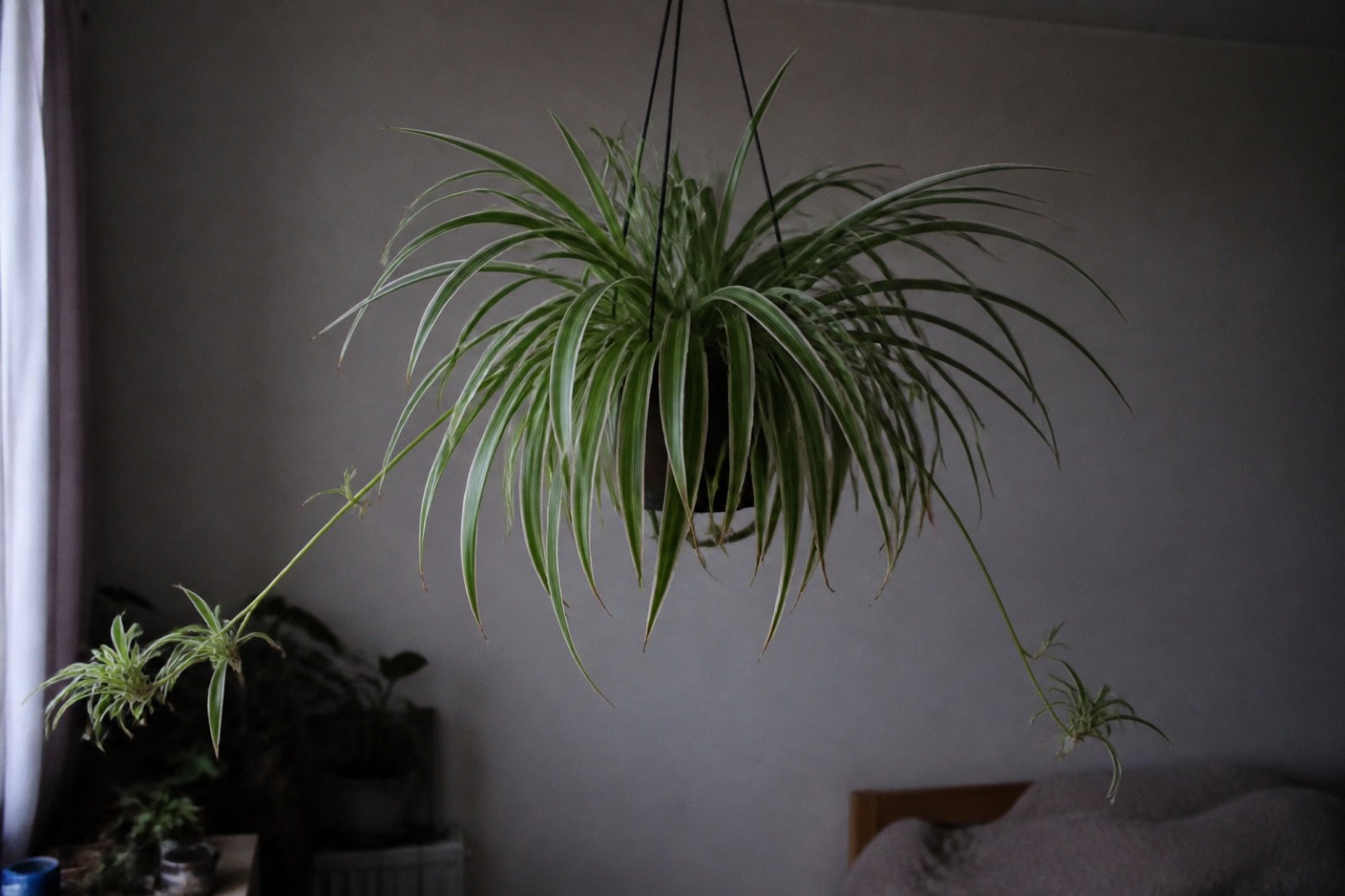
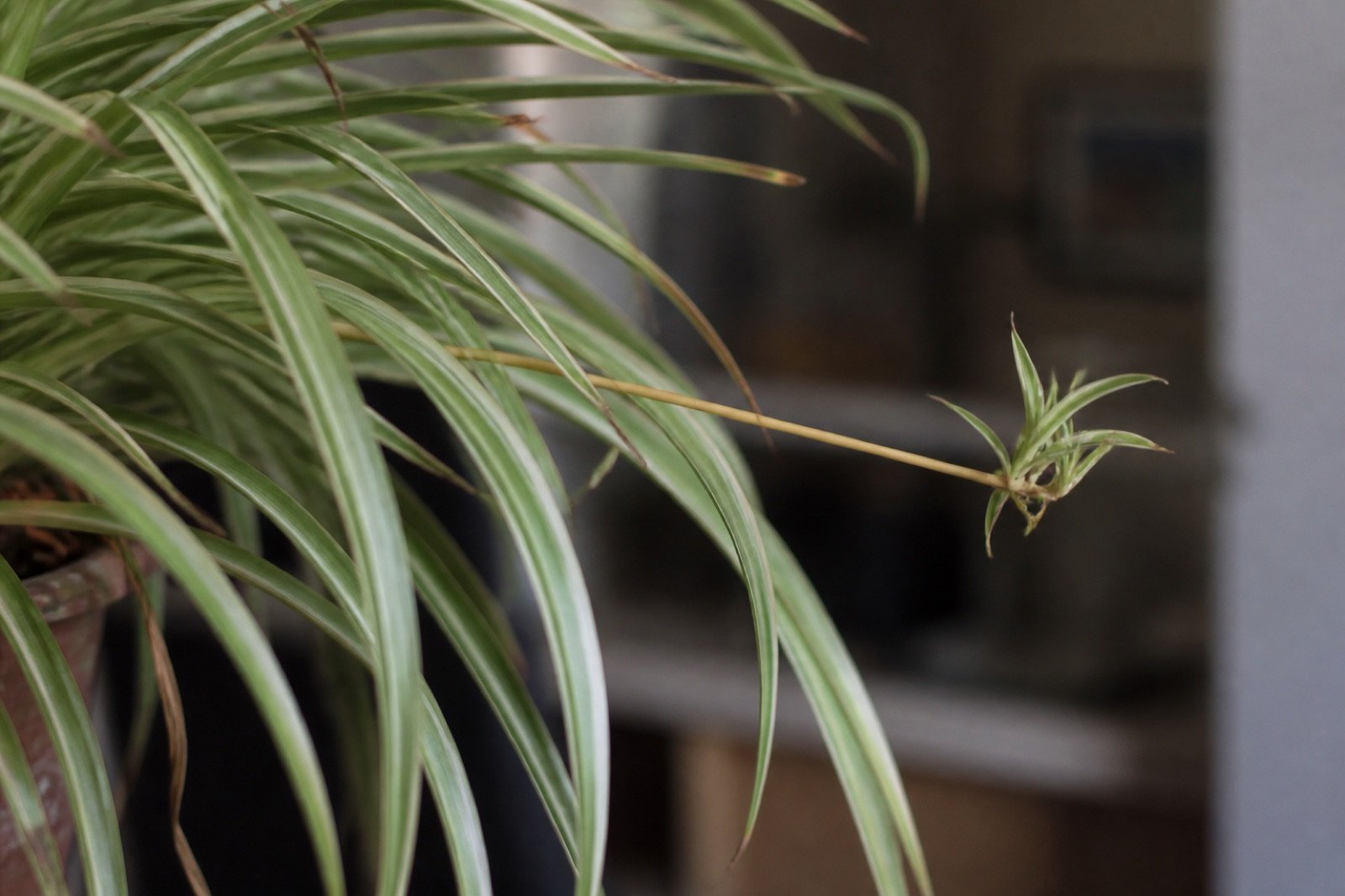
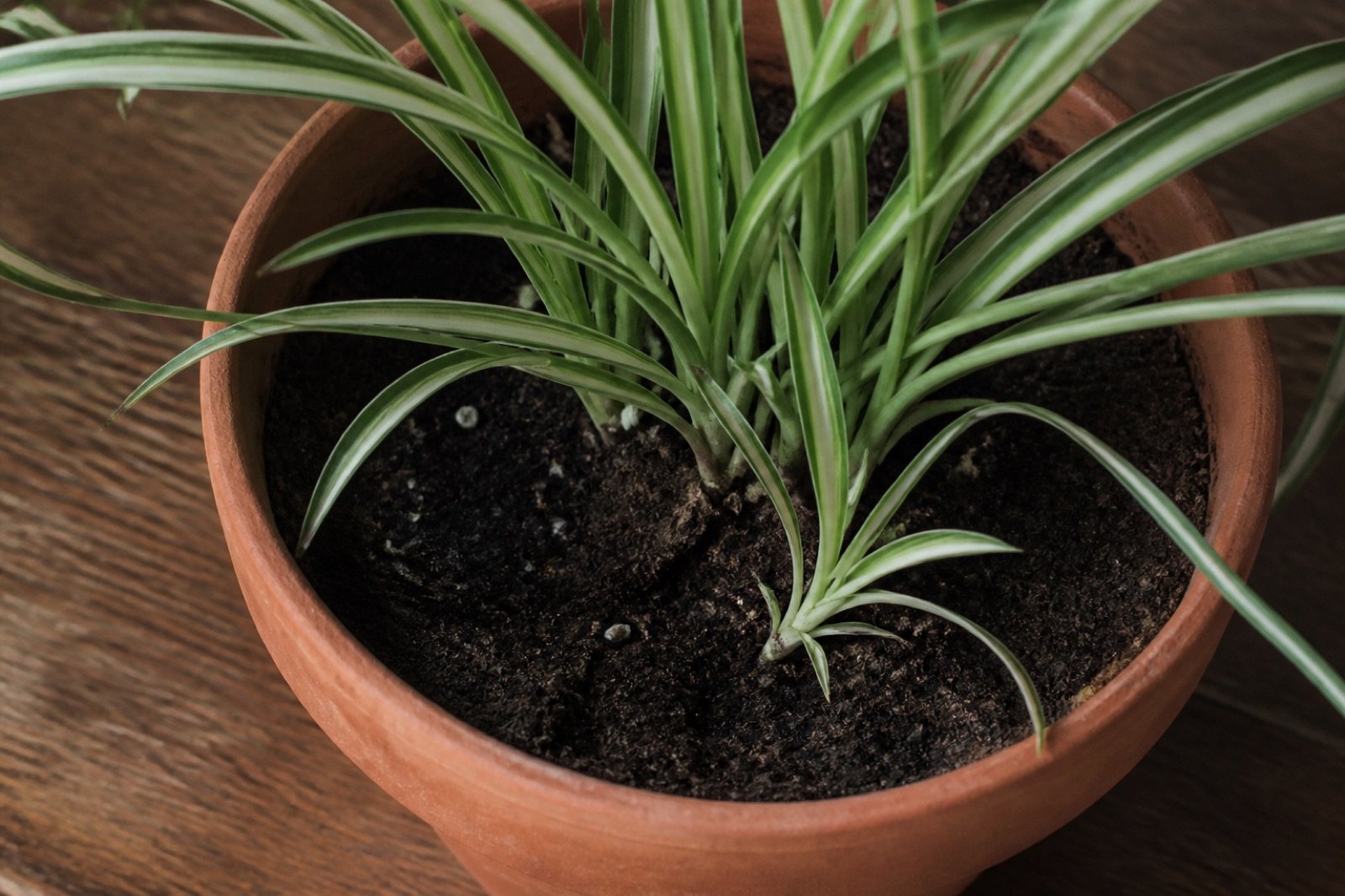
Spider plant is a pick for the brighter end of low light. North Carolina Extension says it prefers medium light yet can tolerate deep shade.
The greenest forms cope best at the low end. Expect slower growth and fewer plantlets in a dim room. If the white stripes fade or growth stalls, a brighter spot is kinder than more plant food.
Water after the surface has lightly dried, then empty the saucer. A mature plant is commonly one to one and a half feet tall, with arching leaves and runners spreading wider. A hanging basket keeps the plantlets visible and away from foot traffic.
Cats often find the dangling leaves tempting, so the plant may still need protection from chewing. The ASPCA lists spider plant as non-toxic to cats and dogs.
The best low-light indoor plants for homes with pets
Cast iron plant is the strongest combination of deep-shade tolerance and ASPCA non-toxic status. Parlor palm is a softer floor plant for the brighter part of the low-light range. Spider plant works in a hanging basket near that same upper end.
Common names can be unreliable, especially with palms. Before buying, match the botanical name on the label with the pet-safe indoor plant guide. Plants that share a familiar common name can have very different safety profiles.
How to keep a low-light plant alive
Water less often, but still water thoroughly
Lower light slows photosynthesis and growth. The pot then loses water more slowly. University of Minnesota Extension specifically warns that plants in less light use less water, which is why a weekly schedule is risky.
Use the drying trigger in the table rather than a calendar. Water until excess drains, then wait for the plant and mix to reach that trigger again. The indoor plant watering guide gives better methods than counting days.
Keep leaves clean and give them space
Dust and overlapping foliage reduce the light reaching a leaf. Wipe broad leaves gently with water and a soft cloth, then space pots so one plant is not shading the next. For stubborn dust, use the houseplant leaf-cleaning guide. Skip oily leaf-shine products.
Move the plant closer before buying equipment
A shift of two or three feet can matter more than changing plant species. Measure at the new leaf position and watch the plant for several weeks. Avoid throwing a shade-acclimated plant into direct afternoon sun, which can scorch leaves.
White walls can help a grow-light setup, but a mirror’s effect depends on its angle, distance, and the incoming light. Measure the result.
Add a grow light when the room falls below the useful range
If the only available spot stays below roughly 50 foot-candles, supplemental light is the practical fix. A compact full-spectrum LED on a timer can turn a dead zone into a usable plant shelf. The lamp must be close enough to deliver light to the leaves without overheating them.
Start with whether the plant needs a grow light. If it does, compare apartment grow lights and set a sensible daily timer.
Search Amazon for a compact full-spectrum grow light (paid link)
Expect less growth
A low-light plant can be healthy without producing a new leaf every week. Slow growth, fewer flowers, and longer drying times are normal. Pale new leaves, shrinking leaf size, long bare gaps on stems, or a plant leaning hard toward the window suggest that tolerance has reached its limit.
Do not correct poor light with extra fertilizer. Missouri Extension notes that inadequate light cannot be cured by water, fertilizer, or repotting. Improve the light or choose a different spot.
Frequently asked questions
What counts as low light for an indoor plant?
A useful working range is about 50 to 250 foot-candles, roughly 540 to 2,700 lux, measured at leaf height. Definitions vary by source, and plants grow better at different points within that band. Below about 50 foot-candles, many plants maintain themselves rather than making healthy new growth.
Can a plant live in a windowless room?
Only if electric lighting supplies enough usable light. Ordinary room lighting may be enough for temporary display or very slow survival, but no green plant can photosynthesize in darkness. Use a measured grow-light setup if there is no window contribution.
Which low-light indoor plants are safe for cats and dogs?
Among the best low-light indoor plants in this guide, the ASPCA non-toxic choices are cast iron plant, parlor palm, and spider plant. Non-toxic plants can still cause stomach upset if chewed. Verify the botanical name because common names are easy to confuse.
Which low-light plant needs the least water?
ZZ plant and snake plant store water and generally dry more thoroughly than the other picks before another soak. Neither has a fixed safe interval. A large pot in a dim winter room may stay moist for weeks longer than a small pot in summer.
Can a peace lily flower in low light?
Yes, but flowering becomes unreliable as light falls. If blooms matter, give it stronger filtered light.
How often should I water plants in low light?
Use the plant’s drying trigger instead of a weekly calendar. Less light usually means slower water use. ZZ and snake plant should dry much more thoroughly than peace lily, while pothos and philodendron fall between those extremes.
Are variegated plants good for low light?
Usually not as good as their greener forms. White, cream, pink, or red leaf areas contain less chlorophyll. Many variegated plants lose pattern, stretch, or slow down when the room is dim.
Measure first, then choose
The best low-light indoor plants for the dimmest usable spots are cast iron plant and ZZ plant. Snake plant also handles weak light when long drying intervals suit your habits, but ZZ and snake plant need to stay away from chewing pets. Parlor palm is the friendlier pet-safe floor choice, while a green Chinese evergreen works where space is tighter.
Then measure the spot. A plant label cannot see the building across your window, the winter sky, or the shelf six feet into the room. Low-light tolerance buys margin. It does not repeal the need for light.