How to Save an Overwatered Plant (and Catch Root Rot Before It’s Too Late)
Last updated: 13.06.2026.
Here is the cruel irony of killing houseplants: most people do it with kindness. We worry, we water, we worry, we water again. And the plant droops, so it looks thirsty, so we water more, and that is the exact thing finishing it off. Overwatering kills more houseplants than neglect ever will, and the worst part is it disguises itself as thirst.
Start here: For a complete overview, see our Indoor Gardening for Absolute Beginners.
I have drowned my share. The good news is an overwatered plant is often saveable if you catch it before the roots fully rot. Here is how to tell what is happening, how to rescue the plant, and how to stop doing it.
Why overwatering actually kills
It is not the water itself. It is what soggy soil does to roots. Constantly wet soil has no air pockets, and roots need oxygen as much as they need water. Sitting in waterlogged soil, the roots suffocate, start to die, and then rot sets in as fungus moves into the dead tissue. That is root rot, and once it spreads through the whole root system, the plant cannot drink or feed itself and it collapses.
So the enemy is not watering. It is watering before the soil has dried enough to let the roots breathe. The full rhythm is in how often to water indoor plants, and getting that right prevents almost everything below.
How to tell overwatering from underwatering
This trips everyone up, because the two look weirdly similar. Both cause wilting and yellowing. Here is how to read them apart:
If the plant is not collapsing but the surface has developed a pale fuzzy layer, use the guide to white mold on houseplant soil before assuming the roots are rotten.
Signs of overwatering:
- Soil is wet, sometimes for days, and feels heavy
- Leaves yellow, often the lower ones first, and feel soft or limp
- Leaves may turn brown with soft, mushy edges
- The base of the stem feels soft or looks dark
- A musty, sour smell from the soil
- Mold on the soil surface, or fungus gnats appearing (they breed in wet soil)
Signs of underwatering:
- Soil is bone dry and pulling away from the pot edges
- Leaves are crispy, dry, and brown at the tips, not mushy
- The pot feels very light
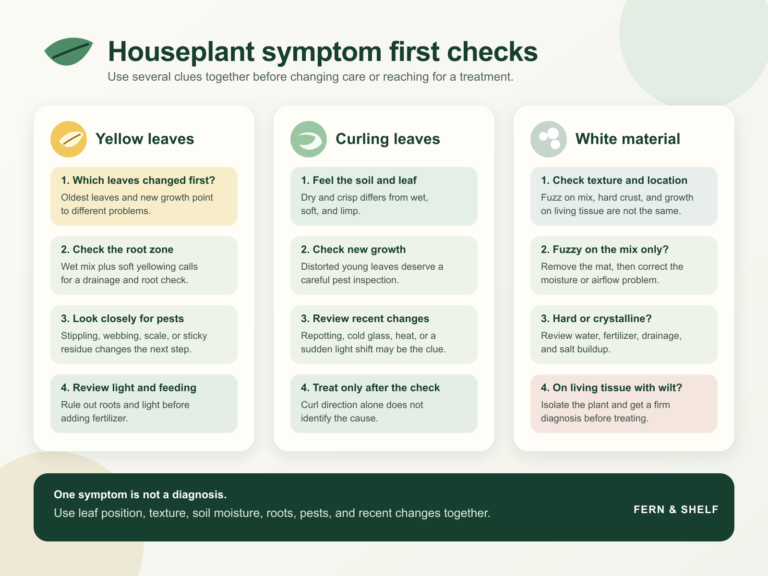
The simplest test: stick your finger two inches (5 cm) into the soil. Wet and the plant is drooping? Overwatered. Dust dry? Underwatered. When yellow leaves have you guessing, this and the yellow-leaf diagnosis guide sort it out fast.
The rescue, step by step
If you have caught it, here is how to save the plant.
1. Stop watering. Obvious, but say it out loud. No water until the plant recovers and the soil dries.
2. Move it out of direct sun. A stressed plant with damaged roots cannot handle harsh light. Bright, indirect light while it recovers.
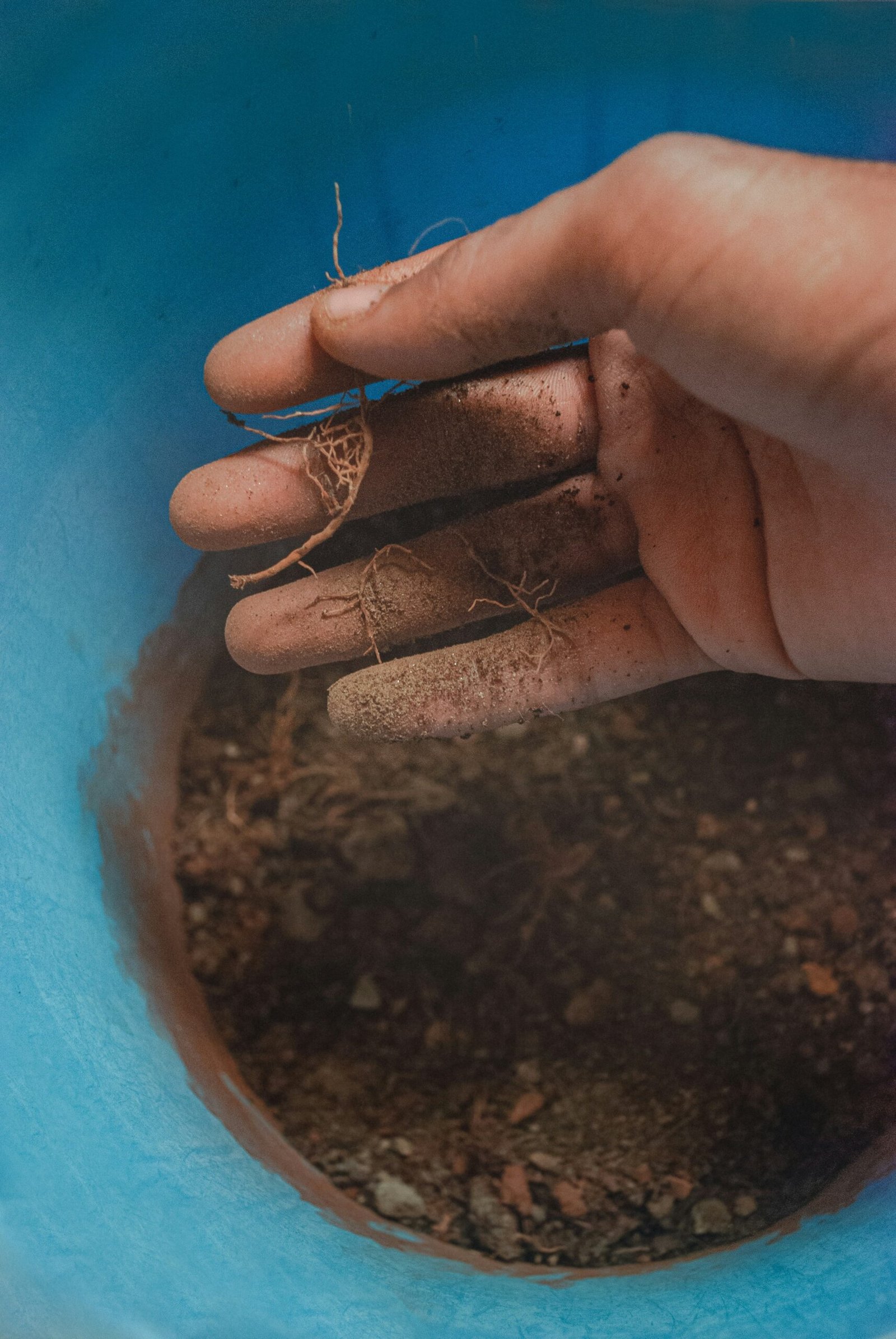
3. Take it out of the pot and look at the roots. This is the moment of truth. Gently slide the plant out and brush soil off the roots.
- Healthy roots are firm and white or light tan.
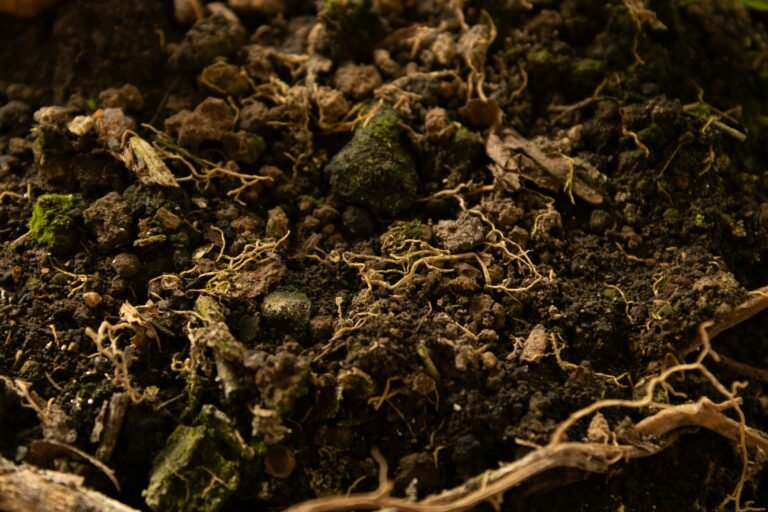
- Rotten roots are brown or black, mushy, and may smell. They sometimes slip apart in your fingers.
4. Trim the rot. With clean, sharp pruning snips, cut away every mushy brown or black root until only firm, healthy root remains. Be ruthless. Rotten root left behind keeps spreading. Wipe the blades between cuts.
5. Repot into fresh, dry, well-draining soil. Do not reuse the old soggy soil. Use fresh well-draining potting mix, and if the plant likes it, mix in a bit of perlite for extra air. Crucially, use a pot with a drainage hole. The full method is in how to repot a houseplant. If you trimmed away a lot of root, move down to a smaller pot, since a big pot holds more water than the reduced roots can use.
6. Wait before watering. Let the plant settle into the dry mix for a day or two, then water lightly once. From here, only water when the top inch or two is dry.
Once the mix has recovered, the bottom watering routine for houseplants can help rewet dry soil evenly, as long as the pot drains fully afterward.
How long recovery takes
Patience now. A rescued plant often looks worse before it looks better, dropping a few leaves as it recovers. That is normal. If you saved enough healthy root, you will see new growth in a few weeks. Do not fertilize during recovery, since feeding stressed roots makes it worse. Resist the urge to “help” by watering or repotting again.
Sometimes the rot has gone too far and the plant cannot be saved. If that happens, check whether any healthy stem remains and take a cutting, because you can often propagate a survivor in water and start fresh even when the parent is lost.
Related guides and tools
How to never overwater again
The whole problem disappears with a few habits:
- Check before every watering. Finger two inches into the soil. Damp means wait. This single habit prevents almost all overwatering.
- Use pots with drainage holes. A pot with nowhere for water to escape is a root-rot machine. Decorative pots without holes are the hidden killer.
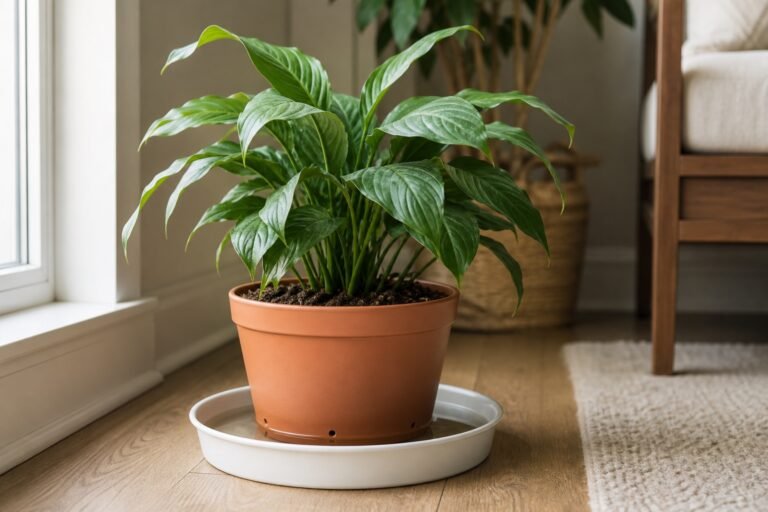
- Empty the saucer. Do not let the pot sit in drained water.
- Match the pot to the plant. Oversized pots hold too much wet soil for small roots.
- Water less in winter. Plants barely drink in the dark months, so the same summer schedule drowns them. See winter houseplant care.
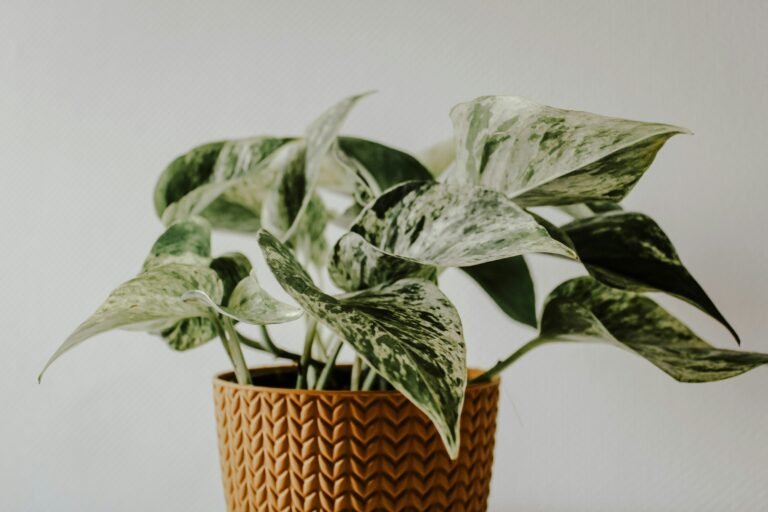
- Choose forgiving plants if you tend to fuss. The easiest indoor plants to keep alive tolerate the occasional heavy hand, though even tough ones like snake plants and pothos die from chronic overwatering.
The hardest lesson in indoor gardening is that doing less is often doing more. Put the watering can down, learn the finger test, and most of your plant deaths simply stop happening.